IPTV VOD Categorization: Mastering Your Streaming Experience
Discover IPTV VOD categorization and learn how it organizes content libraries, enhancing your viewing experience with seamless navigation.
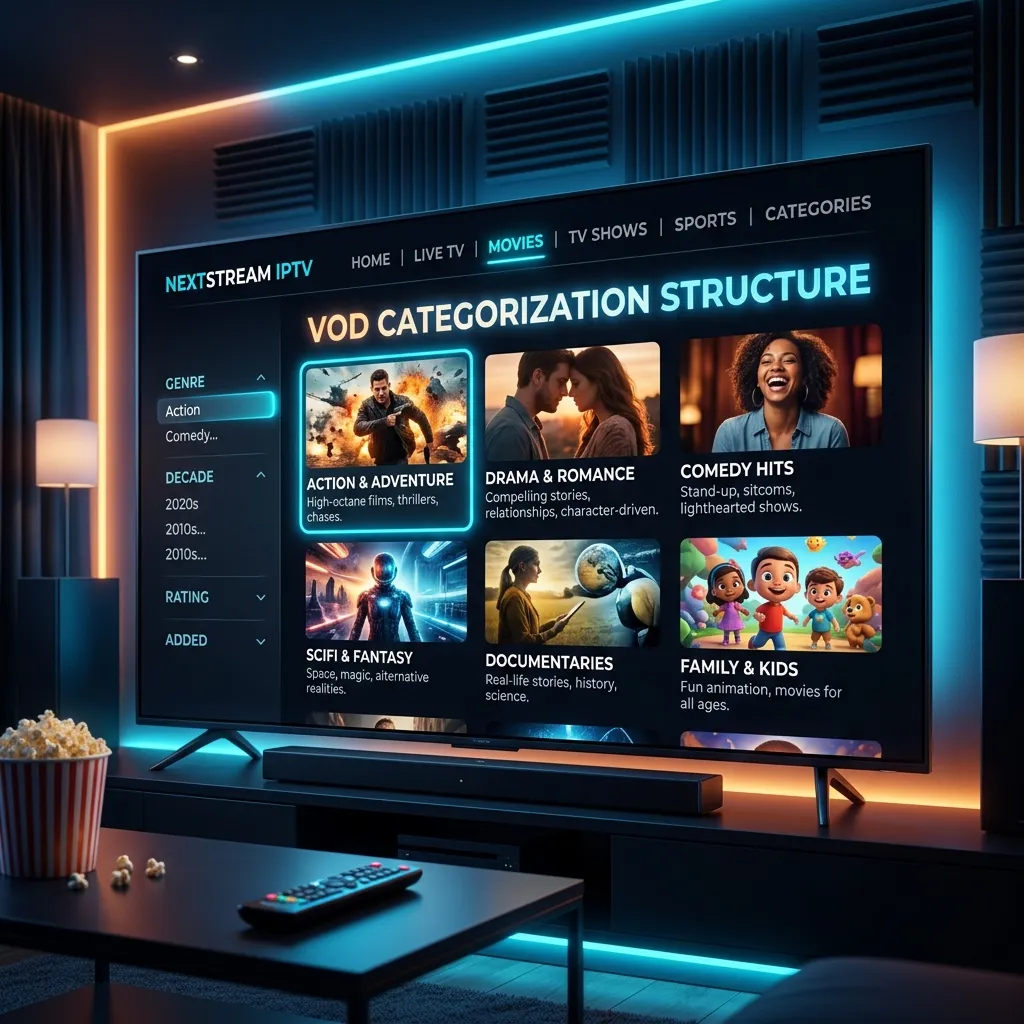
Welcome to the definitive, comprehensive guide on understanding IPTV VOD categorization. In the modern era of digital entertainment and high-speed streaming, the sheer volume of available content is nothing short of staggering. Whether you are a casual viewer looking to unwind with a simple comedy after a long, stressful day, or a dedicated, hardcore cinephile hunting for rare, critically acclaimed independent films, navigating the vast, seemingly endless oceans of movies and television shows can quickly become overwhelming. This is precisely where Video on Demand (VOD) categorization comes into play, serving as the critical, underlying backbone that transforms chaotic content repositories into streamlined, highly user-friendly digital libraries.
In this exhaustive and highly detailed exploration, we will delve deep into the mechanical and technical aspects of VOD categorization. We will rigorously examine why it is absolutely essential for a premium, uninterrupted streaming experience, and we will uncover the fascinating, complex behind-the-scenes technology that makes it all possible. By the end of this massive article, you will have a profound, expert-level understanding of how top-tier platforms—such as those you can discover on our Smartiflix Homepage—organize their massive content databases to deliver unparalleled, frictionless user satisfaction. Let’s dive deep into the fascinating, highly structured world of IPTV VOD categorization.
The Evolution of Video on Demand (VOD)
The journey to our current, highly advanced landscape of instant, beautifully categorised digital media has been long, complex, and deeply transformative. To truly appreciate the sophistication of modern IPTV VOD categorization, we must first look back in time and understand how we used to consume media, and how those legacy systems informed the digital structures we use today.
The Shift from Physical Media to Digital Streaming
Not too long ago, in the late 20th and early 21st centuries, watching a movie at home meant a dedicated trip to the local video rental store. Retail behemoths like Blockbuster and countless independent chains organized their physical VHS tapes, and later DVDs, meticulously by genre. You had distinct physical aisles for Action, Comedy, New Releases, Horror, and Staff Picks. This physical categorization was the general public's first real, tactile exposure to organized, on-demand viewing. When you walked down the aisles, the physical separation of genres made it incredibly easy to browse based purely on your current mood.
However, physical media possessed significant, insurmountable limitations. A physical store could only hold a finite number of plastic copies, and the space dedicated to specific categories was physically constrained by the square footage of the building. If a movie was rented out, it was entirely unavailable. As the internet evolved, broadband penetration increased, and bandwidth speeds skyrocketed, the entertainment industry witnessed a massive, irreversible paradigm shift. Digital streaming emerged as the dominant force, completely eliminating the need for physical copies and utterly removing the spatial constraints of brick-and-mortar stores. Suddenly, content libraries expanded exponentially from mere thousands of physical titles to tens of thousands of digital files, and the absolute need for a sophisticated digital equivalent to the video store aisle became paramount. This critical digital transition laid the foundational groundwork for the complex VOD categorization systems we utilize today.
The IPTV Revolution
Internet Protocol Television (IPTV) took the fundamental concept of digital streaming and elevated it to an entirely new, almost incomprehensible level of scale. While traditional cable and satellite television providers offered limited VOD options—which were often terribly clunky, slow to navigate, and sparsely populated—IPTV leveraged the decentralized power of the global internet to deliver massive, infinitely scalable libraries directly to consumers' living rooms. By utilizing a comprehensive, high-quality IPTV Subscription, users were no longer tethered to rigid broadcast schedules or limited, network-controlled on-demand catalogs.
IPTV platforms masterfully integrated live television channels with staggeringly extensive VOD libraries, effectively creating an all-in-one, unified entertainment hub. This technological convergence meant that an IPTV provider wasn't merely offering a few hundred recent movies; they were providing unfiltered access to vast, comprehensive archives spanning decades of global cinema and television history. Managing this staggering, constant influx of content required sophisticated software, robust databases, and meticulous categorization protocols to ensure users could actually find what they wanted to watch without endless, frustrating scrolling.
The Sheer Volume of Modern Content Libraries
Today, a premium, high-tier IPTV service can effortlessly host upwards of 50,000 to well over 100,000 individual VOD titles. This massive database includes everything from the absolute latest Hollywood blockbuster releases and highly addictive, binge-worthy TV series to niche, obscure documentaries, critically acclaimed international cinema, and comprehensive, sprawling anime collections.
Without rigorous categorization, a media library of this immense magnitude would be a chaotic, entirely unsearchable mess. Imagine, for a moment, a digital folder on your computer containing 100,000 video files named completely randomly—finding one specific movie would be virtually impossible, akin to finding a needle in a digital haystack. VOD categorization brings essential order to this chaos, acting as the tireless digital librarian that tags, sorts, and presents content in a highly logical, visually appealing, and instantly comprehensible manner.
"A massive VOD library is ultimately only as good as the underlying categorization system that organizes it. Without intuitive sorting, endless content quickly becomes an endless chore."
What Exactly is VOD Categorization?
To fully and properly grasp this topic, we need to precisely define what VOD categorization actually entails within the highly specific context of a modern IPTV service.
Defining the Core Concept
At its absolute core, VOD categorization is the systematic, highly technical process of classifying, tagging, and organizing on-demand video content into distinct, logical groups or "categories" based on deeply shared characteristics. This complex organization is achieved primarily through the extensive use of metadata—which is essentially data that provides critical information about other data. For a standard movie file, this necessary metadata includes the title, primary and secondary genres, release year, director, leading cast members, a detailed plot synopsis, and critical aggregated ratings.
When you launch a premium IPTV app and seamlessly navigate to the dedicated "Movies" section, you are thankfully not presented with a raw, intimidating list of thousands of raw media files. Instead, you are warmly greeted with visually distinct, highly recognizable categories such as "Action & Adventure," "Romantic Comedies," "Award-Winning Dramas," or "Recently Added." The VOD categorization engine, working silently in the background, is responsible for instantly parsing the metadata of every single file on the server and accurately assigning it to the appropriate visual buckets, creating a wonderfully organized, easily navigable graphical user interface.
The Difference Between Live TV EPG and VOD Metadata
It is incredibly important for users to firmly distinguish between the two primary, distinct ways IPTV services organize their vast arrays of content: the Electronic Program Guide (EPG) and VOD metadata. While they serve similar organizational purposes, they operate on completely different principles.
| Core Feature | Electronic Program Guide (EPG) | VOD Metadata & Categorization |
|---|---|---|
| Primary Purpose | Organizes Live, linear TV channels and their broadcast schedules. | Organizes static, on-demand movies and TV series libraries. |
| Time Dependency | Highly time-dependent; specifically shows what is playing exactly now and what is up next. | Completely time-independent; content is fully static and always available to play. |
| Visual Structure | Grid-based, linear timeline meticulously mapping channels to specific hours of the day. | Categorical, folder-based, or carousel-based grouping highly dependent on genre or thematic type. |
| Data Sources | Relies on broadcaster schedules, often fed through complex XMLTV feeds. | Relies on massive global Movie databases (such as TMDB, IMDB, TVDB). |
While the EPG is absolutely crucial for navigating live television broadcasts, VOD categorization focuses entirely and exclusively on the non-linear, static on-demand library. Both of these intricate systems require meticulous, constant maintenance by the IPTV provider's backend team to ensure total accuracy and a flawlessly smooth user experience.
Why VOD Categorization Matters for IPTV Users
The specific way that video content is organized directly and profoundly impacts your overall enjoyment of the streaming service. Here is a detailed breakdown of why robust, high-quality VOD categorization is a strictly non-negotiable feature for any serious, dedicated streamer.
Enhancing User Experience (UX) and Navigation
A well-categorized, thoughtfully structured VOD library drastically, fundamentally improves the User Experience (UX). When you launch your chosen IPTV application on your large-screen television or your portable mobile device, the graphical interface should feel inherently intuitive. Superior categorization allows you to navigate effortlessly using a standard remote control or a touch screen. By grouping content logically and hierarchically, you can rapidly drill down from broad, top-level categories (e.g., "Movies") to highly specific, granular subcategories (e.g., "1980s Sci-Fi Thrillers") in just a few quick clicks. This incredibly seamless navigation drastically minimizes user frustration and aggressively maximizes actual viewing time.
Combating Decision Fatigue
One of the most common, universally recognized issues faced by modern streamers is a psychological phenomenon known as "decision fatigue" or the "paradox of choice." When continuously presented with an overwhelmingly large number of unorganized options, consumers frequently struggle to make a definitive selection, which inevitably leads to endless, mind-numbing browsing and ultimate dissatisfaction—often resulting in the user turning off the TV entirely.
Highly effective VOD categorization helps directly mitigate this frustrating phenomenon. By strategically breaking the massive, monolithic library into manageable, bite-sized, thematic chunks, the system gently guides the user's decision-making process. If you're feeling down and in the mood for a quick laugh, navigating straight to the highly curated "Stand-up Comedy" or "Sitcoms" category instantly narrows your overwhelming choices from 50,000 down to a highly manageable 500. This makes it infinitely easier to casually pick something, press play, and start enjoying your evening.
Personalization and Content Discovery
Categorization is also the incredibly powerful engine that directly drives organic content discovery. Beyond standard, boring genres, advanced VOD categorization can intelligently group content by specific actors, visionary directors, or highly niche specific themes like "Critically Acclaimed Indie Hits" or "Hidden International Gems." This highly structured data allows users to organically discover new, exciting content based directly on their existing, proven preferences. If you thoroughly enjoyed a highly specific, cerebral sci-fi movie, a well-organized library will easily, automatically point you toward similar, highly-rated titles in that exact same sub-category, vastly expanding your viewing horizons without ever requiring exhaustive, tedious manual searches.
Core Principles of Effective VOD Categorization
To successfully build and maintain a world-class, premium VOD library, top-tier IPTV providers must strictly adhere to several core, foundational principles of data organization.
Genre-Based vs. Mood-Based Categorization
The most fundamental, universally accepted level of categorization is strictly genre-based. This deeply relies on historically established cinematic and literary classifications: Action, Drama, Horror, Romance, Sci-Fi, Fantasy, Documentary, and so forth. This represents the absolute baseline expectation for any functional VOD service.
However, the truly elite providers go a significant step further and actively incorporate advanced mood-based categorization. Mood-based categories brilliantly appeal directly to the viewer's current emotional state rather than strict, rigid genre definitions. Excellent examples include highly curated rows like "Feel-Good Movies," "Dark and Gritty Dramas," "Mind-Bending Psychological Thrillers," or "Perfect for a Cozy Rainy Day." This highly nuanced, emotionally intelligent approach to categorization requires significantly more sophisticated metadata tagging on the backend but predictably pays massive dividends in overall user engagement and retention.
The Vital Role of Metadata
As previously touched upon, metadata is quite literally the lifeblood of all VOD categorization. Without highly accurate, impeccably formatted, and comprehensive metadata, effective categorization is entirely impossible.
Consider that a single, solitary video file requires extremely extensive data tagging to be properly, usefully sorted within a massive database:
- Primary Metadata: The Exact Title, The Original Release Year, The Total Runtime in minutes, and the Official Age Rating (PG-13, R, TV-MA, etc.).
- Descriptive Metadata: A highly detailed Plot summary, the official marketing Tagline, and both Primary and Secondary Genres.
- Cast & Crew Metadata: The primary Director, Lead Actors, Supporting Cast members, and key Writers.
- Technical Metadata: The precise video Resolution (1080p, 4K UHD), available Audio formats (5.1 Surround, 7.1, Dolby Atmos), and comprehensive Subtitle language availability.
Consider the immense complexity of a simple user search query. If a user searches for "Christopher Nolan," the intelligent system doesn't just lazily look for titles with his name in the primary title. Because the entire VOD library is comprehensively and exhaustively tagged, the system simultaneously queries the 'Director', 'Writer', and 'Producer' metadata fields. It instantly, dynamically compiles a temporary, highly accurate category presenting Inception, The Dark Knight, Interstellar, and Oppenheimer. Without completely accurate metadata, this kind of rapid, highly satisfying, relationship-based categorization would be technically impossible, and users would be painfully forced to search for each specific title individually.
Smart Sorting and AI Algorithms
Modern, cutting-edge VOD systems are increasingly heavily relying on highly advanced smart sorting algorithms. Instead of just lazily presenting a completely static, unmoving alphabetical list within a specific category, smart algorithms dynamically sort the displayed content based on a complex matrix of relevance, global popularity, and recency.
Dynamic categories like "Trending Now Worldwide" or "Top 10 Most Watched This Week" constantly, automatically update based on real-time, aggregated viewership data. As artificial intelligence and machine learning become even more deeply integrated into premium IPTV platforms, categorization will become staggeringly personalized, automatically creating fully custom rows of content specifically, algorithmically tailored to an individual user's highly specific historical viewing habits.
Multilingual and Regional Categories
For a massive, globally distributed audience, highly accurate regional and language-based categorization is incredibly crucial. A top-tier, premium IPTV service must effectively cater to wildly diverse cultural demographics by offering highly dedicated, easily accessible categories for entirely different languages and distinct geographic regions.
This vital organization includes physically separating content into distinct, prominent sections like "Massive Bollywood Hits," "Trending Korean Dramas (K-Dramas)," "Classic French Cinema," or "Hit Spanish Language Series." This deep level of cultural categorization ensures that non-native English speakers, expats, or simply dedicated fans of international cinema can effortlessly, joyfully find content perfectly tailored to their highly specific linguistic and cultural preferences, completely without having to painfully sift through predominantly, overwhelmingly English-language media.
Exploring Common VOD Categories in Premium IPTV Services
Let’s take a much closer, highly detailed look at the standard, foundational structural pillars of a perfectly organized VOD library. When you explore a high-quality, reputable service like a premium IPTV Subscription, you should absolutely expect to clearly see these primary, top-level divisions.
Movies: From Blockbusters to Indie Gems
The movie section is practically always the largest, most data-heavy portion of any comprehensive VOD library. Because of its sheer size, it must be typically divided down into highly granular, specific subcategories to be usable:
- New Releases / Cinematic Premieres: The absolute most recent database additions, very often representing major movies that have only just left physical theaters or recently hit premium digital storefronts.
- Action & Adventure: A massive category dedicated to high-octane thrillers, massive CGI superhero epics, and beloved classic action films.
- Comedy: Ranging wildly from lighthearted romantic comedies and goofy slapstick to incredibly dark, cynical humor.
- Horror & Thriller: Carefully separating slow-burn psychological thrillers, gory slasher films, and terrifying supernatural horror.
- Sci-Fi & Fantasy: Featuring sprawling space operas, grim dystopian futures, and highly intricate magical realms.
- Classic Cinema: A dedicated archive of timeless masterpieces spanning directly from the Golden Age of 1930s Hollywood right up to the highly influential late 20th century.
- Independent Films: A crucial section highlighting lower-budget, critically acclaimed, highly artistic movies produced entirely outside the massive mainstream studio system.
TV Shows: Binge-Worthy Series and Ongoing Seasons
Television series intrinsically present a highly unique, deeply complex categorization challenge for developers because they are strictly hierarchical in nature: The Show > The Season > The Episode.
A truly robust, well-coded VOD system handles this complex data structure flawlessly, perfectly categorizing series by overarching genre while strictly maintaining the structural, chronological integrity of the individual seasons and episodes.
- Trending Series: The absolute most popular, highly discussed shows currently being watched globally.
- Complete Series: Beloved shows that have entirely finished their multi-year run, making them absolutely perfect for uninterrupted, weekend-long binge-watching.
- Ongoing Seasons: Currently airing, highly active shows where brand new episodes are reliably added weekly immediately after broadcast.
- Mini-Series: Highly focused, tightly written self-contained stories told over a strictly limited, predetermined number of episodes.
Kids and Family Content
Complete safety, strict appropriate categorization, and parental peace of mind are absolutely paramount here. The Kids section of any good VOD library is heavily, meticulously curated to strictly ensure completely age-appropriate content. Important subcategories almost always include:
- Toddlers & Preschool: Highly educational, extremely gentle, and entirely sanitized content specifically for the youngest viewers.
- Animated Features: The massive, beloved major studio blockbuster animations from heavyweights like Disney, Pixar, DreamWorks, and Studio Ghibli.
- Live-Action Family: Engaging, fun movies explicitly suitable for absolutely all ages to watch together.
- Teen & Young Adult: Dramas, comedies, and shows aimed specifically at an older, slightly more mature adolescent demographic.
Furthermore, advanced VOD categorization data directly allows for incredibly strict, highly effective parental controls. Because all content is meticulously tagged with official age ratings (G, PG, PG-13, R) and specific content warnings on the backend, parents can easily utilize their chosen IPTV application's built-in locking features. You can securely set a numeric PIN code that completely, utterly locks out any specific category or individual title that exceeds a certain age rating. This crucial feature heavily ensures that the VOD library remains a completely safe, fully secure digital environment for young children to freely explore completely without the need for constant, hovering direct supervision. This profound peace of mind is incredibly invaluable for modern families utilizing massive IPTV libraries.
Documentaries and Educational Content
For those intelligent viewers looking to learn, expand their minds, and explore reality, the massive documentary section offers deep, highly informative dives into the fascinating real world.
- True Crime: An absolutely massively popular, highly addictive genre deeply covering intense real-world criminal investigations and mysteries.
- Nature & Wildlife: Stunning, beautifully shot high-definition visual explorations of the complex natural world and fragile ecosystems.
- History & Biography: Incredibly deep, factual dives into massively important historical events, wars, and highly prominent, world-changing figures.
- Science & Technology: Highly educational content exploring the absolute bleeding edge of human innovation, physics, and space exploration.
Anime and Niche Genres
Japanese Anime has explosively grown into a massive, highly lucrative global phenomenon, absolutely requiring its own dedicated, highly specific categorization structure within a premium IPTV service to satisfy hardcore fans.
- Shounen: Incredibly action-packed, high-energy series aimed primarily at young males.
- Shoujo: Highly emotional romance and complex drama aimed primarily at young females.
- Isekai: Highly popular fantasy stories involving normal characters magically transported to another, fantastical world.
- Mecha: High-octane action featuring massive, pilotable giant robots and futuristic, sci-fi warfare.
Additionally, truly massive VOD libraries very often include highly niche, specific genres like full-length Stand-Up Comedy Specials, massive live Concerts and Music Videos, or detailed Fitness and Workout routines, absolutely ensuring there is truly, undeniably something for everyone, regardless of their specific interests.
Sports Replays and Pay-Per-View (PPV) Archives
While live, highly anticipated sports broadcasts are strictly the domain of the live EPG, a truly comprehensive, premium VOD library almost always includes highly dedicated categories specifically for massive Sports Replays and highly lucrative PPV events. If you unfortunately missed a crucial, highly anticipated UFC fight, a major world-championship boxing match, or a massively significant global football final due to inconvenient time zone differences or work schedules, premium IPTV VOD systems meticulously categorize these major events for convenient later viewing. These replays are typically highly organized by specific sport (MMA, Boxing, Soccer, Motorsport, Basketball) and rigidly chronologically, beautifully allowing massive sports fans to comfortably catch up on the intense action entirely on their own personal schedule, complete with full, detailed event metadata, fighter stats, and comprehensive descriptions.
Comparing VOD Categorization: IPTV vs. Mainstream Streaming Apps
To truly understand the immense value of IPTV categorization, it is highly useful to directly compare it to the major, household-name streaming applications.
The Walled Gardens of Netflix and Hulu
Massive, incredibly wealthy mainstream streaming giants like Netflix, Hulu, and Disney+ operate what are essentially highly restrictive "walled gardens." They absolute control their highly proprietary User Interface (UI) and complex categorization algorithms incredibly tightly. Their specific brand of VOD categorization is notoriously algorithmic, aggressively and heavily favoring pushing their own expensive original content to the top of your feed. While their UIs are undeniably visually polished, users frequently and loudly complain about the distinct lack of transparent, reliable, traditional genre categorization. The categories constantly, frustratingly shift based on highly opaque, hidden algorithms, sometimes making it incredibly difficult to simply find a specific, older type of movie if the black-box algorithm decides you aren't currently interested in it today.
The Open Structure of Premium IPTV
In stark, refreshing contrast, premium, high-quality IPTV services very often provide a much more transparent, rigid, and highly structured approach to massive VOD categorization. Because they actively aggregate vast, staggering amounts of diverse content across absolutely all major studios and global networks, they rely incredibly heavily on standardized, comprehensive, globally recognized metadata libraries (like the aforementioned TMDB). This ultimately results in a massive, highly reliable directory-like structure that actively empowers the user. Instead of frustratingly relying on a hidden black-box algorithm to bossily suggest what to watch, IPTV users have total, unrestricted access to massive, static, highly reliable categories that beautifully allow for deep, manual, highly satisfying exploration of global cinema and television. This empowering "open library" approach appeals greatly to users who want total control over their own personal discovery process.
Interface Flexibility with Third-Party Apps
Another absolutely massive, undeniable advantage of IPTV VOD categorization is total interface flexibility. With Netflix, you are completely forced to use the official Netflix app's UI, whether you like it or not. With standard IPTV, the backend service provides the massive, categorized data feed, but the user completely chooses the frontend application. As we will discuss in our hardware section, you can freely choose TiviMate for a traditional, highly functional grid-based approach, or perhaps XCIPTV for a much more visual, heavily modern, poster-focused approach. The underlying, structural VOD categories absolutely remain exactly the same, but you have the immense power to freely choose the software that visually presents them in a way that perfectly best suits your own personal aesthetic tastes and strict navigational preferences.
How Smartiflix Enhances Your VOD Experience
At Smartiflix, we deeply and fundamentally understand that possessing a massive, 100,000-title library is completely useless if the user physically can't find what they actually want to watch. That’s precisely why we have invested incredibly heavily in our backend server infrastructure to consistently provide an unparalleled, industry-leading VOD categorization experience.
Seamless Navigation and Intuitive UI
When you actively use our premium service, you will immediately, undeniably notice the massive difference in quality. Our exhaustive VOD categories are meticulously organized by human curators, visually highly appealing, and lightning-fast to navigate. We heavily employ high-quality, high-resolution poster art, beautiful, detailed background fanart, and completely full metadata sets for absolutely every single title in our massive library. This incredibly rich, highly visual presentation makes the simple act of browsing our catalog an incredibly enjoyable experience in itself, feeling highly akin to smoothly scrolling through the expensive interface of a multi-billion dollar streaming giant. To physically experience this incredibly premium navigation firsthand, please explore our diverse Pricing plans to find the absolutely perfect subscription tier for your exact entertainment needs.
Regular Library Updates and Accurate Metadata
A massive VOD library is essentially a living, constantly breathing digital entity. Brand new blockbuster movies are released globally almost daily, and highly popular TV shows air new episodes constantly on a weekly basis. Smartiflix actively utilizes highly automated, absolutely state-of-the-art backend scraping technology to absolutely ensure our massive library is heavily updated in near real-time. When a brand new episode officially drops globally, it is almost instantly categorized strictly under the completely correct show and specific season, completely loaded with a detailed episode synopsis and a high-quality thumbnail image. Furthermore, our dedicated team regularly audits our vast metadata databases to manually correct any rare automated sorting errors, absolutely ensuring that our premium categories remain flawlessly accurate and highly relevant to our users.
The Technical Side: How IPTV Providers Manage VOD
Behind the sleek, beautiful user interface visible on your television lies a staggeringly complex, highly technical infrastructure necessary for efficiently managing and flawlessly categorizing tens of thousands of massive video files.
Content Delivery Networks (CDNs) and Storage Infrastructure
High-definition VOD files are absolutely massive. A single, high-bitrate 4K UHD movie can easily be tens of gigabytes in absolute file size. To reliably serve a massive library of 100,000 highly detailed titles to many thousands of demanding concurrent users completely without buffering fundamentally requires a massively robust, incredibly expensive Content Delivery Network (CDN).
A high-quality CDN efficiently, intelligently distributes the physical storage of these massive video files across multiple, incredibly powerful servers located in completely different geographical regions worldwide. When you comfortably click play on a massive movie located in the "Action" category, the incredibly smart IPTV system dynamically and instantly routes your specific media request to the physical CDN server located physically closest to your home router, absolutely ensuring maximum possible download speed and entirely zero buffering. The highly complex categorization database merely acts as a map, precisely pointing the user's app to the totally correct, specific file path located on the massive CDN, perfectly linking the beautiful visual metadata seen on your screen directly to the raw physical file located on the remote server.
Metadata Scraping: TMDB, IMDB, and Beyond
As heavily emphasized earlier, highly accurate metadata is absolutely critical to the entire operation. Modern IPTV providers heavily use complex API (Application Programming Interface) integrations directly with massive, globally recognized databases like TMDB (The Movie Database) and IMDB.
When a provider's automated system adds a raw, brand new video file directly to their storage server (e.g., highly unformatted the_matrix_1999_1080p_surround.mp4), their highly intelligent automated system instantly pings the TMDB API. The automated system intelligently searches for the string "The Matrix 1999" and entirely automatically downloads the high-resolution poster art, the wide backdrop image, the full plot summary, the entire cast list, and all relevant genre tags. It then securely injects all of this rich data deeply into the IPTV provider's local, high-speed database, instantly and perfectly categorizing the raw file cleanly under "Sci-Fi" and "Action" and making it beautifully, highly presentable to the end-user.
Automated vs. Manual Curation
While sophisticated automation easily handles the massive bulk of initial categorization, the absolute very best, truly premium libraries strongly require a dedicated human touch. Highly intensive manual curation specifically involves a dedicated team of human experts carefully reviewing the automated categorization system to manually fix weird edge cases, carefully correct mismatched or broken metadata, and highly creatively build highly customized, perfectly curated categories like specific "Halloween Horror Specials" or highly anticipated "Staff Picks for the Holiday Weekend." This perfect, harmonious blend of high-tech, rapid automation and careful, meticulous human oversight consistently results in the absolute ultimate, unbeatable VOD library.
Setting Up Your Device for the Best VOD Experience
To fully and completely appreciate superior, high-end VOD categorization, you absolutely need the totally correct hardware and software combination. It is a known fact that not all IPTV applications handle heavy VOD metadata equally well.
Top IPTV Apps for VOD Categorization
Carefully choosing the completely right application is incredibly crucial for UX. Some popular apps excel highly at Live TV streaming but unfortunately have incredibly clunky, severely outdated, and ugly VOD interfaces. Others are brilliantly built specifically to perfectly handle massive, data-heavy VOD libraries with supreme elegance and speed.
- TiviMate: Absolutely, widely considered the strict gold standard for all Android and Firestick users. TiviMate handles massive VOD categorization absolutely brilliantly, flawlessly pulling in all heavy metadata, cleanly offering sleek, fast horizontal carousels, and highly providing a heavily dedicated, highly searchable VOD section completely separate from the Live TV interface.
- IPTV Smarters Pro: A highly versatile, incredibly popular app reliably available on almost all operating systems and platforms. It effectively uses a highly clean, highly visual tile-based interface that successfully makes navigating incredibly broad VOD categories extremely intuitive and straightforward for beginners.
- XCIPTV: Highly known for its incredibly visual, heavy Netflix-style interface, XCIPTV is absolutely fantastic for beautifully showcasing massive poster art and highly detailed text metadata perfectly within its rigid categorization structure.
If you are looking for highly detailed, step-by-step assistance in getting these excellent apps successfully up and running, deeply check out our highly comprehensive Installation Guide.
Hardware Considerations for Smooth Playback
A truly massive, highly categorized VOD library loaded with high-resolution poster art and incredibly rich, detailed metadata absolutely requires significant processing power to navigate. Using an incredibly underpowered, cheap, or highly older device can disastrously result in sluggish, painful navigation as the weak device heavily struggles to physically load hundreds of massive image thumbnails within a single category screen.
We absolutely, highly recommend explicitly using a completely modern, high-powered streaming device for the absolute best possible VOD experience. The Amazon Fire TV Stick 4K Max or the highly premium Nvidia Shield Pro are truly excellent, unbeatable choices, highly providing the absolutely necessary RAM and sheer processing power to beautifully, smoothly glide through massive, heavy VOD categories completely without stuttering or crashing. For highly specific, incredibly detailed instructions on optimally setting up Amazon devices, please immediately read our dedicated Firestick Setup guide.
Security and Safety When Streaming VOD on IPTV
As you freely and joyfully explore massive, incredibly diverse libraries of categorized VOD content, strict digital security should absolutely always remain a top, heavily prioritized concern.
The Importance of a Secure Provider
It is a harsh reality that not all IPTV providers are created completely equal when it comes strictly to backend security. Browsing massive VOD libraries means your local home device is constantly, heavily communicating with remote, offshore servers, constantly requesting new metadata, downloading image files, and ultimately pulling the massive video stream itself. It is absolutely crucial and necessary to always use a highly reputable, fully vetted provider that heavily prioritizes heavily secure, encrypted connections and strict user data privacy.
Using highly unverified, completely free, or incredibly shady services can disastrously expose your home device to nasty malware deeply embedded within the shady app or highly invasive tracking scripts that constantly monitor your personal viewing habits. Always deeply ensure you are strictly utilizing a fully trusted, highly reviewed service. For a completely detailed, highly technical breakdown of exactly how to properly stay entirely protected, please read our incredibly in-depth, comprehensive article: Is Smartiflix Safe?.
Protecting Your Data While Streaming
Even with a highly secure, completely reputable provider, it is absolutely, highly recommended by security experts to always use a premium Virtual Private Network (VPN) when heavily streaming. A good VPN strongly encrypts all your internet traffic, securely routing it completely through a highly secure, uncrackable digital tunnel. This crucial step not only successfully protects your highly personal data from any potential malicious interception but also completely prevents your local Internet Service Provider (ISP) from unfairly throttling your home bandwidth. ISPs very often throttle user connections when they successfully detect massive, heavy video streaming, which can incredibly frustratingly lead to severe buffering when attempting to watch high-bitrate, 4K VOD content. A strong VPN completely masks this streaming activity, strictly ensuring you always get the completely full internet speed you pay for, allowing for totally seamless, highly enjoyable streaming of even the absolute highest quality, massive 4K VOD files.
The Role of App Permissions and Data Privacy
When heavily utilizing various third-party applications to successfully access your highly categorized VOD library, it's absolutely vital and necessary to closely monitor and severely restrict app permissions. A truly high-quality, reputable IPTV application shouldn't ever require highly excessive, invasive permissions (like deep access to your personal contacts, your physical GPS location, or your camera) merely to stream standard video content. Truly protecting your digital data privacy means being highly vigilant and incredibly careful about the exact software you willingly install on your personal streaming hardware. By strictly sticking to widely trusted, heavily vetted applications and utilizing securely curated, premium IPTV services, you strongly ensure that your personal VOD browsing habits constantly remain completely private and your local home network remains entirely secure against any potential modern digital vulnerabilities.
The Future of VOD Categorization in IPTV
The massive, highly technical landscape of VOD categorization is continuously, incredibly rapidly evolving. As modern streaming technology heavily advances, we can absolutely expect even more staggeringly sophisticated methods of organizing and discovering amazing content.
AI-Driven Recommendations and Hyper-Personalization
The true, incredible future of VOD categorization absolutely lies deeply in highly advanced artificial intelligence. While somewhat basic smart sorting algorithms exist today, the true next generation of premium IPTV services will heavily utilize incredibly deep machine learning algorithms to hyper-analyze your specific viewing habits on an incredibly granular, micro-level. The highly intelligent system won't just generally know you like broad "Action" movies; it will specifically, deeply learn that you heavily prefer "Fast-paced Action movies specifically starring Keanu Reeves from the late 1990s, strictly with a total runtime solidly under two hours."
This incredible, granular knowledge will inevitably lead to completely dynamic, stunningly hyper-personalized VOD interfaces where the specific categories and rows are built entirely specifically for you alone in absolute real-time, drastically and entirely reducing your search time and massively maximizing your total viewing enjoyment.
Voice Search and Advanced Filtering
As natural language voice recognition technology heavily improves, the act of manually navigating massive categories via a clunky physical remote control will quickly become completely secondary. Highly advanced voice search algorithms will beautifully allow users to successfully query the massive VOD database using incredibly complex, entirely natural conversational language. You will easily be able to casually speak into your smart remote and clearly say, "Show me highly-rated French romantic comedies specifically from the last five years, strictly with an IMDb rating well over 7.5," and the incredibly smart system will instantly, magically generate a completely custom, temporary VOD category perfectly meeting those highly exact, stringent specifications.
Interactive VOD Experiences
We are also absolutely on the massive cusp of highly interactive VOD features. This exciting development heavily includes complex branching narratives where the viewers actively choose the specific direction of the story (highly akin to 'Bandersnatch' or interactive video games), or heavily integrated, real-time trivia and deep cast information that can be easily accessed and viewed overlaid directly on the high-definition video player completely without ever interrupting the actual stream. Highly advanced categorization systems will absolutely need to rapidly adapt to flawlessly handle these brand new, incredibly complex, interactive metadata types.
Conclusion
Fully understanding the extreme importance of IPTV VOD categorization is the absolute, definitive key to fully unlocking the true, massive potential of your digital entertainment experience. What may casually appear to the average user as a highly simple, basic list of cool movies and popular TV shows is actually the incredible, complex result of massive metadata processing, staggeringly vast global server infrastructure, and incredibly thoughtful, highly optimized user interface design.
By beautifully and flawlessly categorizing massive, 100,000-title libraries into highly logical, incredibly visually appealing, and massively searchable sections, modern VOD systems successfully combat frustrating decision fatigue, actively encourage amazing content discovery, and ultimately consistently provide a completely seamless, massively enjoyable viewing experience.
As digital technology relentlessly continues to advance at a rapid pace, VOD categorization will undeniably only become massively more sophisticated, deeply personalized, and highly intuitive. Whether you are a casual, weekend viewer or a truly hardcore, dedicated binger, an intelligently, perfectly organized VOD library is an absolutely indispensable, completely necessary feature. Take absolute control of your entire entertainment life today by eagerly exploring the meticulously curated, massive libraries easily available through premium services, and absolutely never, ever waste another precious evening endlessly, frustratingly scrolling trying to find something good to watch.