IPTV: Stream International Channels Anytime, Anywhere
Unlock global entertainment with IPTV. Learn how to stream international channels, access content, set up devices, and bypass geoblocks effortlessly.
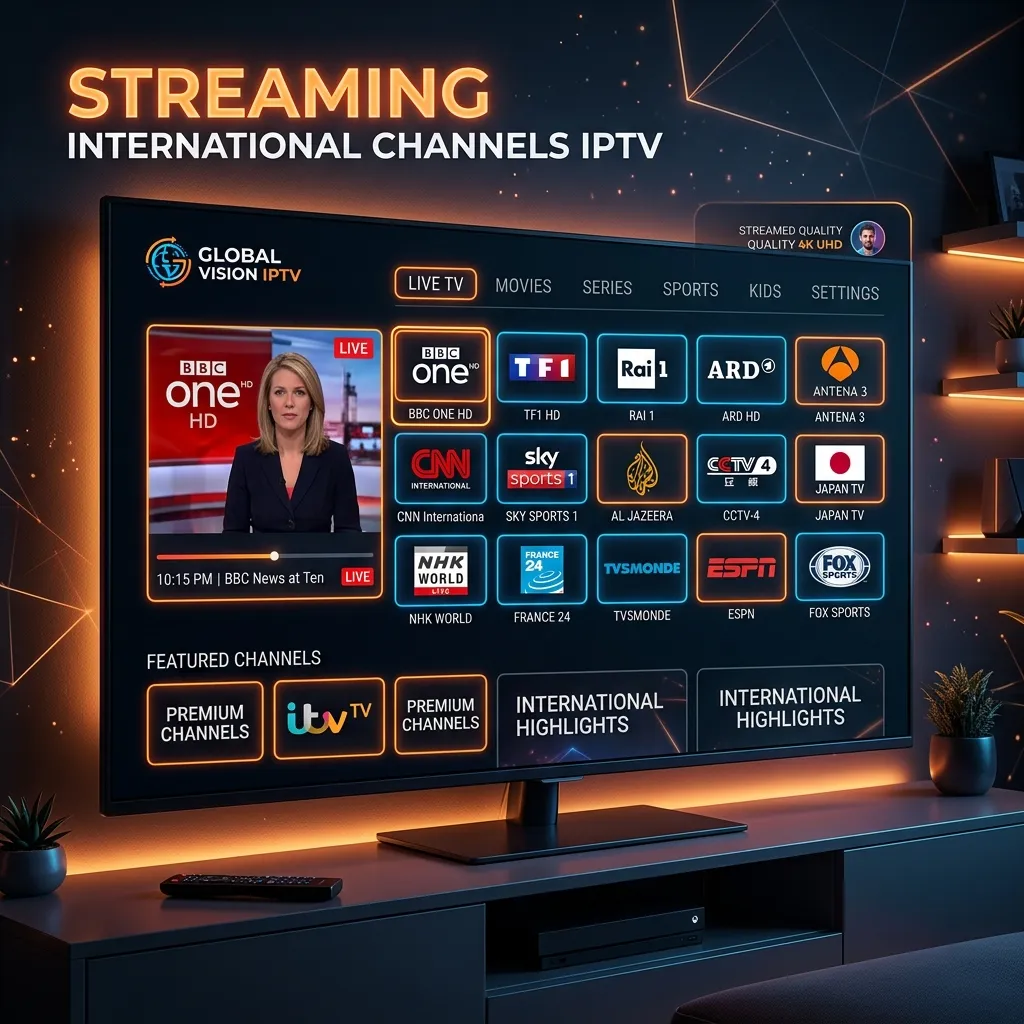
The landscape of home entertainment has undergone a massive, irreversible transformation in the past decade. Gone are the days when viewers were confined strictly to the limited programming offered by local terrestrial antennas, regional cable providers, or expensive, bulky satellite dish installations. We have entered the era of borderless broadcasting, a time when anyone, anywhere, can access a near-infinite library of global content directly from their living room. At the absolute forefront of this digital revolution is Internet Protocol Television, commonly known as IPTV.
Whether you are an expatriate longing for the familiar broadcasts of your home country, an avid language learner seeking authentic immersion, an enthusiast of niche international sports, or simply a voracious consumer of global entertainment, streaming international channels on IPTV represents the ultimate solution. Imagine waking up to live news broadcasts from Tokyo, spending your afternoon watching a gripping telenovela from Mexico, catching an evening Premier League match from London, and ending your night with a blockbuster movie from Mumbai—all seamlessly accessible from a single interface.
In this comprehensive, deep-dive guide, we will explore absolutely everything you need to know about streaming international channels on IPTV. We will dissect the underlying technology, compare it to traditional broadcast methods, highlight the features that separate top-tier services from the rest, provide a continental tour of available programming, offer expert device setup tutorials, and lay out the best practices for a flawless, buffer-free viewing experience. Welcome to the ultimate resource for global cord-cutters. For more information on premium global streaming, visit the Homepage.
The Evolution of Global Broadcasting: From Satellites to Streaming
To truly appreciate the power of IPTV in delivering international channels, we must first look back at the historical progression of global broadcasting. Understanding this evolution highlights precisely why IPTV has become the dominant paradigm for global media consumption today.
The Era of C-Band and Ku-Band Satellite Dishes
In the late 20th century, accessing international television meant installing massive C-band satellite dishes in your backyard. These enormous structures, often spanning several meters in diameter, were expensive to purchase, difficult to maintain, and highly susceptible to weather interference. Later, Ku-band technology introduced smaller, more manageable dishes (like those used by modern direct-to-home providers), but the fundamental limitation remained: satellite footprints. A satellite broadcasting European channels over Europe simply cannot be accessed by a dish in North America due to the curvature of the Earth and the directional nature of satellite signals.
The Reign of Cable Television
Cable television solved the issue of localized equipment by delivering programming through coaxial cables laid across cities. However, cable providers act as gatekeepers. They negotiate contracts with a select few international broadcasters, usually offering only a handful of generic "world" channels hidden behind expensive, premium-tier subscription packages. If your specific regional channel of choice isn't deemed profitable enough by the local cable company, you are simply out of luck.
The Internet Revolution and the Dawn of IPTV
The widespread adoption of high-speed, broadband internet fundamentally disrupted these traditional distribution models. Rather than relying on physical cables in the ground or signals beamed from space, broadcasters and service providers realized that video content could be digitized, compressed into data packets, and transmitted over the global internet architecture. This was the birth of Internet Protocol Television. Suddenly, geographic location became entirely irrelevant. As long as you had a sufficiently fast internet connection, you could pull video data from a server located anywhere on the planet.
[!NOTE] What exactly is IPTV? Instead of transmitting content via light pulses in fiber-optic cables or radio waves from a satellite, IPTV sends television programming through your internet connection using Transmission Control Protocol/Internet Protocol (TCP/IP). The content remains on the host network until requested by the user, making it highly efficient.
Why International Channels Matter More Than Ever
In an increasingly interconnected and globalized world, the demand for international television has skyrocketed. The typical viewer is no longer satisfied with strictly local programming. The appetite for global content is driven by several major factors.
1. The Global Diaspora and Expatriate Communities
Millions of people live, work, and study outside their country of origin. For expatriates, immigrants, and international students, staying connected to their homeland is a profound emotional necessity. Watching local news, morning talk shows, national sports, and familiar entertainment acts as a vital tether to their culture and families back home. Traditional cable rarely provides granular regional channels (for instance, specific state-level news stations in India, or provincial broadcasters in Canada), whereas an IPTV Subscription can provide exact matches to the channels viewers grew up watching.
2. Language Learning and Cultural Immersion
Linguists and educators uniformly agree that linguistic immersion is one of the most effective ways to acquire a new language. Textbooks and language apps can only take you so far; hearing native speakers converse at natural speeds, utilizing contemporary slang and idioms, is invaluable. IPTV allows a student of French to immerse themselves in Parisian talk shows, a student of Japanese to watch un-subtitled anime and news, and a student of Spanish to binge-watch daily telenovelas.
3. Niche Sports and Global Events
Sports broadcasting rights are incredibly localized and fragmented. If you live in the United States, finding live coverage of a cricket test match in Australia, a rugby tournament in South Africa, or a specific stage of a European cycling race can be practically impossible on standard networks. IPTV obliterates these barriers. Sports fans can access the native broadcast feeds from the host countries, complete with passionate local commentary and comprehensive pre-game and post-game analysis that international feeds usually omit.
4. Diverse and Premium Entertainment
The global dominance of Hollywood is shifting as audiences discover the incredible production value of international entertainment hubs. The "Hallyu" (Korean Wave) has popularized K-Dramas globally. British panel shows, gritty Scandinavian crime thrillers (Nordic Noir), and high-budget historical epics from Turkey have massive, dedicated international fanbases. IPTV provides direct access to the source networks airing these phenomena.
How IPTV Solves the International Broadcasting Gap
When attempting to watch international channels via traditional internet streams (such as visiting a foreign broadcaster's website), viewers almost immediately run into a frustrating roadblock: Geoblocking.
Overcoming Geoblocks and Regional Restrictions
Broadcasting rights are sold on a territorial basis. A network in the UK may hold the exclusive rights to broadcast a specific movie or sporting event within the UK. To enforce these contracts, broadcasters use IP tracking to block viewers accessing their streams from outside the permitted territory. This practice is known as geoblocking.
Premium IPTV services utilize complex networks of dedicated, localized servers to bypass these restrictions. Because the IPTV provider ingests the broadcast signal locally and then distributes it globally across their private, optimized server network, the end-user receives the stream without running into the broadcaster's front-end geoblocks.
The Advantage of Dedicated Content Delivery Networks (CDNs)
Streaming video live from across the planet introduces latency and buffering due to the sheer physical distance the data must travel (packet loss and high ping). Top-tier IPTV providers solve this by deploying Content Delivery Networks (CDNs). A CDN caches and routes the video data through local edge servers. Therefore, if you are in New York watching a channel broadcast from Dubai, you aren't pulling data directly from the Middle East. Instead, the IPTV service routes the stream from Dubai to a server in North America, and you stream from that local server, ensuring a smooth, buffer-free, high-definition experience.
Video Compression and Adaptive Bitrate Streaming
Delivering thousands of channels globally requires immense bandwidth. Modern IPTV relies on advanced video compression codecs, specifically H.264 (Advanced Video Coding) and increasingly H.265 (High-Efficiency Video Coding, or HEVC). HEVC allows broadcasters to deliver stunning 4K and Full HD resolution streams using half the bandwidth required by older formats. Additionally, Adaptive Bitrate Streaming (ABR) technology allows the IPTV player to dynamically adjust the quality of the video stream in real-time based on the viewer's current internet speed, preventing sudden buffering if the network experiences a temporary slowdown.
Key Features to Look for in an International IPTV Service
Not all IPTV providers are created equal. When your primary goal is streaming high-quality international channels, there are several critical features you must demand from your provider before committing.
1. Expansive, Well-Organized Channel Lists
The primary draw of an international IPTV service is sheer volume, but volume means nothing without organization. A premium service should offer tens of thousands of live channels, carefully categorized by country, language, and genre (News, Sports, Kids, Entertainment). You should be able to navigate to a specific country's folder and instantly find what you are looking for.
2. High Server Stability and Anti-Freeze Technology
International streaming is highly demanding on server infrastructure. Budget providers often oversell their server capacity, leading to disastrous buffering during peak viewing hours or major sporting events. Look for a provider that advertises "Anti-Freeze Technology" and guarantees a high uptime (typically 99.9%).
3. A Reliable Electronic Program Guide (EPG)
When watching international channels across multiple time zones, knowing what is currently airing and what is coming next is crucial. A robust EPG provides a traditional grid-style TV guide interface, localized to your specific time zone, making channel surfing and scheduling a breeze. A service without a functioning EPG will leave you blindly clicking through thousands of channels.
4. Catch-Up TV (Timeshift)
This is arguably the most important feature for an international viewer. Because of time zone differences, the prime-time show you want to watch in Australia might be airing at 3:00 AM in New York. Catch-Up TV is a server-side DVR feature where the IPTV provider automatically records and stores broadcasts for a rolling window (usually 48 to 72 hours). You can scroll back in the EPG and play a previously aired program on-demand, completely bypassing the constraints of time zones.
5. Multi-Language Video on Demand (VOD)
Alongside live TV, a top-tier IPTV service should feature a massive library of on-demand movies and TV series. For the international viewer, this VOD library must support multiple audio tracks and built-in, customizable subtitles in various languages.
6. Multi-Device Compatibility
You shouldn't be restricted to your living room. The best IPTV services provide M3U links, Xtream Codes API credentials, and dedicated applications that work across Smart TVs, Android boxes, smartphones, tablets, and computers.
To review a subscription that meets all these criteria, explore the Pricing plans available at Smartiflix.
Exploring Global Regions Through IPTV: A Continental Tour
To grasp the true scale of what an international IPTV subscription offers, let's take a virtual tour across the continents and highlight the kind of programming that becomes instantly available to you.
| Region | Highlighted Content & Networks | Why Viewers Stream It |
|---|---|---|
| United Kingdom & Ireland | BBC One/Two, ITV, Sky Sports, BT Sport, Channel 4 | World-class news, Premier League football, highly acclaimed British dramas, panel shows, and documentaries. |
| Western Europe | TF1, Canal+ (France), Rai 1 (Italy), ZDF (Germany), RTVE (Spain) | Access to La Liga, Serie A, Ligue 1, Eurovision events, regional cinema, and European news coverage. |
| North America | NBC, CBS, ABC, Fox, ESPN, TSN, CBC | NFL, NBA, NHL, MLB live sports, Hollywood network premieres, and dedicated 24/7 news cycles. |
| Latin America | Televisa, Univision, Globo, Fox Sports Sur | Extensive coverage of Copa Libertadores, massive telenovela networks, and regional cultural programming. |
| Asia & Subcontinent | Star Plus, Sony TV, Zee TV (India), NHK (Japan), KBS (Korea) | Bollywood premieres, live Cricket matches (IPL, ICC), K-Dramas, Anime, and localized regional languages. |
| Middle East & Africa | MBC Group, Al Jazeera, OSN, SuperSport (South Africa) | Arabic cinematic content, comprehensive African sports broadcasting, and regional news networks. |
The European Landscape
European television is incredibly diverse. With IPTV, a viewer can seamlessly switch from watching a highly produced BBC nature documentary to a live feed of the Tour de France on France Télévisions, and then catch the evening news on Germany's Das Erste. The demand for European sports, particularly top-flight football (soccer) leagues, drives massive international viewership.
The Americas: North and South
While North American content is globally ubiquitous, accessing live, unedited feeds of regional US and Canadian channels is highly desirable for expats and sports bettors. Moving south, Latin American television is a powerhouse of entertainment. The telenovela industry exports content worldwide, but many fans prefer to watch the original broadcasts in real-time. IPTV provides unfettered access to the vibrant broadcasting ecosystems of Mexico, Brazil, Argentina, and beyond.
The Asian and Pacific Markets
Asia represents a colossal segment of international streaming. The Indian broadcasting network alone encompasses hundreds of channels split across languages like Hindi, Tamil, Telugu, and Bengali. Whether it's catching a massive Bollywood premiere on Sony MAX or streaming a live Indian Premier League (IPL) cricket match, IPTV is essential. Further east, the soaring popularity of South Korean pop culture makes networks like tvN and SBS highly sought after, alongside Japan's extensive anime broadcasts and traditional programming on NHK.
The Middle East and Africa
For Arabic speakers, the MBC network provides world-class entertainment, while news junkies value direct access to regional broadcasts like Al Jazeera. In Africa, South Africa's SuperSport network is widely considered one of the best sports broadcasting platforms on the planet, offering exhaustive coverage of rugby, cricket, football, and athletics.
Setting Up Your Devices for Optimal International Streaming
Having access to thousands of global channels is only half the battle; ensuring your hardware is correctly configured is essential for a premium experience. IPTV is highly versatile and can be enjoyed on nearly any modern screen.
[!TIP] Wired Over Wireless: Whenever possible, connect your primary streaming device directly to your router using an Ethernet cable. Live international IPTV streaming requires a continuous, uninterrupted data flow. Wi-Fi signals are susceptible to interference from walls, microwaves, and neighboring networks, which can result in frustrating micro-stutters and buffering.
1. Smart TVs (Samsung, LG, Sony)
Modern Smart TVs are excellent devices for IPTV, eliminating the need for extra cables and remotes.
- Samsung (Tizen) and LG (WebOS): You can download dedicated IPTV player apps directly from their respective app stores. Popular choices include IBO Player, Flix IPTV, and Smart IPTV (SIPTV). Once installed, you simply upload your subscription playlist (usually via an M3U URL or Mac Address portal on the app's website).
- Sony / Android TVs: Because these run the Android TV operating system, they have access to the Google Play Store, giving you access to the best IPTV applications on the market, such as TiviMate and IPTV Smarters Pro.
2. Android TV Boxes and Nvidia Shield
Dedicated Android TV boxes are arguably the most powerful hardware for IPTV. The Nvidia Shield TV Pro, in particular, features advanced AI upscaling that can take a standard definition international broadcast and algorithmically upscale it to look fantastic on a 4K television. These devices offer snappy navigation, massive storage for VOD and Catch-Up recording, and superior Wi-Fi/Ethernet hardware compared to built-in TV processors.
3. Amazon Fire TV Stick
The Amazon Firestick is the undisputed king of budget-friendly, high-performance streaming. It is small, portable, and incredibly easy to modify for IPTV usage. Because Fire OS is based on Android, you can easily "sideload" applications that are not natively available in the Amazon Appstore. This allows you to install top-tier IPTV players directly onto the stick. For a comprehensive, step-by-step tutorial, check out our dedicated Firestick Setup guide.
4. Apple TV, iOS, and Mac
Apple users are not left out of the IPTV revolution. The Apple App Store features excellent, highly polished IPTV applications.
- Apple TV: Apps like iPlayTV and GSE Smart IPTV offer beautiful, Apple-native interfaces that integrate smoothly with the Apple TV remote.
- iOS (iPhone/iPad): Perfect for streaming international news on your commute or catching a game in bed. Smarters Player Lite is a highly recommended iOS choice.
- Mac/Windows PC: VLC Media Player remains the classic, reliable choice for playing M3U playlists on a computer, though dedicated apps like IPTV Smarters also offer desktop versions for a more TV-like interface.
If you are new to the world of IPTV and need help getting started on any device, our comprehensive Installation Guide covers everything from app selection to credential input.
Best Practices for a Flawless International Streaming Experience
Streaming video across oceans and continents requires a robust digital environment. To ensure your international channels load instantly and play without buffering, follow these crucial best practices.
1. Optimize Your Internet Connection
The golden rule of IPTV is that your stream is only as strong as your internet connection.
- Minimum Requirements: For standard definition (SD) international channels, a stable 10 Mbps connection is required. For High Definition (HD), you need a minimum of 15-25 Mbps. For ultra-crisp 4K content, 50 Mbps or higher is strongly recommended.
- Understand Ping and Jitter: It's not just about raw download speed. When streaming from international servers, "ping" (latency) and "jitter" (fluctuations in latency) are critical. A connection with high jitter will cause the stream to stutter, even if the total download speed is high. Using an Ethernet cable dramatically reduces jitter.
2. Configure Your Router Settings
Many modern routers feature Quality of Service (QoS) settings. By logging into your router's admin panel, you can prioritize traffic going to your specific streaming device (like your Smart TV or Firestick). This ensures that if someone else in your house starts downloading a massive file or gaming online, your IPTV stream will not be choked out of bandwidth. Furthermore, changing your router's default DNS servers to faster, public options like Google DNS (8.8.8.8) or Cloudflare (1.1.1.1) can improve routing speeds to international IPTV servers.
3. Utilize a Virtual Private Network (VPN)
When dealing with international IPTV streaming, a Virtual Private Network (VPN) is not just an optional luxury; it is often a necessity.
- Bypassing ISP Throttling: Many Internet Service Providers (ISPs) actively monitor user traffic. If they detect sustained, heavy video streaming data (especially from unknown international IPTV servers), they may intentionally slow down—or "throttle"—your connection, resulting in severe buffering. A VPN encrypts your traffic, hiding the nature of your data from your ISP and preventing throttling.
- Improving Routing: Sometimes, a VPN can actually improve your connection to a distant international server by providing a more direct, optimized routing path than your default ISP routing.
- Security and Privacy: Above all, a VPN ensures your digital footprint remains private and secure.
[!IMPORTANT]
Security should always be a top priority when streaming. For a deeper understanding of how to protect your network, devices, and personal data while utilizing IPTV services, read our extensive Security Guide.
Legal and Security Considerations for International IPTV
As the popularity of IPTV has surged, so too have questions regarding its legality and safety. It is critical to navigate this space with a clear understanding of the rules.
The Legality of the Technology
First and foremost: IPTV technology is 100% legal. The protocols used to stream video over the internet are the exact same protocols used by massive, legitimate corporations like Netflix, Hulu, YouTube, and traditional telecom providers who offer their own IP-based TV services. The hardware (Android boxes, Firesticks, Smart TVs) and the software (IPTV players like TiviMate or VLC) are completely legal to own, download, and utilize.
The Legality of the Content
The legal gray area arises solely from the content being streamed and the provider supplying it. A provider must possess the proper licensing and distribution rights to broadcast a channel in a given region. Because broadcasting rights are complex, archaic, and heavily siloed by traditional media conglomerates, many international channels are simply not legally available for distribution in certain countries, leading to the proliferation of unauthorized IPTV streams.
As a consumer, it is your responsibility to research and understand the copyright laws in your specific jurisdiction. In many Western nations, the legal penalty for copyright infringement focuses heavily on the distributors and hosts of unauthorized content, rather than the end-user streaming it in the privacy of their home. However, utilizing a VPN remains the best practice for maintaining your digital privacy regardless of the services you use.
Avoiding Scams and Malware
The massive demand for cheap international TV has flooded the market with thousands of fly-by-night, unverified IPTV "resellers." These shady operations often take payments via untraceable crypto, provide zero customer support, and vanish after a few months. Worse, some require you to install proprietary, infected applications on your devices that can compromise your network security.
Always choose established, reputable providers. Look for services that:
- Allow you to use standard, trusted, third-party apps (like TiviMate, Smarters, or IBO Player) rather than forcing you to download an unknown
.apkfile. - Provide clear, accessible customer support channels.
- Offer secure, standardized payment gateways rather than relying solely on sketchy, peer-to-peer transfers.
- Are transparent about their server uptime and refund policies.
Why Smartiflix is the Ultimate Choice for Global Content
Navigating the vast ocean of IPTV providers can be daunting. If you are seeking the absolute pinnacle of international streaming, Smartiflix is engineered to be your final destination.
We understand that an international viewer demands reliability, exceptional variety, and pristine quality. Here is why Smartiflix stands head and shoulders above the competition when it comes to global broadcasting:
- Unrivaled Global Roster: Our meticulously curated channel list spans the globe. From the Americas to Europe, Asia to Africa, we provide access to the premium networks, localized news stations, and niche sports channels you desire.
- Next-Generation Server Infrastructure: We don't oversell our capacity. Smartiflix operates on an advanced network of premium servers equipped with state-of-the-art Anti-Freeze technology. This ensures 99.9% uptime, rapid channel zapping, and buffer-free 4K/HD streaming, even during high-traffic international sporting events.
- Comprehensive Catch-Up and VOD: Time zones will never dictate your viewing schedule again. Our extensive Catch-Up feature lets you rewind live TV, while our colossal Video on Demand library is constantly updated with the latest international cinema, television series, and multilingual subtitles.
- Seamless EPG Integration: Our Electronic Program Guide is highly accurate and dynamically updates to your local time zone, making browsing international schedules effortless.
- Dedicated 24/7 Support: We pride ourselves on customer service. Whether you need help setting up an obscure device or have questions about your subscription, our team is available around the clock.
Ready to revolutionize your home entertainment and unlock the world? Check out our IPTV Subscription packages and find the perfect Pricing plan to suit your needs today.
Frequently Asked Questions (FAQs)
Do I need a satellite dish to watch international channels on IPTV?
Absolutely not. The entire premise of IPTV is that it delivers television programming exclusively through your internet connection. You do not need a satellite dish, an antenna, or any physical cabling from a traditional telecom provider. All you need is a smart device and a broadband internet connection.
How much internet speed is really necessary for international IPTV?
While many providers claim you can scrape by with 5-10 Mbps, the reality of streaming live, uncompressed video from overseas servers dictates higher requirements for a flawless experience. We recommend a highly stable 20-25 Mbps for 1080p HD streaming, and a consistent 50+ Mbps if you intend to stream 4K UHD content or if you have multiple devices connected to your network simultaneously.
Can I watch an IPTV subscription on multiple TVs in my house?
Yes, but this depends entirely on the specific plan you purchase from your provider. Most basic IPTV subscriptions allow for one active connection at a time. If you try to stream on the living room TV and the bedroom TV simultaneously using a single-connection account, one or both streams will block or buffer continuously. Premium providers offer multi-connection packages for a slightly higher fee, allowing simultaneous streaming across different devices and IP addresses.
Why do some international channels buffer more than local ones?
Buffering on specific international channels usually comes down to server routing and the physical distance the data must travel (latency). If an IPTV provider's source feed for a particular channel in a distant country is weak, or if the routing path from that country's server to your home is congested, buffering occurs. This is why utilizing a VPN and changing your DNS settings can often resolve localized buffering issues. Furthermore, premium providers invest in localized CDNs to mitigate this exact problem.
Will IPTV work when I am traveling internationally?
Yes! One of the greatest benefits of IPTV is its complete lack of geographical hardware binding. If you take your Amazon Firestick, laptop, or iPad with you on vacation, you can connect to the hotel Wi-Fi and access your full home subscription exactly as you would in your living room, no matter what country you are currently visiting. (Note: Using a VPN is highly recommended on public hotel Wi-Fi networks).
What is an M3U link and Xtream Codes API?
These are the two primary methods IPTV providers use to deliver their service to your player application. An M3U link is a very long, unique URL that acts as a digital playlist. When you paste it into an IPTV app, it downloads the entire channel list and server connections. Xtream Codes API is a more modern, user-friendly login method that simply requires a Host URL, a Username, and a Password. Most modern IPTV applications support both formats.
Conclusion: The World at Your Fingertips
The barriers that once segregated global media have completely collapsed. We no longer live in a world where your television programming is dictated by the physical cables running down your street or the footprint of a satellite hovering in orbit. Internet Protocol Television has democratized broadcasting, placing the entire globe's media output squarely at your fingertips.
Streaming international channels on IPTV is not just about entertainment; it is about connection. It is the ability to bridge geographical divides, immerse yourself in foreign cultures, maintain ties with your homeland, and experience global events precisely as the locals do. By choosing the right hardware, optimizing your home network, prioritizing security, and partnering with a premium, reliable service provider like Smartiflix, you can build a home theater experience that truly knows no borders.
The future of television is global, digital, and entirely on-demand. Embrace the revolution, cut the cord, and start exploring the world.
For the best premium, stable, and comprehensive global IPTV experience, explore the Homepage.