IPTV vs Satellite TV: The Best Choice for Cord-Cutters
Explore IPTV vs Satellite TV to find the best option for cord-cutters. Analyze costs, quality, and flexibility to make an informed streaming choice.
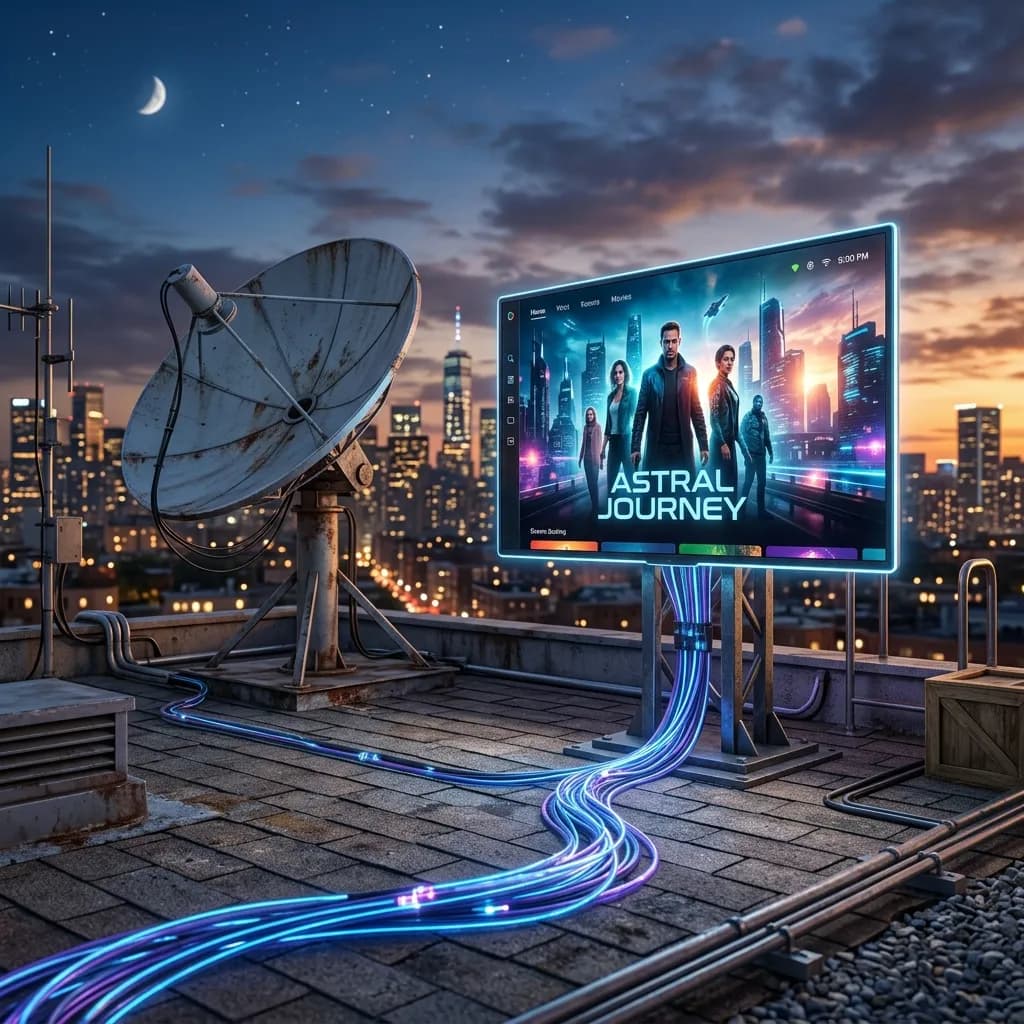
The landscape of home entertainment has undergone a dramatic, permanent transformation over the last decade. For years, consumers were locked into a rigid paradigm: you either signed up for an expensive cable subscription, or you opted for a satellite television provider to beam programming directly to a dish strapped to your roof. Both options required long-term commitments, invasive installations, and subjected viewers to ever-increasing monthly bills packed with hidden fees. However, the dawn of the high-speed internet era has ushered in a revolution known as "cord-cutting." Millions of viewers around the globe are enthusiastically severing their ties with traditional broadcasting monopolies in favor of digital streaming solutions. At the absolute forefront of this mass migration is Internet Protocol Television (IPTV), a technology that delivers massive libraries of live and on-demand content over the internet.
But for those who have relied on satellite television for their entire lives, the transition can seem daunting. Satellite TV has a long, storied history of providing access to hundreds of channels, particularly in rural or remote areas where traditional cable infrastructure never reached. It has been the gold standard for premium sports packages, international programming, and robust, dedicated broadcasting. As cord-cutting becomes less of a niche trend and more of a global standard, consumers are increasingly asking themselves a critical question: Is making the switch to IPTV genuinely worth it, or does traditional satellite television still hold a competitive edge in today's saturated media market?
This exhaustive guide is designed to dissect, analyze, and compare every single facet of IPTV and Satellite TV. We will dive deep into the underlying technologies that power both platforms, meticulously compare the short-term and long-term costs associated with each, evaluate the diversity of their content libraries, and assess their respective reliability in the face of environmental challenges. Whether you are a tech-savvy early adopter looking to optimize your home theater setup, or a frustrated consumer tired of paying exorbitant satellite bills for channels you never watch, this comprehensive comparison will provide you with the definitive answers you need to make an informed, confident decision.
Understanding the Contenders: A Technological Breakdown
Before we can accurately declare a winner in the battle for your living room, it is essential to fundamentally understand how both IPTV and Satellite TV operate on a technical level. The methods by which these two platforms encode, transmit, and deliver audio and video data to your television screen could not be more different, and these fundamental architectural differences directly influence everything from picture quality to monthly subscription costs.
What is Satellite TV? The Traditional Broadcasting Giant
Satellite television is a marvel of 20th-century telecommunications engineering. The process begins at a massive broadcasting center on Earth, where television networks compile their programming and beam it up into space using enormous, powerful uplink antennas. These signals travel approximately 22,236 miles (35,786 kilometers) to reach communication satellites positioned in geostationary orbit. Because these satellites orbit the Earth at the exact same rotational speed as the planet itself, they appear to remain completely stationary in the sky, allowing satellite dishes on Earth to lock onto them permanently without needing to continuously track their movement.
Once the satellite receives the uplinked signal, it uses onboard transponders to amplify the data and broadcast it back down to Earth over a massive geographical footprint. This is where your home setup comes into play. A parabolic satellite dish, typically mounted on your roof, balcony, or a dedicated pole in your yard, captures these high-frequency microwave signals. The curved shape of the dish serves a specific purpose: it reflects and concentrates the incoming signals onto a small component suspended in front of the dish called a Low Noise Block downconverter (LNB). The LNB takes these high-frequency signals, amplifies them, and converts them into a lower frequency that can be transmitted through a standard coaxial cable.
This cable runs through the walls of your home and connects directly into a proprietary set-top box or satellite receiver. The receiver acts as the final gatekeeper; it decrypts the signal using a smart card authorized by your subscription provider, decompresses the video and audio data (usually utilizing MPEG-4 or HEVC standards), and formats it for display on your television screen.
The Golden Era of Satellite Dish Television For decades, this technology was revolutionary. It completely eliminated the geographical limitations of terrestrial antennas and coaxial cable networks. If you lived in a remote cabin in the woods or a rural farming community miles away from the nearest city, satellite TV guaranteed you access to hundreds of channels in crystal-clear digital quality. Providers built massive empires by offering exclusive sports packages, premium movie channels, and extensive international programming. However, the infrastructure required to maintain this system—launching multi-million dollar satellites into space, maintaining global uplink centers, and dispatching fleets of technicians to install hardware on millions of homes—results in massive overhead costs that are ultimately passed down to the consumer.
What is IPTV? The Future of Television Delivery
If satellite television represents the peak of dedicated broadcast engineering, IPTV (Internet Protocol Television) represents the limitless potential of modern digital networking. Instead of relying on a dedicated, closed infrastructure of space-based transponders and localized satellite dishes, IPTV leverages the exact same packet-switched network infrastructure that powers the global internet. When you stream a YouTube video, send an email, or browse a website, data is broken down into tiny packets, routed through various servers across the globe, and reassembled on your device. IPTV uses this identical mechanism to deliver live television channels, movies, and TV shows directly to your screen.
When you subscribe to a premium IPTV Subscription, the provider captures live television feeds from various sources worldwide. These raw video feeds are immediately digitized and heavily compressed using advanced video codecs like H.264, H.265 (HEVC), or AV1. The compressed data is then packaged into internet protocols, commonly using formats like HTTP Live Streaming (HLS), MPEG-DASH, or Real-Time Messaging Protocol (RTMP).
Unlike satellite TV, which operates on a "multicast" broadcast model—meaning it blasts every single channel down to Earth simultaneously regardless of whether anyone is watching them—IPTV generally operates on a "unicast" model. In a unicast system, the content is only transmitted to your specific device when you actively request it. When you click on a channel in your IPTV app, your device sends a request to the provider's server, and the server opens a dedicated, individualized data stream specifically for you. To ensure that this data arrives quickly and without buffering, premium IPTV providers utilize massive, globally distributed Content Delivery Networks (CDNs). These CDNs cache data on servers located as close to the end-user as possible, drastically reducing latency and ensuring smooth playback even during peak internet traffic hours.
The Shift to Internet-Based Viewing Because IPTV completely bypasses the need for proprietary broadcasting infrastructure, it is inherently infinitely scalable. There are no limits dictated by transponder bandwidth or satellite footprints. If an IPTV provider wants to add 5,000 new channels from across Europe, Asia, and the Americas, they simply add the streams to their servers and update the digital playlist. Furthermore, because IPTV relies purely on software applications rather than hardware decoders, it can be accessed on virtually any smart device—from your living room smart TV and Amazon Firestick to your smartphone, tablet, or laptop. This incredible flexibility has made it the undisputed champion of the cord-cutting movement.
The Ultimate Showdown: IPTV vs Satellite TV
Now that we understand the technological foundations of both platforms, it is time to pit them against each other in a head-to-head comparison. We will evaluate these services across the most critical metrics that matter to modern consumers: cost, content variety, picture quality, reliability, installation complexity, and security.
1. Cost Comparison and True Value for Money
When discussing cord-cutting, the conversation almost inevitably begins with financial savings. Traditional television models have become notorious for their exploitative pricing structures, and this is arguably the single most significant factor driving viewers toward IPTV.
The Hidden Costs of Satellite TV On the surface, satellite television providers often advertise seemingly attractive promotional rates—perhaps $60 or $70 a month. However, these introductory rates are almost always a mirage designed to lock consumers into rigid, legally binding two-year contracts. Once the promotional period expires (usually after the first 12 months), the monthly base price often doubles. But the base price is just the tip of the iceberg.
Satellite TV bills are notoriously padded with an array of hidden fees and surcharges. Consumers are routinely charged "Broadcast TV Fees" simply for accessing local network channels, and "Regional Sports Fees" to subsidize the exorbitant costs of local sports broadcasting rights. Furthermore, satellite providers charge monthly leasing fees for the hardware required to use their service. You do not own the satellite dish or the set-top boxes in your home; you rent them. If you want a receiver in your living room, your bedroom, and your guest room, you will pay an additional monthly "Advanced Receiver Fee" or "Multi-Room Viewing Fee" for each individual box. Add in potential installation fees, activation fees, and DVR service fees, and that advertised $60 package quickly balloons into a monthly commitment of $130, $150, or even $200. If you attempt to cancel the service before your two-year contract is up, you will be hit with aggressive Early Termination Fees (ETFs) that can cost hundreds of dollars.
The Transparent, Flexible Model of IPTV In stark contrast, IPTV operates on a model of absolute transparency and consumer flexibility. When you explore the Pricing for a premium IPTV service, what you see is exactly what you pay. There are no broadcast surcharges, no regional sports fees, and absolutely no hardware leasing fees. Because IPTV is delivered via software applications, you can use devices you already own—such as an Amazon Firestick, an Apple TV, an Android TV box, or even your computer.
More importantly, IPTV services completely eschew the concept of long-term contracts. Subscriptions are typically offered on a month-to-month, quarterly, bi-annual, or annual basis. If you decide you no longer want the service, you simply stop paying for it. There are no cancellation fees, no returning of rented equipment, and no aggressive retention departments to negotiate with. When evaluating the annual cost, the difference is staggering. A premium satellite subscription can easily cost a household between $1,500 and $2,400 a year. A comprehensive IPTV subscription, offering significantly more content, typically ranges between $60 and $150 for an entire year of uninterrupted service. For budget-conscious cord-cutters, the financial argument alone is often enough to settle the debate entirely.
"The transition from traditional satellite broadcasting to internet protocol television isn't just a technological upgrade; it is a profound reclamation of consumer purchasing power, eliminating decades of monopolistic pricing structures in a single stroke."
2. Content Variety, Customization, and On-Demand Libraries
Television is ultimately about content, and the way these two platforms package and deliver media is fundamentally different.
The Rigid Bundles of Satellite TV Satellite television providers operate on a tiered package model. To gain access to a specific channel you actually want to watch—perhaps a niche documentary network or a specific premium sports channel—you are forced to upgrade to a higher-tier package that includes 50 other channels you have absolutely no interest in. This "take it or leave it" bundling strategy is incredibly frustrating for consumers who feel they are subsidizing channels they never view.
Furthermore, satellite TV is heavily restricted by regional licensing agreements and satellite footprints. If you live in North America, your satellite dish is pointing at a North American satellite, meaning your access to international content is severely limited. While some providers offer international add-on packages, they are incredibly expensive and typically only offer a handful of networks from specific regions.
The Infinite Scalability of IPTV IPTV, unbound by the physical limitations of transponder bandwidth, offers a truly staggering variety of content. A standard IPTV subscription routinely includes upwards of 10,000 to 20,000 live television channels spanning the entire globe. Whether you want to watch local news from a small town in the Midwest, premium cinema channels from the UK, anime broadcasts from Japan, or live sports from the Middle East, IPTV delivers it all in a single, unified interface.
But live television is only half of the equation. Modern IPTV services are effectively massive media hubs that include extensive Video on Demand (VOD) libraries. Unlike satellite TV, where you must set a DVR to record a movie at a specific time, an IPTV subscription grants you instant access to tens of thousands of movies, complete television series, and documentaries on demand, mimicking the functionality of giants like Netflix or Hulu. Additionally, most premium IPTV providers include Pay-Per-View (PPV) events—such as major boxing matches, UFC fights, and professional wrestling events—completely free of charge, whereas a satellite provider would charge upwards of $80 for a single evening's event.
3. Picture Quality, Audio Fidelity, and Bandwidth
The battle for picture quality is one of the most hotly debated topics among home theater enthusiasts. Both platforms have their distinct advantages and technological limitations.
Broadcast Compression vs Internet Streaming Satellite television benefits from a dedicated, closed network. Because the signal is broadcast linearly without competing with other internet traffic, satellite providers can guarantee a consistent bitrate. Major satellite providers generally offer excellent 1080i and 1080p high-definition broadcasts, and the audio is typically delivered in crisp, uncompressed Dolby Digital 5.1 surround sound. Some providers have begun offering limited 4K live broadcasts, particularly for major sporting events, but these channels are exceptionally rare due to the massive amount of satellite bandwidth required to transmit 4K data.
IPTV's picture quality is directly tied to the power of modern video codecs and the speed of your home internet connection. Because IPTV must transmit massive amounts of data over the public internet, the video feeds must be heavily compressed. However, modern IPTV providers utilize state-of-the-art H.265 (HEVC) compression algorithms, which are significantly more efficient than the older MPEG-4 standards used by many satellite systems. This allows IPTV to deliver stunning 1080p and even 4K UHD streams that consume half the bandwidth of older formats.
If you have a robust, high-speed internet connection (ideally fiber-optic or high-speed cable), a premium IPTV service can deliver a picture quality that rivals or even exceeds satellite television, complete with HDR (High Dynamic Range) colors and Dolby Atmos audio on supported VOD files. However, if your internet connection is slow, unstable, or heavily throttled by your ISP, your IPTV stream will suffer from aggressive downscaling, artifacting, and the dreaded "buffering" wheel. In short: Satellite guarantees a consistent, good picture regardless of your internet, while IPTV has the potential for a vastly superior picture, provided your home network is up to the task.
4. Reliability, Weather Interference, and Uptime
No television service is perfect, and both IPTV and satellite platforms face unique environmental and infrastructural challenges that can interrupt your viewing experience.
The Dreaded "Rain Fade" The Achilles' heel of satellite television is environmental interference, commonly referred to in the industry as "rain fade." Because satellite signals must travel over 22,000 miles through the Earth's atmosphere, they are highly susceptible to absorption and scattering by atmospheric moisture. Heavy rainstorms, dense thunderstorms, and particularly thick snow accumulation on the surface of the dish itself will severely degrade or completely block the incoming microwave signals. When a severe storm rolls in—often precisely when you want to stay indoors and watch television—satellite TV is prone to frustrating digital pixelation, audio dropouts, and total signal loss. Furthermore, physical obstructions like growing trees or new building construction can block the dish's precise line of sight to the southern sky, requiring a technician to relocate the entire setup.
ISP Dependency and Network Congestion IPTV is entirely immune to local weather conditions. A massive blizzard could bury your house in snow, and as long as your internet connection remains active, your IPTV streams will continue to play flawlessly in crystal-clear 4K. However, IPTV trades weather dependency for ISP dependency. Your viewing experience is entirely at the mercy of your internet service provider.
During peak internet usage hours (typically between 7:00 PM and 11:00 PM), local network nodes can become congested, leading to temporary drops in bandwidth. Furthermore, some aggressive ISPs actively throttle (intentionally slow down) continuous video streaming traffic to manage network load. If the routing between your home and the IPTV provider's server experiences packet loss, your stream will buffer. To mitigate this, many users employ Virtual Private Networks (VPNs) to encrypt their traffic and bypass ISP throttling, ensuring a stable connection. Ultimately, the reliability of IPTV is directly proportional to the quality of your home internet connection and the robustness of your Wi-Fi router.
5. Hardware, Setup, and Portability
The convenience factor cannot be overstated. The process of getting these two services up and running in your home highlights the stark contrast between antiquated hardware and modern software.
Professional Installation vs DIY Setup Acquiring satellite television is an invasive, time-consuming process. It requires scheduling a professional installation, taking time off work to wait for a technician within a vague four-hour window, and allowing a stranger to drill holes into the exterior of your home, route cables through your walls, and permanently mount a highly visible parabolic dish to your roof. For renters, or individuals living in communities with strict Homeowner Association (HOA) regulations, installing a satellite dish is often strictly prohibited, making the service entirely inaccessible.
IPTV is the ultimate plug-and-play solution. There are no technicians, no drilling, and no proprietary hardware required. The entire process takes less than ten minutes. You simply purchase a subscription, follow a comprehensive Installation Guide, download an application like TiviMate, Smarters Pro, or XCIPTV onto your preferred device, enter your digital credentials, and immediately begin watching television. If you need help configuring specific hardware, dedicated tutorials like our Firestick Setup guide make the process foolproof, even for individuals with minimal technical expertise.
Unprecedented Portability Satellite television is geographically locked. Your service is tethered to the dish mounted on your roof. If you go on vacation, travel for business, or move to a new house, you leave your television service behind.
IPTV, conversely, offers unprecedented portability. Because the service is tied to a digital account rather than a physical location, it travels with you. You can unplug your Amazon Firestick, toss it into your luggage, and plug it into the television of your hotel room halfway across the world. As long as the hotel has Wi-Fi, you have instant access to your entire library of live channels, custom playlists, and on-demand movies. You can even install the IPTV application on your smartphone and watch live sports on your commute to work. This multi-device, multi-location flexibility makes IPTV the clear winner for individuals with active, mobile lifestyles.
6. Legal, Privacy, and Security Considerations
When transitioning away from mainstream broadcasting providers, security and privacy become important topics of discussion that responsible cord-cutters must navigate.
Navigating the Digital Landscape Satellite television operates within a highly regulated, thoroughly licensed environment. When you pay a major satellite corporation, you are operating within a completely traditional, legally ironclad consumer framework. Your data is managed by large telecommunications companies (with all the targeted advertising and data harvesting that entails), but the delivery of the content itself is entirely above board.
The IPTV landscape is significantly more varied. While the technology of IPTV itself is completely legal and utilized by major corporations (services like Sling TV, YouTube TV, and Hulu + Live TV are technically IPTV services), the broader third-party IPTV market requires consumers to exercise a degree of due diligence. When selecting an independent IPTV provider, it is crucial to prioritize security, data privacy, and robust infrastructure.
Smart cord-cutters take their digital privacy seriously. It is highly recommended to pair your IPTV service with a high-quality Virtual Private Network (VPN). A VPN creates a secure, encrypted tunnel between your device and the internet. This prevents your Internet Service Provider from monitoring your streaming habits, protects you from targeted bandwidth throttling, and secures your data from malicious actors on public Wi-Fi networks when traveling. For a deep dive into protecting your home network and ensuring a secure streaming environment, we highly recommend reading our comprehensive Security Guide.
Comprehensive Feature Comparison Matrix
To summarize the granular details we have discussed, here is a direct, point-by-point comparison matrix highlighting the core differences between the two platforms:
| Feature / Metric | IPTV (Internet Protocol Television) | Satellite Television |
|---|---|---|
| Delivery Method | Internet connection (Packet-switched) | Parabolic dish and microwave signals |
| Monthly Cost | Extremely low ($10 - $20/month avg) | Very high ($80 - $150+/month avg) |
| Contracts | None (Month-to-month flexibility) | Strict 1-to-2 year binding contracts |
| Hardware Required | Smart TV, Firestick, PC, or Smartphone | Exterior Dish, LNB, Coaxial cables, proprietary Set-Top Boxes |
| Installation | Instant, DIY, plug-and-play | Requires professional technician and structural drilling |
| Content Volume | 10,000+ Global Channels & massive VOD | 150 - 300 Region-locked channels |
| Weather Dependency | Immune to local weather (Rain/Snow) | Highly susceptible to "Rain Fade" and storms |
| Internet Dependency | Requires high-speed, stable internet | Zero internet required for live broadcast |
| Portability | Usable anywhere worldwide with Wi-Fi | Locked to the physical installation site |
| Hidden Fees | None | Broadcast fees, receiver fees, regional sports fees, DVR fees |
Pros and Cons Breakdown
Still on the fence? Let's distill the argument down to the absolute core advantages and disadvantages of each service.
Satellite TV
Pros:
- Does not require an internet connection, making it ideal for extremely remote, off-grid locations where broadband is unavailable.
- Offers a highly consistent, stable bitrate that does not fluctuate based on local network traffic or household bandwidth usage.
- Provides high-quality, uncompressed 5.1 surround sound audio directly from the broadcast feed.
- Operates within a familiar, traditional set-top box environment with highly polished proprietary user interfaces.
Cons:
- Exorbitantly expensive, with bills that reliably increase year over year.
- Traps consumers in long-term contracts with predatory early termination fees.
- Susceptible to complete signal loss during heavy rainstorms, blizzards, or solar flares.
- Extremely limited channel selection locked entirely to your specific geographic region.
- Requires invasive hardware installation that may violate rental agreements or HOA guidelines.
IPTV
Pros:
- Incredible financial savings, often reducing yearly television expenses by over 85%.
- Unmatched content libraries, offering tens of thousands of global channels, PPV events, and massive on-demand movie databases.
- Absolute freedom from contracts, credit checks, and hardware leasing fees.
- Ultimate portability; watch your content on virtually any screen, anywhere in the world.
- Instant, self-guided setup with no technicians, drilling, or proprietary hardware required.
Cons:
- Entirely reliant on a robust, high-speed internet connection to function properly.
- Susceptible to stream buffering if your ISP aggressively throttles video data or if your home Wi-Fi network is heavily congested.
- Navigating the vast market of providers requires initial research to find reliable, high-quality servers.
- May require the additional setup of a VPN to guarantee optimal privacy and bypass aggressive ISP routing algorithms.
The Environmental Impact: An Overlooked Factor
As consumers become increasingly conscious of their environmental footprint, the sustainability of home technology is worth considering. Satellite television infrastructure is incredibly resource-intensive. The manufacturing, launching, and maintenance of geostationary satellites require massive amounts of rocket fuel and contribute significantly to the growing crisis of space debris in Earth's orbit. Furthermore, the millions of proprietary satellite dishes and set-top boxes manufactured each year quickly become obsolete e-waste, filling up landfills with non-recyclable plastics and heavy metals when consumers switch providers or upgrade hardware.
IPTV, by contrast, operates almost entirely in the cloud. While massive server farms and CDNs certainly consume electricity, they are highly optimized and increasingly powered by renewable energy sources. More importantly, IPTV drastically reduces household e-waste. Because the service is software-based, it runs on the smart devices, televisions, and smartphones that consumers already own and use daily. There is no need to manufacture, ship, and eventually discard dedicated satellite receivers, massive metal dishes, and miles of copper coaxial cabling. Switching to digital streaming is a small, but meaningful, step toward a more sustainable digital lifestyle.
How to Make the Switch to IPTV Today
If you have read through this comprehensive analysis and decided that the financial savings, infinite content, and hardware flexibility of IPTV make it the superior choice for your household, transitioning is incredibly simple.
- Verify Your Internet Speed: Ensure you have a stable broadband connection. For smooth 1080p and 4K streaming, a consistent downstream speed of at least 25 Mbps to 50 Mbps is recommended.
- Choose Your Hardware: The Amazon Fire TV Stick 4K Max or the NVIDIA Shield TV Pro are widely considered the absolute best devices for IPTV due to their powerful processors and excellent Wi-Fi antennas.
- Select a Premium Provider: Navigate to our Homepage to explore the finest, most reliable IPTV servers on the market. We pride ourselves on offering 99.9% uptime, anti-freeze technology, and exhaustive channel rosters.
- Download a Player App: Install an IPTV management application like TiviMate or IPTV Smarters Pro on your device. These apps provide a beautiful, cable-like Electronic Program Guide (EPG) interface.
- Connect Your Subscription: Input your M3U link or Xtream Codes API credentials provided upon purchase, and watch as tens of thousands of channels populate your screen instantly.
Conclusion: The Final Verdict for Modern Viewers
When evaluating the battle between IPTV and Satellite TV, the conclusion is overwhelmingly clear for the vast majority of modern consumers. While satellite television undeniably paved the way for global media distribution and remains a viable option for those living in deeply remote, off-grid locations without access to broadband internet, its business model and hardware limitations are fundamentally antiquated. The rigid contracts, hidden fees, invasive installations, and weather vulnerabilities make it a dinosaur in the digital age.
IPTV represents the democratization of media. It strips away the massive overhead costs of corporate broadcasting monopolies and passes those savings directly to the consumer. It transforms any screen in your house—or in your pocket—into a global media hub capable of pulling down massive libraries of live sports, international news, and premium cinema at a moment's notice. For cord-cutters looking to maximize their entertainment budget, customize their viewing experience, and break free from the restrictive chains of traditional television providers, IPTV is not just the better option; it is the absolute future of home entertainment.
Frequently Asked Questions (FAQs)
1. Do I need a smart TV to use IPTV? No, a smart TV is not strictly required. While many modern smart TVs (particularly those running Android TV, LG's webOS, or Samsung's Tizen) have IPTV applications available directly in their app stores, you can easily use an older "dumb" television. All you need to do is plug an inexpensive streaming dongle, such as an Amazon Firestick, Roku, or Apple TV, into an available HDMI port on your television. The streaming device will connect to your Wi-Fi and host the IPTV software perfectly.
2. Is it difficult to cancel my satellite TV contract to switch to IPTV? Canceling satellite TV can sometimes be a frustrating process, as providers employ retention specialists trained to convince you to stay. Be prepared to stand your ground and firmly state that you are terminating the service. Be aware that if you are currently under a binding one or two-year contract, the satellite company may charge an Early Termination Fee (ETF). However, because IPTV is so incredibly inexpensive, the money you save in your first few months of cord-cutting will often entirely offset the cost of the ETF.
3. Will IPTV buffer more than satellite TV glitches during a storm? This depends entirely on your home internet setup. Satellite TV is guaranteed to fail during heavy thunderstorms or blizzards due to physical microwave interference. IPTV is immune to weather, but it requires a strong Wi-Fi signal. If you have a high-speed fiber-optic connection and a modern mesh Wi-Fi router, you will experience zero buffering, even in 4K. If your router is old or your internet plan is exceptionally slow, you may experience occasional buffering during peak evening hours. We recommend hardwiring your streaming device via an Ethernet cable for the absolute best, buffer-free performance.
4. Can I watch local news channels on IPTV? Yes, absolutely. One of the greatest misconceptions about cord-cutting is that you lose access to local programming. Premium IPTV subscriptions include exhaustive regional categories. You will not only have access to major national networks (ABC, NBC, CBS, FOX), but also the specific local affiliate feeds for almost every major city and region, allowing you to stay completely up to date with your localized weather, traffic, and community news.
5. How many devices can I use my IPTV subscription on simultaneously? This depends on the specific plan you purchase from your provider. Most base IPTV subscriptions come with 1 or 2 "concurrent connections," meaning you can watch on one or two devices at the exact same time (for example, the living room TV and a tablet in the bedroom). If you have a large family and need to stream on 4 or 5 televisions simultaneously, you can simply upgrade your package or purchase additional connections from your provider for a small nominal fee.
6. Do I still need to pay for Netflix or Amazon Prime if I have IPTV? This is a personal preference, but many users find that they no longer need secondary streaming subscriptions. Premium IPTV services include massive Video on Demand (VOD) libraries that are updated daily. These libraries often contain the exact same exclusive movies, documentaries, and hit television series found on platforms like Netflix, Hulu, Disney+, and HBO Max. By consolidating your entertainment into a single IPTV application, you can cancel multiple redundant subscriptions and save even more money every month.