IPTV vs Cable TV: Cost, Performance, and Flexibility Explained
Explore IPTV vs Cable TV in our detailed guide. Learn about cost, performance, and why IPTV is revolutionizing the way we watch television.
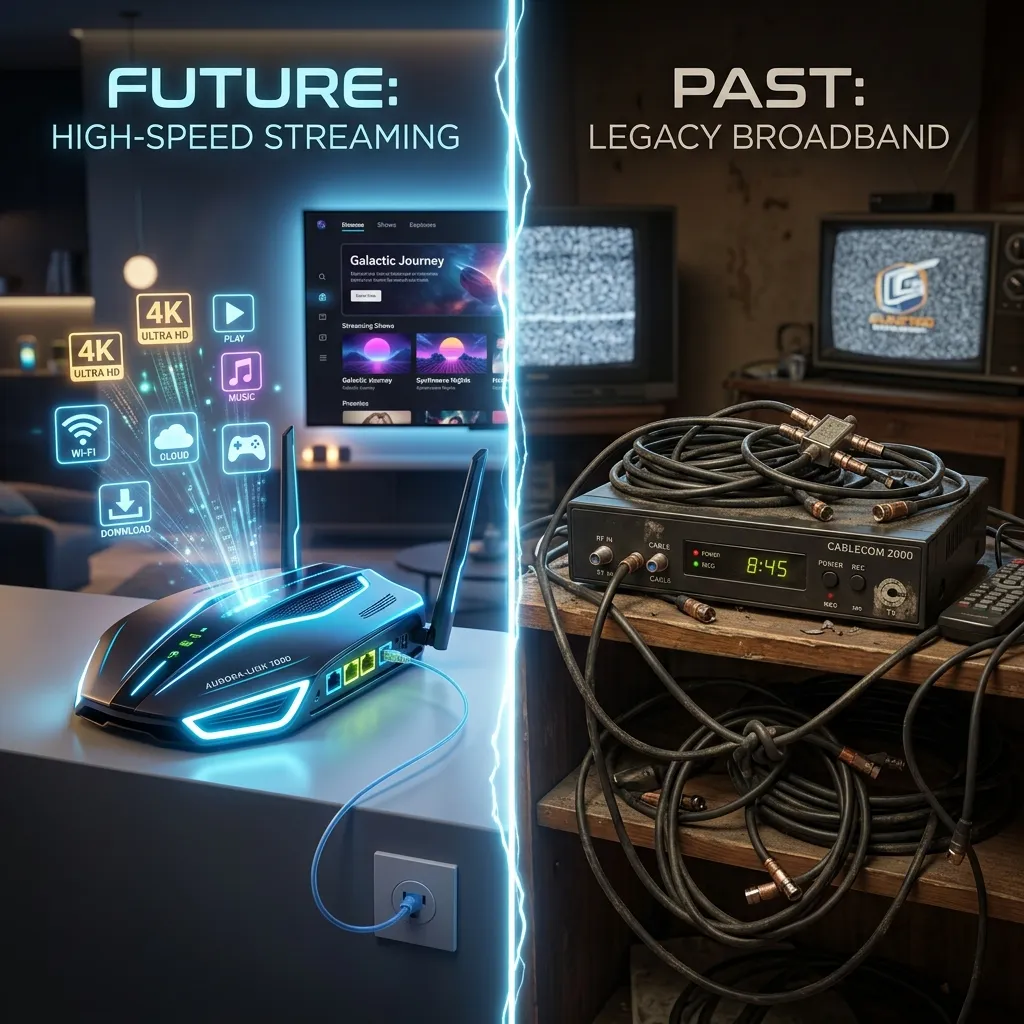
The entertainment landscape has experienced a seismic shift over the last decade. As technology advances and internet speeds become faster and more reliable globally, the traditional methods of consuming media are being challenged. At the center of this revolution is the ongoing battle between two primary broadcasting models: traditional Cable Television and Internet Protocol Television (IPTV). If you are reading this, you are likely contemplating joining the millions of viewers who have already "cut the cord," or you simply want to understand the profound differences in cost, performance, and flexibility between these two dominant forces in the media industry.
This comprehensive guide serves as the ultimate cost and performance comparison between IPTV and Cable TV. We will dive deep into the underlying technologies that power these services, analyze the financial implications of each, evaluate the quality and reliability of the streams, and discuss the hardware required to set them up. By the end of this exhaustive analysis, you will be equipped with all the knowledge you need to make an informed decision about the future of your home entertainment system.
Welcome to the ultimate showdown: IPTV vs. Cable TV. Whether you are looking for local news, international sports, or an expansive library of on-demand movies, understanding how these two services stack up against one another is critical to optimizing both your entertainment experience and your monthly budget.
The Evolution of Television: From Antennas to the Internet
To truly appreciate the differences between IPTV and Cable TV, it is essential to understand how television broadcasting has evolved.
The Era of Antennas and Broadcast TV
In the early days of television, content was delivered via radio frequency (RF) signals transmitted through the air from terrestrial broadcasting towers to antennas mounted on rooftops or placed atop television sets. This analog broadcast system, while revolutionary at the time, was highly susceptible to geographical barriers, weather interference, and signal degradation. Viewers were limited to a handful of local channels, and the picture quality was notoriously inconsistent.
The Rise of Cable Television
Cable television emerged in the mid-20th century, initially as a solution to bring broadcast signals to remote or mountainous areas where over-the-air reception was poor. By transmitting signals through coaxial cables rather than through the air, cable companies could deliver a much clearer, more reliable picture. Over the decades, cable infrastructure expanded massively. Cable operators began adding non-broadcast channels—networks specifically created for cable distribution, such as MTV, CNN, and HBO. This marked the golden age of cable TV, establishing an oligopoly of massive telecommunications companies that controlled the infrastructure, the programming, and the pricing.
The Digital and Internet Revolution
As the internet transitioned from dial-up to broadband, the potential for transmitting large amounts of data over internet protocols became a reality. The transition from analog to digital cable improved picture quality and increased channel capacity, but it was the advent of high-speed internet that paved the way for a true alternative. Internet Protocol Television (IPTV) was born out of the capability to packetize video content and deliver it via the internet, bypassing traditional terrestrial, satellite, and cable formats entirely.
Understanding the Core Competitors
Before we delve into the granular comparisons of cost and performance, we must define what Cable TV and IPTV actually are from a technical and operational standpoint.
What is Cable TV? The Legacy Giant
Cable television is a system of delivering television programming to consumers via radio frequency (RF) signals transmitted through coaxial cables, or in more modern systems, light pulses through fiber-optic cables.
When you subscribe to a cable service, the provider sends all available channels down the cable simultaneously. Your television or the provided set-top box acts as a tuner, filtering out the specific frequency of the channel you want to watch. This broadcast architecture is highly efficient for delivering the exact same content to millions of homes at once (a one-to-many model). However, it requires a massive, expensive physical infrastructure of cables running under streets and hanging from utility poles, reaching directly into your living room.
Because the infrastructure requires significant capital investment and maintenance, local markets are typically dominated by one or two major cable providers. This lack of competition historically led to rigid pricing structures, unavoidable equipment rental fees, and bloated channel packages where consumers pay for hundreds of channels they never watch.
What is IPTV? The Future of Broadcasting
IPTV stands for Internet Protocol Television. Instead of delivering content via traditional satellite signals or traditional cable formats, IPTV delivers television content over Internet Protocol (IP) networks. This is the same technology that allows you to browse the web, send emails, and make VoIP phone calls.
The architecture of IPTV is fundamentally different from cable. Instead of blasting all channels to your home simultaneously, IPTV uses a two-way, highly interactive network. When you select a channel or an on-demand movie, your device sends a request to the IPTV provider's server. The server then streams only that specific content to your device via unicast (one-to-one) or multicast (one-to-many, but specifically routed) transmission.
Because it relies on existing internet infrastructure, IPTV providers do not need to lay their own physical cables to your house. This dramatically reduces overhead costs and eliminates regional monopolies. You can access an IPTV Subscription from anywhere in the world, as long as you have a stable internet connection.
Key Takeaway: Cable TV pushes all channels to your house at once through dedicated proprietary cables. IPTV pulls only the specific content you request through your existing internet connection.
The Ultimate Cost Comparison: Where Does Your Money Go?
For the vast majority of consumers, the decision to cut the cord and switch to IPTV comes down to one primary factor: Cost. The financial disparity between traditional cable packages and modern IPTV subscriptions is staggering when examined closely.
The Hidden Costs of Traditional Cable
Cable television is notorious for its opaque pricing structures and hidden fees. When you see a promotion for a "$50/month" cable package, that is rarely the amount you will actually pay. Here is a breakdown of the typical costs associated with a traditional cable subscription:
- The Base Package Price: This is the advertised rate for a bundle of channels. To get the channels you actually want (like premium sports or movie networks), you are often forced into higher-tier, expensive packages.
- Broadcast TV Fees: A controversial fee charged by cable providers to cover the costs they pay to local network affiliates (ABC, NBC, CBS, FOX). This fee has skyrocketed in recent years and is almost never included in the advertised price.
- Regional Sports Fees: Similar to the Broadcast TV Fee, this is an unavoidable surcharge applied if your package includes any regional sports networks, regardless of whether you actually watch sports.
- Equipment Rental Fees: Cable companies typically charge a monthly rental fee for each set-top box in your home. If you have three televisions, you might be paying $10-$15 per month, per box. Over a year, this adds hundreds of dollars to your bill for hardware that you will never own.
- DVR Service Fees: Want to pause live TV or record a show? That is an extra monthly fee for the DVR service, and often a higher rental fee for the DVR-capable box.
- Taxes and Regulatory Fees: Local and state taxes, FCC regulatory fees, and franchise fees add another layer of cost to the final bill.
- Contract Commitments and Price Hikes: Most cable promotions require a 12-to-24-month contract. Once the promotional period ends, the base price often doubles, leading to bill shock and frustrating renegotiation calls.
When factoring in all these additional costs, the average monthly cable bill in the United States and parts of Europe easily exceeds $100 to $150 per month, totaling $1,200 to $1,800 annually.
The Transparent, Flat-Rate Model of IPTV
In stark contrast, IPTV operates on a modern, transparent subscription model. Because IPTV providers utilize the open internet for distribution and avoid the massive overhead of maintaining physical neighborhood networks, they can pass extraordinary savings onto the consumer.
Here is how IPTV pricing generally works:
- Flat Subscription Fee: IPTV services typically offer a single, comprehensive package or a very small number of tiers. You pay a flat rate—often monthly, quarterly, or annually.
- No Hidden Fees: With a reputable IPTV provider, the price you see is the price you pay. There are no surprise "Broadcast TV Fees," no regional sports surcharges, and no arbitrary regulatory fees added to your bill.
- No Equipment Rentals: IPTV applications run on hardware you likely already own—Smart TVs, Amazon Firesticks, Apple TVs, or even your smartphone. There is no need to rent a proprietary set-top box.
- No Long-Term Contracts: The vast majority of IPTV services operate on a prepaid, month-to-month or term-based model without binding contracts or early termination fees. You are free to cancel or change services at any time.
When comparing the raw numbers, a premium IPTV service might cost anywhere from $10 to $20 per month. Even when combined with the cost of a high-speed internet connection (which you likely need and pay for anyway), the savings are monumental. You can review transparent Pricing plans to see exactly how much you can save compared to your current cable bill. Over the course of a year, an IPTV user can save upwards of $1,000 without sacrificing content.
Performance and Technology: Coaxial vs. Internet Protocol
While cost is a massive driver for the transition to IPTV, performance and picture quality are equally critical. You do not want to save money if it means watching pixelated, buffering sports broadcasts. Let's compare the technological performance of both ecosystems.
Bandwidth and Resolution: 4K UHD vs HD
Cable TV Performance: Cable television relies on the QAM (Quadrature Amplitude Modulation) standard to pack multiple channels into specific frequency bands. Because cable companies have to transmit hundreds of channels simultaneously through the same coaxial cable, bandwidth is inherently limited. To fit everything in, cable providers heavily compress the video signals.
As a result, the vast majority of traditional cable broadcasts are still transmitted in 720p or 1080i resolution. True 1080p broadcast over traditional cable is rare, and 4K UHD channels are virtually non-existent, except for a few isolated special events or specific premium channels that require highly specialized equipment. The heavy compression also leads to "macroblocking" (pixelation during fast-moving scenes, heavily noticeable in sports).
IPTV Performance: IPTV does not have the same "simultaneous broadcast" bandwidth constraints. Because you are only streaming the one specific channel you request, all of your available internet bandwidth can be dedicated to that single video stream.
Modern IPTV utilizes advanced video codecs like H.264 and H.265 (HEVC), which offer incredibly efficient compression without sacrificing quality. As long as your internet connection is robust (typically 25 Mbps or higher is recommended for premium streaming), IPTV can effortlessly deliver true 1080p FHD at 60 frames per second (fps), and an increasing number of channels and on-demand movies in breathtaking 4K UHD. The picture quality is generally sharper, colors are more vibrant, and fast-motion artifacts are significantly reduced.
Reliability, Weather, and Infrastructure
Cable Reliability: Cable TV is generally highly reliable. Because the network is a closed system managed end-to-end by the provider, they have tight control over the signal quality. However, cable infrastructure is physical. Fallen trees, traffic accidents involving utility poles, and severe localized weather can take down cable lines, causing massive neighborhood-wide outages that require physical repair crews.
IPTV Reliability: IPTV relies entirely on the stability of your internet connection. If your internet goes down, your TV goes down. However, internet infrastructure is increasingly robust, with fiber-optic networks providing near 99.9% uptime in many areas.
One historical critique of IPTV was "buffering." In the early days, internet speeds struggled to keep up with live high-definition video. Today, with the proliferation of high-speed broadband, 5G, and advanced Content Delivery Networks (CDNs), buffering is largely a thing of the past—provided you use a reputable service and have adequate home Wi-Fi.
Pro Tip: For the best IPTV performance, it is always recommended to connect your streaming device directly to your router using an Ethernet cable rather than relying on Wi-Fi, as this eliminates wireless interference and packet loss.
Hardware and Setup Requirements
The physical footprint of your entertainment system changes drastically when moving from Cable TV to IPTV.
Bulky Cable Boxes vs. Sleek Smart Devices
The Cable Setup: Cable companies require you to use their proprietary set-top boxes. These devices are often bulky, consume significant standby power, and require an unsightly web of coaxial cables and power cords behind your television. If you want cable on three different TVs in your house, you need three separate cable boxes, three separate coaxial wall outlets, and three separate monthly rental fees. The user interface on these legacy boxes is often sluggish, dated, and difficult to navigate.
The IPTV Setup: IPTV represents a minimalist dream. The service operates via software applications that can be installed on a wide array of consumer electronics that you likely already possess. You can watch IPTV on:
- Smart TVs: Samsung (Tizen), LG (WebOS), and Android TVs have native IPTV apps available in their respective app stores.
- Streaming Sticks: Amazon Fire TV Stick, Google Chromecast with Google TV, and Roku.
- Set-Top Streaming Boxes: Apple TV, Nvidia Shield, and various Android TV boxes.
- Mobile Devices: Smartphones and tablets (iOS and Android).
- Computers: Windows and Mac via web players or dedicated software.
Setting up IPTV is incredibly straightforward. It usually involves downloading an app, entering your subscription credentials or an M3U playlist URL, and you are ready to watch. There are no installation appointments required. You can follow our comprehensive Installation Guide or specifically check out our optimized Firestick Setup tutorial to see just how easy it is to get started within minutes.
Furthermore, if you want IPTV on every TV in your home, you simply download the app on each respective device. There is no need to run coaxial cables through the walls of your house.
Content Library, Flexibility, and On-Demand Access
The way we consume media has shifted. We no longer want to organize our lives around a TV guide schedule; we want content available exactly when we demand it.
The Death of Appointment Television
Cable Constraints: Cable TV is linear. If a movie starts at 8:00 PM, you must be in front of your television at 8:00 PM to watch it, unless you remember to program your DVR in advance. While traditional cable providers have attempted to introduce Video on Demand (VOD) services, their libraries are often heavily restricted, clunky to navigate, and charge exorbitant pay-per-view fees for new releases.
IPTV Flexibility: IPTV bridges the gap between traditional live television and the modern "Netflix-style" streaming experience. A premium IPTV subscription provides access to thousands of live channels, but it also heavily features massive, integrated Video on Demand (VOD) libraries. This means you have instant access to tens of thousands of movies and entire box-sets of TV series, ready to play at the click of a button, generally included in the base subscription price.
Additionally, many IPTV services offer a "Catch-Up" feature. This technology automatically records and stores broadcasts from popular channels for a rolling period (e.g., 3 to 7 days). If you missed the big game or a season finale yesterday, you can simply navigate back in the Electronic Program Guide (EPG) and watch it as if it were live, completely eliminating the need to manually schedule DVR recordings.
International Channels and Niche Content
Cable providers are severely limited by their local infrastructure and broadcasting agreements. Your channel lineup is heavily curated based on your geographical region. If you are an expatriate wanting to watch news from your home country, or a die-hard sports fan looking to follow a niche international soccer league, cable TV will almost certainly leave you disappointed.
IPTV transcends geographical borders. Because the content is delivered via the internet, a single IPTV subscription can offer channels from the USA, UK, Canada, Latin America, Europe, Asia, and the Middle East, all in one centralized interface. This global reach makes IPTV the undisputed champion for international viewers and dedicated sports fans looking to bypass local blackout restrictions.
Security, Legality, and User Privacy
A common question that arises when discussing the transition to internet-based streaming is: Is it safe?
Cable Security
Cable TV operates on a closed, encrypted network. From a security standpoint, it is incredibly safe. It is very difficult for a third party to intercept your cable signal or extract personal data through your cable box.
IPTV Security
Because IPTV utilizes the public internet, it falls under the same security paradigms as any other online activity. The safety and legality of IPTV depend entirely on the provider you choose.
There are thousands of legitimate, highly secure IPTV services. However, the internet is also home to unverified, unencrypted, and potentially unsafe providers. When utilizing IPTV, it is highly recommended to:
- Choose a Reputable Provider: Look for services with strong reviews, secure payment gateways, and transparent privacy policies.
- Use a VPN: A Virtual Private Network (VPN) encrypts your internet traffic, preventing your ISP from throttling your streaming speeds and protecting your data from potential interception.
- Avoid Sketchy Applications: Only download IPTV applications from official app stores (like Google Play, Amazon Appstore, or Apple App Store) or directly from verified provider websites.
For a deep dive into protecting your privacy and ensuring your streaming setup is bulletproof, read our dedicated Security Guide.
IPTV vs Cable TV: The Pros and Cons Breakdown
To summarize this extensive comparison, let's look at a clear, structured breakdown of the advantages and disadvantages of both ecosystems.
| Feature / Category | Traditional Cable TV | Internet Protocol Television (IPTV) |
|---|---|---|
| Monthly Cost | Very High ($100 - $150+ / month) | Very Low ($10 - $20 / month) |
| Hidden Fees | Yes (Broadcast fees, taxes, rentals) | No (Transparent, flat-rate pricing) |
| Hardware Required | Proprietary rented set-top boxes | Smart TVs, Firesticks, Apple TV, Phones |
| Contracts | Usually requires 1-2 year binding contracts | Month-to-month, prepaid, cancel anytime |
| Picture Quality | Mostly 720p/1080i (Highly compressed) | Up to 1080p FHD and 4K UHD |
| Channel Variety | Limited to regional and national networks | Global access to thousands of channels |
| Video On Demand | Limited, often expensive PPV | Massive, integrated libraries included |
| Installation | Requires technician visit & physical wires | Instant setup via app download |
| Internet Required | No | Yes (High-speed broadband recommended) |
Cable TV Pros and Cons
Pros:
- Does not utilize your internet bandwidth.
- Highly reliable, closed-loop network.
- Familiar, traditional TV experience for older demographics.
Cons:
- Exorbitant pricing with continuous, unpredictable rate hikes.
- Hidden fees and expensive hardware rental charges.
- Binding long-term contracts.
- Inferior picture quality due to bandwidth limitations.
- Clunky hardware and outdated user interfaces.
IPTV Pros and Cons
Pros:
- Massive financial savings compared to traditional cable.
- Unparalleled access to global content, sports, and VOD.
- Superior picture quality (1080p and 4K capability).
- Use hardware you already own (Smart TVs, Firesticks).
- Maximum flexibility: No contracts, cancel anytime, watch anywhere.
Cons:
- Requires a stable, high-speed internet connection.
- Can be subject to buffering if your home Wi-Fi network is poor.
- The landscape can be confusing due to the sheer volume of providers.
Conclusion: The Final Verdict on IPTV vs Cable TV
The debate between IPTV and Cable TV ultimately boils down to a clash between legacy infrastructure and modern internet technology. Cable TV represents an outdated model that relies on monopolistic control over physical neighborhood wiring, resulting in bloated prices, hidden fees, and rigid contracts. It served us well for decades, but its technological limitations are becoming increasingly apparent in a 4K, on-demand world.
IPTV represents the democratization of media. By leveraging the open internet, it strips away the overhead costs of physical infrastructure and hardware rentals, passing immense financial savings and unparalleled content variety directly to the consumer. It offers better picture quality, greater flexibility, and access to a truly global library of live and on-demand entertainment.
If you have a reliable high-speed internet connection, the choice is clear. The era of overpaying for hundreds of channels you never watch and renting clunky boxes from a cable giant is over. Cutting the cord and transitioning to an IPTV subscription is not just a financially sound decision; it is a massive upgrade to your overall home entertainment experience.
Are you ready to take control of your TV viewing, slash your monthly bills, and unlock a world of endless entertainment? Explore the Smartiflix homepage, review our transparent plans, and join the cord-cutting revolution today. The future of television is here, and it streams over the internet.