Protect Your Privacy Streaming IPTV in 2026: Essential Tips
Unlock the secrets to safeguarding your privacy while streaming IPTV in 2026. Learn essential tips on VPNs, secure payments, and device safety.
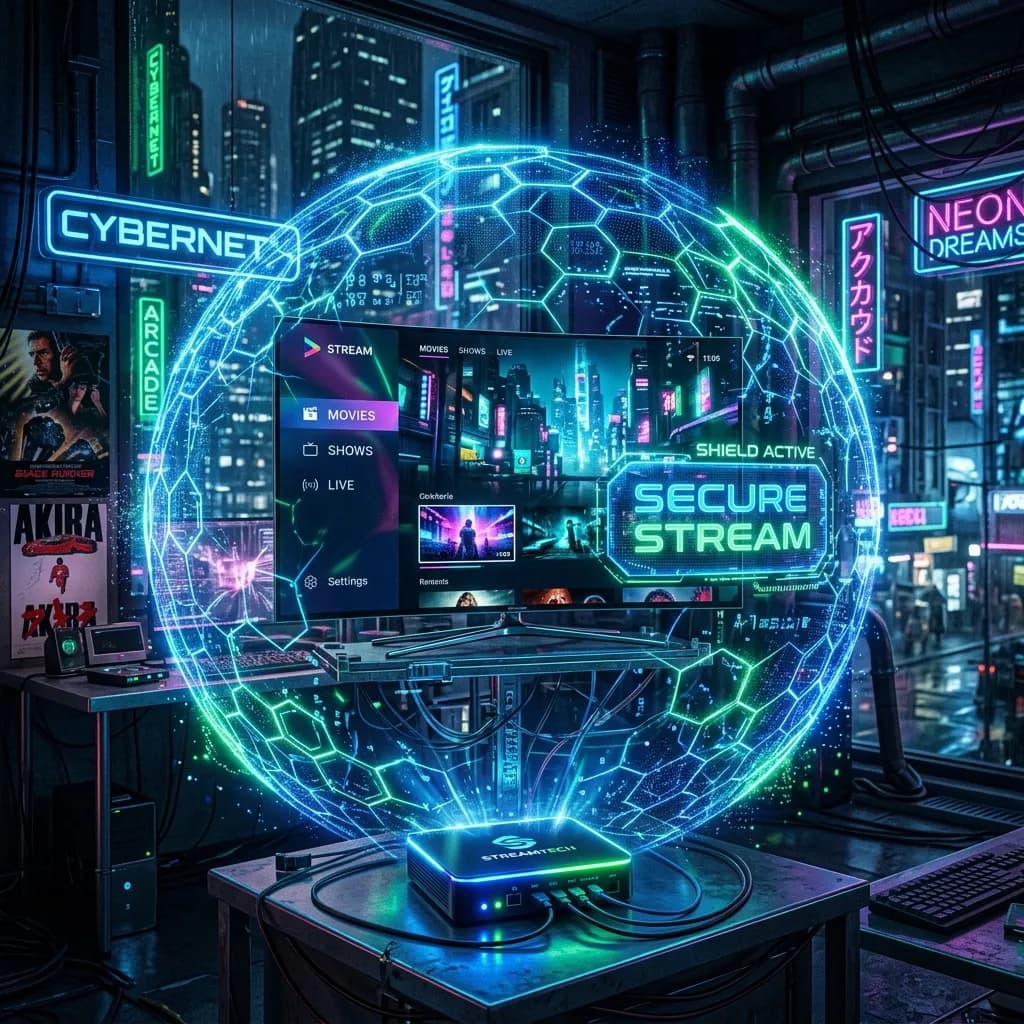
The world of digital entertainment has evolved rapidly, and by 2026, Internet Protocol Television (IPTV) has solidified its position as the premier method for consuming media. From live sports and international news to the latest blockbuster movies and binge-worthy TV series, IPTV offers unparalleled convenience and variety. However, as the technology has advanced, so too have the risks associated with digital privacy.
When you connect to an IPTV service, you are transmitting data across the internet. Without the proper precautions, this data can be intercepted, monitored, or logged by various third parties, including Internet Service Providers (ISPs), government agencies, marketers, and cybercriminals. In an era where digital footprints are constantly scrutinized, learning how to protect your privacy while streaming IPTV is no longer optional—it is an absolute necessity.
At Smartiflix, we believe that everyone deserves a secure, private, and unrestricted viewing experience. In this comprehensive, massive guide, we will explore the multifaceted landscape of IPTV privacy in 2026. We will delve deeply into the risks of unprotected streaming, the critical role of Virtual Private Networks (VPNs), how to secure your hardware, safe payment methods, advanced network-level privacy techniques, and much more. Whether you are a casual viewer or a dedicated cord-cutter, this guide will provide you with the exact knowledge and tools you need to stream safely, anonymously, and with complete peace of mind.
1. Understanding the Deep Risks of Unprotected IPTV Streaming
Before you can effectively protect your privacy, you must first understand the severe threats that exist in the digital ecosystem today. Streaming IPTV without adequate protection exposes you to a myriad of risks that can compromise your personal data, degrade your viewing experience, and even lead to legal complications.
The Threat of ISP Throttling and Monitoring
Your Internet Service Provider (ISP) acts as your gateway to the internet. Because absolutely all your network traffic flows through their servers, they possess the inherent ability to monitor your online activities. This includes the websites you visit, the files you download, and the specific content you stream.
In many jurisdictions worldwide, ISPs are legally permitted to log this data and even sell it to third-party advertisers for profit. Furthermore, if your ISP detects that you are consuming massive amounts of bandwidth for streaming—particularly if they cannot identify the source or if they suspect you are using a high-bandwidth, unauthorized IPTV service—they may deliberately slow down your connection. This highly frustrating practice, known as bandwidth throttling, results in endless buffering screens, poor video quality, and a generally miserable user experience.
Aggressive Data Harvesting by Third Parties
Many free or unverified IPTV applications and services are not as benevolent as they seem on the surface. In exchange for offering "free" access to premium content, these platforms often embed aggressive tracking codes, telemetry, and analytics software deep into their apps. These trackers silently harvest a wealth of your personal information in the background, including:
- Your exact IP address
- Your precise geographical location data
- Your specific viewing habits and content preferences
- Unique device identifiers (MAC addresses, advertising IDs)
- Network interaction logs
This data is then aggregated and sold to specialized data brokers or advertising networks. By using these free services unprotected, you are fundamentally violating your own digital privacy.
"If an IPTV service is entirely free, you are not the customer; you are the product. Your data is the valuable currency paying for your entertainment." — Cybersecurity Adage
The Danger of Malware, Spyware, and Malicious Apps
The broader IPTV landscape is unfortunately fraught with malicious applications cleverly disguised as legitimate streaming players. Downloading an APK (Android Package Kit) from an obscure, untrusted source can inadvertently introduce severe malware, ransomware, or spyware directly onto your device.
Once installed, this malicious software can operate invisibly in the background, stealing highly sensitive information such as login credentials, bank details, and personal photos. In some cases, your device could be hijacked and forced to participate in a larger botnet, performing DDoS attacks without your knowledge.
To ensure your devices remain completely uncompromised, it is highly recommended to read our comprehensive Security Guide to learn precisely how to identify and avoid dangerous applications in the wild.
Navigating Legal Repercussions and Copyright Trolls
While the underlying technology of IPTV is completely legal, the legality of specific content streams varies by country and depends largely on copyright laws. Copyright enforcement agencies and their associated legal teams—often referred to as "copyright trolls"—are increasingly aggressive in 2026.
These entities actively monitor IP addresses that connect to known unauthorized streams or peer-to-peer (P2P) streaming networks. If your raw, unprotected IP address is logged by these agencies, your ISP may be legally compelled to forward you a cease-and-desist warning letter. In more severe cases, they may hand over your real-world identity to copyright holders, leading to potential exorbitant fines, service termination, or serious legal action.
2. The Indispensable Role of VPNs in IPTV Security
If there is one absolute necessity for protecting your privacy while streaming IPTV in 2026, it is a Virtual Private Network (VPN). A VPN is a mandatory, indispensable tool that creates a highly secure, heavily encrypted tunnel between your streaming device and the wider internet. This effectively shields your online activities from all prying eyes.
How a Modern VPN Protects You
When you connect to a VPN server, two absolutely critical security actions occur simultaneously:
- Military-Grade Encryption: All data transmitted to and from your device is encrypted using advanced cryptographic protocols (such as AES-256 bit encryption, the same standard used by governments and militaries). This means that even if your ISP, a malicious hacker on public Wi-Fi, or a government agency intercepts your data packets, they will only see a scrambled, entirely indecipherable mess of code. They absolutely cannot see what video you are streaming, which IPTV provider you are communicating with, or what files you are downloading.
- Total IP Address Masking: Your real IP address—the unique digital fingerprint that identifies your exact physical location and the specific device you are using—is instantly replaced by the IP address of the remote VPN server. This makes you virtually anonymous online, preventing websites, streaming services, targeted advertisers, and copyright trolls from tracking your true identity and location.
Essential VPN Features to Demand for IPTV in 2026
The VPN market is saturated, and unfortunately, not all VPNs are created equal. The immense demands of high-definition streaming (especially 4K and emerging 8K streams) require a robust, premium service. When selecting a VPN specifically for IPTV, you must demand the following features:
| Essential VPN Feature | Why It Is Crucial for IPTV Streaming |
|---|---|
| Blazing Fast Speeds | Video streaming requires significant, continuous bandwidth. A slow or congested VPN will cause constant buffering. Look for providers supporting the highly efficient WireGuard protocol. |
| Strict, Audited No-Logs Policy | The VPN provider must explicitly guarantee (and verify via third-party audits) that they do not record your browsing history, connection timestamps, DNS requests, or IP addresses. |
| Vast Global Server Network | A large global server network allows you to reliably bypass geographical restrictions (geo-blocks) and quickly find uncongested servers for optimal streaming performance. |
| Network Kill Switch | If the VPN connection drops unexpectedly (even for a microsecond), the kill switch instantly severs your internet connection entirely, preventing your real IP address from leaking to your ISP. |
| Robust DNS Leak Protection | This ensures that your highly revealing DNS requests (which explicitly show the website domains you visit) are securely routed entirely through the encrypted VPN tunnel, never leaking back to your ISP. |
| Obfuscated Servers (Stealth Mode) | Obfuscation actively hides the fact that you are using a VPN protocol at all, making your traffic look like standard HTTPS web traffic. This is incredibly useful in countries with strict internet censorship or against ISPs that actively attempt to block or throttle VPN traffic. |
A Deep Dive into VPN Protocols
To truly optimize your privacy and streaming performance, you must understand the underlying VPN protocols:
- WireGuard: The undisputed champion in 2026. It is a modern, lightweight protocol that offers incredibly fast speeds (perfect for 4K streaming) and state-of-the-art cryptography. It connects almost instantly and is highly efficient on mobile and low-power devices like streaming sticks.
- OpenVPN (UDP/TCP): The long-standing industry standard. OpenVPN is open-source, highly secure, and incredibly thoroughly audited. For IPTV streaming, OpenVPN UDP is preferred over TCP because it prioritizes speed over absolute data packet verification, reducing buffering.
- IKEv2/IPsec: Excellent for mobile devices because it excels at quickly reconnecting when switching networks (e.g., from home Wi-Fi to cellular data). However, for stationary home streaming setups, WireGuard remains superior.
Setting Up a VPN for Maximum Effectiveness
Setting up a VPN is easier than ever in 2026. Most reputable providers offer polished, dedicated applications for a massive range of devices, including Windows PCs, macOS, Android smartphones, iOS devices, and specifically, smart TVs and streaming sticks.
If you require assistance configuring your device for maximum privacy, be sure to check out our highly detailed Installation Guide. It comprehensively covers step-by-step instructions for getting your specific streaming setup running completely securely.
3. Choosing the Right Hardware and Software for Safe Streaming
Your overall privacy is only exactly as strong as the single weakest link in your digital chain. Even if you utilize a premium, top-tier VPN, using compromised hardware or fundamentally insecure software applications can hopelessly expose your sensitive data. In 2026, selecting the right tools is paramount to your digital safety.
Evaluating Secure Streaming Devices
When it comes to IPTV, the physical device you use matters immensely. Some devices are inherently more secure, receive regular security updates, and offer far better privacy controls than others.
- Amazon Fire TV Stick 4K / 4K Max: The Firestick remains undeniably one of the most popular devices globally for IPTV. This is largely due to its extreme affordability and the incredible ease with which users can sideload third-party APKs. However, out of the box, Amazon's proprietary Fire OS includes extensive built-in telemetry, usage tracking, and targeted advertising. To maximize your privacy on this device, users must dive deep into the settings and manually disable targeted advertising, device usage data collection, and app data collection. For a complete, step-by-step guide on locking down and securing this device, refer immediately to our Firestick Setup tutorial.
- NVIDIA Shield TV (Pro): Widely considered by enthusiasts as the absolute gold standard for Android TV devices, the NVIDIA Shield offers immense processing power (crucial for fast VPN encryption) and incredibly robust security features. It runs on a much cleaner, far less bloated version of Android TV, giving users significantly more granular control over individual app permissions, background processes, and data sharing.
- Apple TV 4K: Apple as a corporation is globally renowned for its extremely strict privacy policies and closed ecosystem. The Apple TV does not natively support sideloading unverified apps as easily as Android-based devices. While this restricts customization, it massively limits the risk of inadvertently installing malicious software. If you exclusively use verified, vetted IPTV apps available in the official App Store, an Apple TV offers an exceptionally secure, walled-garden streaming environment.
- Generic, Unbranded Android TV Boxes: You must exercise extreme, uncompromising caution with cheap, unbranded Android TV boxes found on massive e-commerce sites (like AliExpress or Wish). Security researchers have repeatedly proven that many of these devices ship from the factory with deeply embedded malware, hidden backdoors, or unremovable tracking software pre-installed at the firmware level. They rarely receive security updates. Always stick to highly reputable, recognizable brands to ensure baseline hardware security.
Selecting Trusted IPTV Players and Software
The specific application you use to interface with and play your IPTV streams is just as critical as the hardware it runs on. Avoid downloading obscure, unverified, heavily modified APKs from random forums or sketchy websites. Instead, strictly utilize well-known, community-trusted, legally clean IPTV players.
- TiviMate (Premium): Highly regarded by the community for its incredibly sleek, modern interface and massive feature set. TiviMate is a premium, paid IPTV player that categorically does not track your data, does not serve invasive third-party ads, and operates entirely locally on your device.
- IPTV Smarters Pro / XCIPTV: Reliable, widely used cross-platform players that allow you to input your M3U playlist or Xtream Codes API credentials securely. Always ensure you download the official versions, not cloned or "modded" versions from third-party sites which often contain injected malware.
- Kodi: A tremendously powerful, completely open-source media center that is highly customizable. While the core Kodi application itself is completely secure and privacy-respecting, you must be extremely cautious when installing third-party add-ons or "builds." These third-party community add-ons are entirely unregulated and can easily introduce severe vulnerabilities or malicious code to your system.
Golden Rule of Software: Always ensure you are downloading your apps exclusively from official, verified sources, such as the Google Play Store, the Apple App Store, the Amazon Appstore, or directly from the official developer's verified website.
4. Protecting Your Highly Sensitive Financial Information
When subscribing to an IPTV service, the initial transaction process is a massive vulnerability point. Handing over your primary, personal credit card information to an unverified, offshore, or shady provider is a perfect recipe for devastating identity theft and long-term financial fraud. Protecting your digital privacy fundamentally means protecting your physical wallet.
The Absolute Importance of Reputable Providers
The very first and most critical step in securing your financial data is choosing to do business exclusively with a legitimate, high-quality, professional IPTV provider. Reputable services invest heavily in highly secure, industry-standard payment gateways protected with military-grade SSL encryption, ensuring your financial data is transmitted safely and cannot be intercepted in transit. Furthermore, they will possess transparent privacy policies, clear terms of service, and responsive customer support.
At Smartiflix, we prioritize your absolute security above all else. We utilize industry-leading, constantly updated encryption and partner exclusively with globally trusted, audited payment processors. We invite you to explore our highly secure, premium IPTV Subscription packages and thoroughly review our completely transparent Pricing plans to see exactly how a truly professional, security-focused service operates in 2026.
Advanced, Secure Payment Methods for the IPTV Market
If you are exploring the broader, unvetted IPTV market, you must utilize privacy-focused, separated payment methods whenever humanly possible:
- Cryptocurrency (The Gold Standard for Privacy): Paying with decentralized cryptocurrencies like Bitcoin (BTC), Ethereum (ETH), Litecoin (LTC), or especially privacy-coins like Monero (XMR) is the ultimate, unrivaled way to protect your financial privacy. Crypto transactions absolutely do not require you to link your real name, physical address, or banking details to the purchase. This ensures that even if the IPTV provider's internal database is completely compromised by hackers, your personal financial identity remains entirely safe, as it was never provided in the first place.
- Virtual Credit Cards (VCCs): Services like Privacy.com or advanced features offered by modern banks allow you to generate temporary, burner virtual credit card numbers linked to your actual bank account. You can configure incredibly strict spending limits (e.g., exactly $15.00 per month) and strictly lock the VCC to be used exclusively with one specific merchant. If the card number is eventually stolen or the provider tries to overcharge you, the transaction will be immediately declined, and they absolutely cannot use the card anywhere else.
- Prepaid Cash Gift Cards: Purchasing a prepaid, unbranded Visa or Mastercard with physical cash at a local brick-and-mortar retail store, and subsequently using that specific card to pay for your online subscription, adds a massive, almost impenetrable layer of real-world anonymity.
- PayPal (Use With Extreme Caution): While PayPal does offer robust buyer protection and successfully hides your raw credit card number from the end merchant, it fundamentally still requires you to link your real, verified identity and banking details to the transaction on PayPal's end. Use this method only with highly trusted, long-standing providers, as your identity is still attached to the payment flow.
5. Deep Dive: Advanced, Enterprise-Grade Privacy Techniques for IPTV Enthusiasts
For those who refuse to compromise and want to take their digital privacy to the absolute maximum extreme in 2026, relying solely on a basic, app-based VPN setup might not be enough. Implementing advanced, network-level configurations can fortify your home digital fortress against almost any threat.
1. Comprehensive Router-Level VPN Configuration
Installing a VPN application directly on your Firestick or smartphone perfectly protects that one specific device. But what about the entirety of the rest of your home network? By installing a VPN client directly onto your home Wi-Fi router (often requiring specialized firmware like DD-WRT, OpenWRT, or Asuswrt-Merlin), you forcefully extend military-grade encryption and total IP masking to absolutely every single device connected to your network. This includes smart TVs, gaming consoles, and IoT devices that completely lack native support for VPN applications.
Massive Benefits of a Router-Level VPN:
- Always-On, Unbreakable Protection: You never, ever have to remember to manually launch an app and turn the VPN on; it runs continuously, 24/7/365, deep in the background at the network level.
- Completely Bypass Imposed Device Limits: Most commercial VPN providers strictly limit the number of simultaneous active connections allowed on a single account (e.g., 5 or 10 specific devices). A router physically counts as only one single connection to the VPN provider, but it effortlessly protects dozens of your home devices simultaneously.
- Protects Vulnerable IoT Devices: Smart home devices (like smart fridges, Wi-Fi lightbulbs, or networked thermostats) are notoriously, horribly insecure and rarely receive updates. A router VPN completely secures their outbound traffic as well, preventing them from being exploited.
2. Intelligent Split Tunneling Protocols
Split tunneling is a highly advanced VPN feature that grants you the granular ability to forcefully route specific applications, devices, or exact websites through the encrypted VPN tunnel, while simultaneously letting all other traffic access the internet directly, unprotected, through your standard ISP connection.
Why is Split Tunneling Crucial for IPTV? You absolutely want your dedicated IPTV player app (e.g., TiviMate) to route strictly through the VPN tunnel to ensure total privacy and prevent any possibility of ISP throttling. However, you might simultaneously want your highly secure local banking application, or a hyper-regional streaming service (like your local Netflix catalog), to entirely bypass the VPN. These specific services often aggressively block known commercial VPN IP addresses or fundamentally require your true, physical GPS location to function properly. Split tunneling gives you ultimate control, offering the best of both worlds without compromise.
3. Hardened, Custom DNS Configurations
The Domain Name System (DNS) is effectively the phonebook of the entire internet. It seamlessly translates human-readable web addresses (like smartiflix.com) into the exact numerical IP addresses that servers use to communicate. By default, your standard ISP entirely handles your DNS requests. This explicitly means they can clearly see every single website domain and server you ever attempt to connect to, even if the actual data traffic itself is heavily encrypted.
To completely prevent this invasive tracking, you must manually change your DNS servers. While a premium VPN will force traffic through its own secure, encrypted, zero-log DNS servers, you can also manually configure your local devices or your main router to use privacy-respecting, highly secure public DNS providers, such as:
- Cloudflare (1.1.1.1): Unquestionably known for blazing-fast speed and a massive, legally binding strict privacy policy guaranteeing they do not log your data.
- Quad9 (9.9.9.9): Incredibly secure, as it includes powerful built-in, network-level malware and phishing domain blocking, automatically protecting you from malicious links.
- AdGuard DNS: Automatically and ruthlessly blocks intrusive ads, hidden trackers, and known malicious domains at the absolute network level, before they even reach your device.
4. Ultimate Isolation: Network Segregation via VLANs
If you are running highly questionable, unverified hardware (like a cheap, generic Android TV box purchased overseas) and absolutely want to isolate it from your sensitive personal data, you should strongly consider creating a Virtual Local Area Network (VLAN). A VLAN logically separates your single physical network into multiple, entirely distinct, completely isolated network segments.
You can place your potentially compromised IPTV devices strictly on one isolated VLAN, and place your highly sensitive personal computers, smartphones, and NAS (Network Attached Storage) drives holding personal files on a completely different, inaccessible VLAN. This complex enterprise-grade setup ensures that if the cheap IPTV device is eventually compromised by a vicious malware worm, the infection is physically and logically trapped. It absolutely cannot traverse the network to scan or infect your sensitive personal devices.
5. Why the Tor Network is NOT for IPTV
A common misconception is that the Tor network (The Onion Router), famous for extreme anonymity on the dark web, can be used for streaming. This is unequivocally false and highly detrimental.
- Abysmal Speeds: Tor routes your traffic through at least three random, volunteer-run nodes globally. This immense overhead causes massive latency and incredibly slow speeds, making video streaming utterly impossible.
- Network Strain: Streaming high-bandwidth video over Tor severely degrades the network for users who genuinely rely on it for critical communication in oppressive regimes.
- The Verdict: Never use Tor for IPTV. Always use a premium, high-speed VPN.
6. Navigating Legal and Ethical Considerations in 2026
Privacy does not exist in an isolated vacuum; it intersects significantly and constantly with complex, evolving legal and ethical frameworks. As the massive IPTV industry has grown exponentially over the last decade, governments and international regulatory bodies worldwide have significantly tightened their grip on digital piracy, unauthorized broadcasting, and copyright infringement.
Thoroughly Understanding the Complex Legal Landscape
It is absolutely crucial to understand, fundamentally, that IPTV technology itself is entirely, 100% legal. It is simply a highly efficient technological protocol for delivering video content over standard internet infrastructure. Massive, multi-billion-dollar corporations like AT&T, Verizon, Comcast, and various global cable providers utilize IPTV technology every single day to deliver their completely legitimate, licensed services.
The severe legal issues arise exclusively concerning what specific content is being streamed and, most importantly, whether the specific provider delivering that content has the appropriate, highly expensive licensing agreements to legally distribute that exact content to consumers. Accessing tightly copyrighted material—such as premium exclusive sports broadcasts, newly released blockbuster movies, or incredibly expensive pay-per-view events—without paying the legitimate copyright holder through heavily authorized channels is considered illegal in the vast majority of jurisdictions worldwide.
The True Role of Privacy in the Modern Legal Context
Protecting your digital privacy is a fundamental human right recognized globally, but it absolutely should not be viewed merely as a convenient tool to facilitate or hide illegal activities. The true, primary reasons for maintaining strict, unyielding privacy while streaming include:
- Completely preventing unauthorized, massive-scale data harvesting by invasive ISPs and massive tech conglomerates.
- Protecting yourself entirely from malicious actors, hackers, and cybercriminals actively targeting vulnerable, unprotected streaming devices.
- Avoiding arbitrary, algorithmic bandwidth throttling by internet providers trying to manage network load at your expense.
The Reality of Modern Copyright Enforcement
In 2026, massive copyright holders (like major movie studios and sports leagues) employ incredibly sophisticated, automated tracking systems to constantly monitor peer-to-peer (P2P) networks, torrent swarms, and known unauthorized IPTV streaming servers. If you inadvertently connect to a heavily monitored server without the ironclad protection of a VPN, your exposed IP address is instantly logged in a massive database.
This can, and often does, result in:
- Aggressive Cease and Desist Letters: Your ISP may formally forward threatening warnings from copyright holders directly to your physical mailbox.
- Immediate Service Termination: Repeated infractions can lead your ISP to permanently terminate your internet connection entirely, blacklisting you.
- Devastating Legal Action: In increasingly severe cases, copyright holders may initiate massive lawsuits against individual end-users for staggering statutory damages.
By strictly utilizing the comprehensive privacy techniques discussed in this extensive guide—specifically, a robust, audited, no-logs VPN—you flawlessly obscure your IP address and completely encrypt your traffic. This effectively and completely insulates you from these highly invasive, automated tracking practices. However, Smartiflix strongly encourages all users to respect intellectual property rights and strictly utilize services that operate entirely within the bounds of the law.
7. Shattering Common Privacy Myths in 2026
The internet is absolutely rife with dangerous misinformation, outdated advice, and blatant lies regarding digital security. Relying on these outdated or entirely incorrect assumptions can lead to a highly dangerous false sense of security, leaving your sensitive data completely vulnerable to attack. Let's conclusively shatter some of the most pervasive, dangerous privacy myths circulating in 2026.
Myth 1: "Using Incognito Mode Keeps Me Completely Anonymous"
The Hard Reality: Incognito or "Private Browsing" mode only prevents your local web browser application from saving your immediate history, cookies, and search queries locally on your specific physical device. It does absolutely, unequivocally nothing to hide your network activity from your ISP, the actual websites you visit, network administrators at your workplace, or government surveillance. Your IP address, your MAC address, and your raw, unencrypted traffic remain completely, entirely visible to anyone monitoring the network. Incognito mode is strictly for hiding your local activity from other people who physically share your computer; it offers zero protection from the internet at large.
Myth 2: "All VPNs, Including Free Ones, Offer the Same Level of Protection"
The Hard Reality: There is a monumental, highly dangerous difference between a premium, paid VPN and a "free" VPN application. Running massive global server networks costs millions of dollars. Free VPNs cost money to operate, and if they aren't charging you a monthly subscription fee, they are absolutely monetizing you in far more insidious ways. The vast majority of free VPNs aggressively log your data, explicitly inject malicious advertisements directly into your web traffic, sell your browsing history to third parties, or even secretly sell your device's bandwidth to massive botnets. To legitimately protect your IPTV streaming, you must absolutely use a highly reputable, independently audited, premium paid VPN service with a strict, proven no-logs policy.
Myth 3: "My Smart TV is Inherently Safe Because It Isn't a 'Real' Computer"
The Hard Reality: Modern Smart TVs are essentially incredibly powerful, highly connected computers running complex, fully-featured operating systems (like Tizen, WebOS, or full Android TV). Furthermore, they are equipped with highly sensitive microphones, sometimes hidden cameras, and incredibly extensive, deeply embedded tracking software. Smart TVs are globally notorious for collecting vast, staggering amounts of data on your viewing habits through Automatic Content Recognition (ACR) technology, which literally takes screenshots of what you are watching every few seconds. Securing your Smart TV absolutely requires the exact same diligence, VPN protection, and network isolation as securing your main laptop or smartphone.
Myth 4: "I Only Stream 100% Legal Content, So I Don't Need Any Privacy Tools"
The Hard Reality: Even if absolutely every single piece of content you consume is 100% legal, officially licensed, and fully paid for, your ISP and third-party corporate trackers are still aggressively harvesting your data 24/7. They still know exactly when you are home, what specific genres of media you prefer, your exact political leanings based on news consumption, and which specific devices you own. They can and will still throttle your bandwidth if their automated algorithms deem you are using "too much" data during peak hours. Privacy is fundamentally about maintaining total control over your own personal information and digital life, completely regardless of the legality of your specific online activities.
8. Creating an Unbreakable, Holistic Privacy Setup: The Ultimate Checklist
Protecting your digital privacy while streaming IPTV is a constant, ongoing process, not a simple, one-time setup that you can set and forget. To ensure you remain completely, absolutely secure in the hostile digital landscape of 2026, you must implement and regularly review this holistic, comprehensive checklist:
1. Ironclad Device Security
- Relentlessly Update Operating Systems: Constantly keep your Firestick, Android TV, Apple TV, and routers completely updated to the absolute latest firmware available. Updates contain highly critical patches for newly discovered, zero-day security vulnerabilities.
- Ruthlessly Review App Permissions: Periodically, heavily scrutinize the exact permissions granted to your streaming apps. Does a simple media player application really need access to your personal contacts, your device's camera, or your highly precise GPS location? Revoke all unnecessary permissions immediately.
- Manually Disable Built-in Telemetry: Dive deep into the obscure settings menus of your Smart TV and streaming devices and completely turn off any options relating to data sharing, targeted advertising, usage reporting, and specifically ACR (Automatic Content Recognition).
2. Impenetrable Network Security
- Mandate WPA3 Encryption: Ensure your home Wi-Fi network is secured with the latest WPA3 encryption standard (or, at the absolute minimum, AES-secured WPA2) and utilizes an incredibly strong, complex, alphanumeric passphrase (at least 16 characters).
- Eliminate Default Router Credentials: Never, ever use the factory default "admin/admin" or "password" login credentials for your router's administrative panel. Change the username and password immediately upon setup to prevent trivial, unauthorized remote access by botnets.
- Deploy a Premium VPN Relentlessly: Ensure your premium VPN application is fully active, connected to a fast server, and verified to be working before you ever launch your IPTV application. Always enable the network kill switch feature as a mandatory fail-safe.
3. Fortified Account Security
- Mandate Strong, Unique Passwords: Absolutely never reuse passwords across different online services. Use a highly reputable, encrypted password manager (like Bitwarden or 1Password) to generate, store, and automatically fill incredibly complex, 20+ character passwords for absolutely all your IPTV subscriptions and related accounts.
- Enforce Multi-Factor Authentication (MFA): Whenever a service, email provider, or payment gateway offers MFA (specifically receiving a highly secure Time-based One-Time Password via an authenticator app, not via insecure SMS), enable it immediately. This adds an absolutely critical, almost impenetrable layer of security against unauthorized account access, even if your password is stolen in a massive data breach.
- Vigilantly Monitor Financial Statements: Regularly, carefully review the specific bank statements or virtual credit cards used to pay for your online subscriptions. Look aggressively for any unauthorized, recurring, or highly suspicious micro-charges.
9. Conclusion: Reclaiming Your Digital Autonomy
As we navigate the increasingly complex, highly monitored digital landscape of 2026, the critical intersection of digital entertainment and personal privacy has never, ever been more important. Streaming IPTV offers an absolutely incredible, boundless world of media content right at your fingertips, but it also simultaneously opens a wide door to highly invasive corporate tracking, malicious ISP throttling, and potentially devastating cyber threats.
Protecting your digital privacy is absolutely not about irrational paranoia; it is entirely about taking proactive, highly informed control of your own digital footprint and personal data. By thoroughly understanding the deep risks, aggressively employing a high-quality, audited VPN, rigorously securing your streaming hardware at the network level, and intelligently utilizing highly safe, anonymous payment methods, you can build an absolutely formidable, unbreakable defense against those who wish to harvest, monitor, or exploit your data.
Remember always that absolute digital security is a continuous, never-ending journey. You must remain highly informed about the absolute latest cybersecurity threats, regularly and ruthlessly audit your devices and complex network settings, and always choose highly reputable, completely transparent service providers. At Smartiflix, we are deeply committed to providing you with not just exceptional, high-quality entertainment, but also the critical resources, knowledge, and expert guidance you need to enjoy it completely securely.
Equip yourself with the right knowledge, deploy the advanced tools we've discussed, follow the best practices outlined in this massive guide relentlessly, and permanently reclaim your fundamental right to completely private, entirely uninterrupted, and absolutely secure streaming. Your digital life, your data, and your privacy are yours alone—protect them fiercely.