IPTV Streaming Technology in 2026: Innovations & Trends
Explore IPTV streaming technology in 2026! Discover trends, innovations, AI integration, and the future of high-definition digital entertainment.
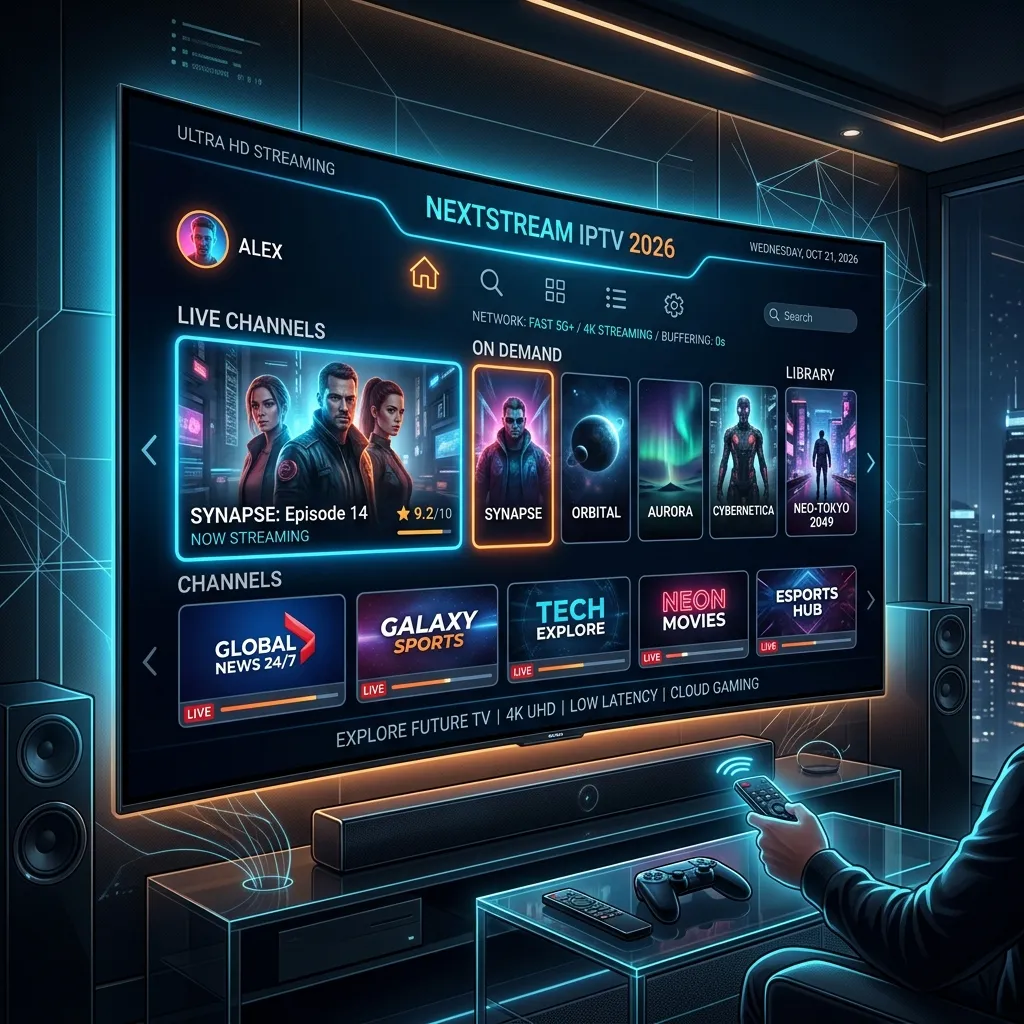
The landscape of home entertainment is undergoing a monumental shift, and at the absolute center of this technological transformation is Internet Protocol Television, more widely known as IPTV. As we navigate through the year 2026, the convergence of hyper-fast internet infrastructure, artificial intelligence, and cutting-edge hardware has propelled IPTV from a niche alternative to traditional broadcasting into the undisputed king of global media consumption. Gone are the days of rigid cable schedules, frustrating geographical restrictions, and pixelated, buffering streams. The future is finally here, and it is customized, fiercely interactive, and astonishingly high-definition.
At Smartiflix, we have been proudly stationed at the forefront of this digital renaissance. We continually evolve our infrastructure and service offerings to meet the surging demands of modern viewers who expect nothing less than perfection. We deeply understand that modern consumers no longer just want to passively "watch" TV; they want to experience it, interact with it, and have it seamlessly integrate into their broader smart home ecosystems.
This massive, comprehensive guide will delve deep into the technological marvels that are driving the future of IPTV streaming in 2026. We will explore the complex mechanics behind 8K streaming, the vital role of generative AI in personalized content curation, the implementation of decentralized edge networks for unparalleled security and speed, and much more. Whether you are a casual viewer looking to upgrade your family's weekend movie nights, or a dedicated tech enthusiast eager to understand the sophisticated backend architecture of modern streaming, this article will serve as your ultimate roadmap. Fasten your seatbelts as we journey into the extraordinary future of IPTV streaming technology.
1. The State of IPTV in 2026: A True Paradigm Shift
To properly understand the future trajectory of streaming, we must first critically analyze the present reality. In 2026, IPTV is no longer simply "television delivered over the internet." It has aggressively evolved into a holistic, all-encompassing entertainment ecosystem that effortlessly blends live broadcasting, massive Video on Demand (VOD) libraries, interactive media, and social viewing features. The global transition away from traditional satellite and cable TV has accelerated exponentially, driven by an unstoppable combination of technological advancements, consumer demand for absolute flexibility, and the widespread rollout of next-generation internet infrastructure.
The traditional broadcast model, characterized by linear programming and rigid geographical boundaries, simply cannot compete with the dynamic, on-demand nature of a modern IPTV Subscription. Today's cutting-edge IPTV platforms offer access to tens of thousands of channels, millions of hours of VOD content spanning every conceivable genre, and the crucial ability to stream concurrently on multiple devices across entirely different geographical locations.
1.1 The Inevitable Decline of Traditional Broadcasting
The migration from legacy broadcast systems to advanced IPTV platforms has undeniably reached a tipping point. Satellite dishes and bulky cable set-top boxes are increasingly viewed by consumers as relics of a bygone, inefficient era. The reasons driving this massive cord-cutting movement are multifold and deeply rooted in both economics and user experience:
- Cost-Effectiveness and Value: Maintaining traditional broadcasting infrastructure—launching satellites, laying coaxial cables, and producing proprietary hardware—is incredibly expensive. Cable companies routinely pass these bloated infrastructure costs directly onto consumers through massive, inflexible channel packages filled with content the user never actually watches. Conversely, IPTV operates on highly efficient, digital delivery networks, allowing modern providers to offer highly competitive, modular Pricing models that represent vastly superior value.
- Hardware Limitations and Obsolescence: Traditional television relies heavily on proprietary set-top boxes that become outdated almost as soon as they are installed. Modern IPTV, however, is beautifully software-centric. This means the service can run flawlessly on virtually any smart device you already own, from your primary living room 8K Smart TV to your smartphone, tablet, or gaming console.
- The Lack of Personalization: Linear TV forces the viewer to ruthlessly adapt their life to the network's broadcast schedule. IPTV flips this dynamic entirely; the service adapts to the viewer, offering limitless on-demand access, comprehensive catch-up TV features, and AI-driven personalized recommendations.
1.2 The Anatomy of the 2026 IPTV Ecosystem
The IPTV ecosystem functioning in 2026 is a breathtakingly complex, globally distributed web of content creators, network aggregators, colossal Content Delivery Networks (CDNs), and highly intuitive end-user interfaces. The historical lines between linear streaming services, interactive gaming platforms, and social media networks have blurred significantly.
Viewers today can seamlessly switch from watching an ultra-high-definition live sports event to instantly participating in a virtual, synchronized watch party with friends across the globe—all functioning within the exact same software application.
"In 2026, we don't just consume content; we interact with it in a fundamentally meaningful way. IPTV has become a robust two-way street where the viewer's explicit and implicit preferences actively, dynamically shape the broadcast they receive." – Lead Streaming Architect, Global Media Insights.
2. Core Technologies Transforming the IPTV Landscape
The breathtaking capabilities of modern IPTV services are powered entirely by a sophisticated suite of core technologies that have matured and coalesced significantly over the past half-decade. From advanced artificial intelligence to hyper-fast networking protocols, these monumental innovations form the absolute bedrock of the 2026 streaming experience.
2.1 The Artificial Intelligence Revolution in Content Curation
Artificial Intelligence (AI) and deep Machine Learning (ML) are unquestionably the most disruptive and beneficial forces operating within the streaming industry today. Their deep, systemic integration into IPTV platforms has fundamentally altered how content is discovered, recommended, delivered, and dynamically optimized.
Hyper-Personalization Algorithms: Knowing What You Want Before You Do
In the early, primitive days of streaming, recommendations were based entirely on simple viewing histories and basic genre tags. It was a blunt instrument. In 2026, AI algorithms utilize incredibly sophisticated deep learning models that instantaneously analyze a vast, multi-dimensional array of data points:
- Micro-Viewing Habits: The AI analyzes far more than just what you watched. It examines precisely which specific scenes you rewound, at what exact millisecond you paused or abandoned a show, and which characters consistently hold your attention based on screen-time analysis.
- Biometric and Environmental Feedback: For users who actively opt-in through connected smart home devices or advanced biometric sensors (like smartwatches), AI can subtly gauge emotional responses—such as elevated heart rates during a thriller—and dynamically adjust future recommendations accordingly.
- Contextual and Temporal Awareness: The intelligent system inherently knows the time of day, the local weather outside, and crucially, who is currently in the room (identified via subtle voice profile recognition or device presence). It curates content that perfectly matches the precise moment's atmosphere. A rainy Sunday afternoon yields different suggestions than a Friday night pre-game session.
This unprecedented level of hyper-personalization permanently eradicates the infamous "what to watch" dilemma. Your IPTV service essentially functions as a bespoke, continuously evolving television channel curated specifically for your exact tastes at any given moment.
AI in Real-Time Video Compression and Delivery Optimization
Bandwidth is the vital lifeblood of all IPTV platforms. Delivering flawless, high-definition content to millions of concurrent users globally requires incredibly efficient, intelligent data management. Enter AI-driven video compression.
Modern technologies like Neural Network-based Video Coding (NNVC) can analyze every single frame of a high-definition video in absolute real-time. The AI intelligently determines which visual elements require maximum high fidelity (such as a fast-moving sports ball or the complex micro-expressions on an actor's face) and which elements can be aggressively compressed without the human eye noticing (such as a static background sky or an out-of-focus wall).
This incredible technological breakthrough allows premium IPTV providers to deliver stunningly clear, uncompromised visual images while utilizing up to 50% less network bandwidth compared to the older, traditional HEVC codecs of the past. It mathematically guarantees a smooth, buffer-free viewing experience, even when the user is operating on suboptimal or highly congested network connections.
2.2 5G Advanced and the Dawn of 6G Networks
The aggressive global rollout of 5G Advanced (frequently referred to as 5.5G in industry circles) and the early, highly anticipated experimental deployments of 6G have completely shattered all previous, historical limitations regarding data transfer speeds, network capacity, and critical latency.
| Network Generation | Peak Data Rate | Expected Latency | Practical Impact on IPTV in 2026 |
|---|---|---|---|
| 4G LTE (Legacy) | 1 Gbps | 30-50 ms | Capable of basic HD streaming, but severely struggles with multi-device 4K or live event traffic spikes. |
| 5G (Standard) | 10 Gbps | 10-20 ms | Enabled standardized 4K streaming and highly robust mobile viewing without significant buffering. |
| 5G Advanced (Current) | 20 Gbps | <5 ms | Delivers seamless 8K streaming, absolute zero-latency live sports broadcasting, and complex AR integration. |
| 6G (Early Trials) | 100+ Gbps | <1 ms | Designed for future holographic streaming, fully immersive volumetric video, and instant global synchronization. |
With the ultra-low, single-digit millisecond latency provided by 5G Advanced networks, the frustrating delay between a live event occurring in the stadium and it appearing flawlessly on your screen has been virtually eliminated. This specific advancement is particularly crucial for live sports betting, interactive gaming, and real-time social viewing events, where even a two-second delay can completely ruin the experience and spoil the outcome. For users who stream heavily on the go via mobile devices, these advanced cellular networks guarantee a flawless, buffer-free connection regardless of their physical location or velocity.
2.3 8K Streaming and Spatial Audio: The Indisputable New Standard
While 4K resolution was considered a highly premium, exclusive luxury just a few short years ago, 2026 has witnessed 8K resolution firmly, undeniably establish itself as the absolute baseline standard for high-end, immersive home entertainment. Boasting a staggering four times the overall pixel density of standard 4K (and 16 times that of standard HD), 8K delivers an unprecedented, hyper-realistic level of visual detail. It transforms modern large-screen OLED and MicroLED televisions from mere display panels into literal, lifelike windows looking into another world.
To adequately complement this overwhelming visual feast, leading IPTV platforms have widely adopted and deeply integrated object-based spatial audio technologies, primarily advanced, next-generation iterations of Dolby Atmos and DTS:X.
Instead of arbitrarily assigning audio tracks to specific physical channels (like the traditional "front left speaker" or "rear right surround"), spatial audio engines treat every single sound effect as an independent, floating object that can be mathematically placed and dynamically moved anywhere within a precise three-dimensional space around the viewer. Whether it is the deafening roar of a fighter jet flying directly overhead or a terrifyingly subtle whisper seemingly originating from just behind your left ear, the resulting audio experience is immersive, gripping, and terrifyingly realistic.
3. Redefining the User Experience (UX): Beyond the Remote Control
The user interface (UI) of any IPTV service is the critical, defining bridge connecting the viewer to the vast, almost incomprehensible ocean of available content. In 2026, UX design has forcefully shifted away from clunky, static text menus and rigid grid layouts, moving definitively toward highly interactive, brilliantly intuitive, and deeply immersive digital environments.
3.1 Immersive Viewing with Augmented and Virtual Reality Integration
Augmented Reality (AR) and Virtual Reality (VR) have, after years of promise, finally found solid, practical footing within the modern living room. While traditional, large-screen panel viewing remains the dominant primary method, the exciting option to literally step "inside" the content is becoming increasingly popular and highly sought after by enthusiasts.
Imagine, for a moment, watching a live, high-stakes Formula 1 race. Through a lightweight, high-resolution VR headset seamlessly connected to your IPTV service, you can instantly switch from the traditional, director-controlled broadcast view to a live, 360-degree camera physically mounted directly onto your favorite driver’s helmet. You can physically look around the tight cockpit, check the digital dashboard, glance at the rear-view mirrors, and viscerally feel the terrifying adrenaline of the race exactly as if you were physically sitting there.
For Augmented Reality, viewers utilizing advanced smart glasses can effortlessly project multiple, resizable virtual screens around their physical living environment. This allows them to watch three different NFL games simultaneously on floating screens, while dynamically displaying real-time player statistics, fantasy football updates, and live social media feeds perfectly integrated right next to the main broadcast window.
3.2 The Aggressive Gamification of Live Events
The historical concept of purely passive viewing is rapidly evolving into highly active, engaging participation. IPTV platforms in 2026 are aggressively and seamlessly incorporating complex gamification elements directly into their live broadcast streams.
During a popular reality TV finale, viewers can cast votes, make real-time predictions, and answer live trivia questions using intuitive voice commands or smart remotes. In live sports broadcasts, dynamic interactive overlays allow engaged users to predict the outcome of the very next play (e.g., "Will the next pitch be a strike or a ball?"), earning digital points that can be instantly redeemed for tangible rewards, such as Subscription discounts, exclusive VOD movie rentals, or limited-edition team merchandise.
3.3 Voice, Advanced Gesture, and Early Neural Interfaces
The frustrating days of frantically tearing apart the couch cushions searching for a lost plastic remote control are thankfully fading into obscurity. Modern IPTV systems are deeply, natively integrated with dominant smart home voice assistants (like advanced versions of Alexa, Google Assistant, and Apple Siri). A simple, natural-language conversational command like, "Hey, play that new sci-fi movie my brother recommended to me yesterday," is understood flawlessly by the AI, which instantly cross-references your messages and viewing history to launch the exact correct stream without hesitation.
More advanced, premium setups push the boundaries even further, utilizing hyper-accurate built-in depth cameras (equipped with strict, hardwired privacy shutters) to recognize complex, subtle hand gestures for volume control, fast-forwarding, or menu navigation.
At the absolute bleeding edge of the industry, some early-adopter beta programs are even experimenting with entirely non-invasive neural interfaces—lightweight, comfortable headbands that can accurately read basic brainwave patterns, allowing users to effortlessly navigate menus, select channels, and confirm choices without moving a single muscle or speaking a word. While still in its infancy, this remarkable technology represents the ultimate, friction-free future of IPTV control mechanisms.
4. The Invisible Backbone: Infrastructure and Content Delivery Networks (CDNs)
Behind every single flawless, buffer-free stream lies a massive, unimaginably complex, and highly optimized global network infrastructure. The sheer, staggering volume of digital data required to reliably deliver uncompressed 8K video to billions of concurrent users globally necessitates relentless, constant innovation in precisely how that data is routed, stored, and ultimately delivered.
4.1 Advanced Edge Computing in Video Streaming
Traditionally, video content was stored in massive, heavily centralized data centers located in major tech hubs. When a user in a remote area requested a stream, that heavy video data had to travel from that central hub to the user's home, sometimes crossing oceans, multiple network backbones, and continents. This long physical journey inevitably caused latency, packet loss, and vastly increased the risk of frustrating buffering.
In 2026, the entire IPTV industry relies heavily on sophisticated Edge Computing. Instead of relying solely on distant central servers, popular content is aggressively cached and distributed onto thousands of "edge nodes"—smaller, highly efficient servers deliberately located as close to the end-user as physically possible, often positioned directly within their specific city, neighborhood, or even at the base of their local cellular tower.
When you request a highly popular newly released movie or tune into a massive live sports event, the streaming data is delivered directly from a server located just a few miles away from your house. This architectural shift drastically reduces latency to near zero, significantly alleviates dangerous congestion on the broader global internet backbone, and absolutely guarantees a highly stable, flawless stream even during the most extreme peak viewing hours (like the Super Bowl or a global news event).
4.2 Peer-to-Peer (P2P) Hybrid Mesh Streaming
To further optimize network delivery and ensure absolute resilience, many leading IPTV platforms now employ a highly advanced hybrid CDN-P2P model. While the primary, foundational stream always originates from the secure edge servers, viewers who are actively watching the exact same live event in the same geographical vicinity can securely, seamlessly, and anonymously share incredibly small, encrypted packets of video data directly with each other.
This decentralized, mesh-network approach creates a highly resilient, self-healing network ecosystem; counterintuitively, the more people who are simultaneously watching a stream, the more robust, stable, and flawless that stream becomes for everyone involved.
4.3 Cloud DVR and the Era of Infinite Storage
Physical hard drives and loud, localized DVR set-top boxes are entirely obsolete. Today, absolutely everything is recorded, processed, and stored securely in the cloud. Modern, premium IPTV services offer essentially infinite cloud DVR storage capacities, allowing users to schedule and record entire seasons of dozens of different shows simultaneously without ever once worrying about running out of local disk space or managing storage limits.
Furthermore, comprehensive "Catch-Up TV" features have become the universal standard. This remarkable feature means that virtually every single channel automatically, silently records its entire broadcast output and stores it on the server for a rolling period of up to 14 days. If you completely missed a crucial show or the evening news, you do not even need to have remembered to set a recording; you simply navigate backward seamlessly in the Electronic Program Guide (EPG), locate the past show, and hit play. It is time travel for television.
5. The Role of Smart Devices and Monumental Hardware Evolution
While the colossal backend cloud infrastructure handles the heavy lifting of routing and processing, the user's local hardware is ultimately responsible for beautifully decoding and displaying the final visual image. The sheer variety and sheer processing power of devices capable of flawlessly streaming modern IPTV have never been greater or more accessible.
5.1 Smart TVs and Deeply Integrated Ecosystems
The Smart TVs manufactured in 2026 are incredibly powerful, sophisticated computers in their own right. They feature robust, multi-core neural processors specifically engineered to handle advanced AI image upscaling, complex real-time video decoding, and spatial audio processing without breaking a sweat.
Operating systems like Google's Android TV, LG's WebOS, and Samsung's Tizen have become highly streamlined, lightning-fast, and deeply intuitive. They offer profound, system-level integration with premium IPTV services. In many modern cases, downloading a dedicated, standalone app is entirely unnecessary; the IPTV platform integrates directly, natively into the TV's primary interface, gracefully aggregating live channels and VOD content seamlessly alongside offerings from other major streaming giants like Netflix or Disney.
5.2 The Next Generation of Portable Streaming Sticks
For users looking to significantly upgrade an older, "dumb" television, or those who require a highly portable, travel-friendly solution, streaming sticks remain incredibly popular and more powerful than ever. The latest iterations of flagship devices like the Amazon Fire TV Stick 4K Max and Apple TV have evolved significantly.
Following a modern, streamlined Firestick Setup is easier and faster than ever before, often requiring absolutely nothing more than physically plugging the device into an HDMI port and securely authenticating via a quick QR code scanned with a smartphone app.
These impressively compact, affordable devices now natively support demanding 8K resolutions, incredibly fast Wi-Fi 7 wireless connectivity, and feature dedicated, built-in AI co-processors designed to process complex voice commands and execute real-time image enhancement entirely locally on the device. They represent the absolute perfect, highly cost-effective method to access a flawless, premium IPTV experience on any display in the world.
5.3 Installation and Setup Simplification: From Hours to Seconds
Historically, the process of setting up a new IPTV service involved a steep learning curve: navigating clunky, badly designed menus, manually entering excessively long and complex URLs, or configuring incredibly confusing M3U playlists. The streaming industry rightly recognized that this high barrier to entry was severely hindering mass mainstream adoption.
Today, utilizing the Installation Guide for a modern, premium service like Smartiflix is remarkably, refreshingly straightforward. Through the deployment of highly advanced auto-provisioning systems and ultra-secure smart device pairing technologies, a brand-new user can easily transition from purchasing a subscription to happily watching live TV in under 60 seconds flat.
The sophisticated software silently handles all the complicated, tedious backend server configurations, server routing, and EPG synchronization entirely automatically. This ensures a true, flawless plug-and-play experience that even the absolute most non-technical users can navigate with complete confidence and ease.
6. Fort Knox for Streaming: Security, Privacy, and Anti-Piracy
As global IPTV adoption has skyrocketed into the billions, so too have the legitimate concerns surrounding network security, commercial piracy, and personal data privacy. The industry has aggressively responded with a massive suite of sophisticated, military-grade countermeasures designed specifically to protect both the content creators and the privacy of the end-users.
6.1 Is IPTV Safe? The Absolute Evolution of Digital Security
A frequent, understandable question among individuals transitioning from cable is, "Is IPTV Safe?". The definitive answer, when dealing exclusively with highly reputable, premium providers like Smartiflix, is a resounding and absolute yes. The digital security infrastructure protecting legitimate IPTV services in 2026 is practically on par with global online banking systems.
- Unbreakable End-to-End Encryption: All digital data transmitted between the IPTV edge servers and the user's local viewing device is heavily secured using military-grade AES-256 encryption protocols. This absolute security prevents Internet Service Providers (ISPs), hackers, or malicious third-party actors from artificially throttling bandwidth based on content type, or worse, intercepting and analyzing sensitive viewing data.
- Strict Zero-Trust Architecture: Modern streaming platforms operate entirely on a rigid "zero-trust" security model. This dictates that every single device, every single app launch, and every single video request must be continually, cryptographically authenticated and explicitly authorized in real-time. This effectively prevents unauthorized, rogue access to the delivery network and flawlessly protects user accounts from being hijacked or compromised.
- Ironclad Data Privacy Policies: Reputable, premium providers deeply understand the immense value and sensitivity of user data. They employ highly strict data anonymization techniques, mathematically ensuring that your specific, personal viewing habits are utilized solely to directly improve your individual AI recommendations, and are absolutely never sold, rented, or distributed to third-party data brokers or aggressive advertisers.
6.2 Advanced Digital Rights Management (DRM) and Invisible Watermarking
To successfully secure highly lucrative, exclusive licensing deals with major Hollywood studios and global professional sports leagues, IPTV platforms must implement incredibly robust Digital Rights Management (DRM). In 2026, DRM has evolved far beyond simple, crackable encryption keys. It now universally includes dynamic, real-time forensic watermarking.
Forensic watermarking involves seamlessly embedding invisible, algorithmic markers directly within the video stream that are entirely unique to every single individual user account. If an unauthorized entity or commercial pirate attempts to illegally restream or capture a protected broadcast, the robust forensic watermark allows the content owners and the IPTV provider to instantly, automatically trace the leaked footage back to the exact specific user account responsible, immediately terminating the connection and banning the user in absolute real-time. This sophisticated, uncrackable technology has massively curbed commercial piracy, ensuring that rightful revenue securely flows back to the creators, which in turn heavily funds the continued production of more incredible, high-budget content.
6.3 Web3 and Blockchain Integration for Ultimate Transparency
The strategic integration of decentralized Web3 blockchain technology into the backend IPTV ecosystem has provided a totally new, unprecedented level of verifiable transparency and financial security. Blockchain ledgers are increasingly being utilized to securely manage digital user identities, flawlessly handle automated subscription billing via unalterable smart contracts, and securely, transparently distribute sensitive DRM decryption keys.
This highly decentralized approach mathematically ensures that absolutely no single point of network failure can completely compromise the entire system, and it simultaneously provides users with undeniable cryptographic proof that their personal data and financial payments are completely safe and secure.
7. The New Economics of IPTV in 2026
The fundamental business model and underlying economics of global television have been completely, irreversibly overhauled. The rigid, aggressively expensive, and deeply unpopular forced cable packages of the past have been entirely replaced by highly flexible, modular, and intensely consumer-centric financial models.
7.1 Hyper-Flexible Subscription Models and Granular Pricing
The modern, empowered consumer rightfully demands absolute flexibility, and modern IPTV overwhelmingly delivers. When exploring Pricing options today, users are instantly met with a massive variety of highly customized choices specifically tailored to match their exact, unique viewing habits and budget constraints:
- The Ultimate All-Inclusive Tiers: Designed for the absolute ultimate entertainment enthusiast, premium elite tiers offer unrestricted access to absolutely everything—all live global sports, tens of thousands of international channels, massive, bottomless VOD libraries, and generous simultaneous multi-device support.
- Niche, Micro-Thematic Packages: Users can now easily choose to subscribe solely to highly specific, focused genres. They can select a "Global Soccer Only" package, a "Classic Cinema" bundle, or an "Anime and eSports" tier, guaranteeing they only ever pay exactly for the content they actually want to watch, without subsidizing channels they never click on.
- Frictionless Micro-Transactions and Pay-Per-Minute: The widespread ease of secure digital wallets and blockchain payments has facilitated the rise of seamless micro-transactions. Do you want to watch a single, highly anticipated UFC championship fight, or quickly rent a newly released blockbuster movie for exactly 12 hours? It can be accomplished seamlessly directly within the UI, instantly charged to your preferred digital wallet with a single, biometric click.
7.2 The Massive Resurgence of Free Ad-Supported Streaming TV (FAST)
Free Ad-supported Streaming TV (FAST) has absolutely exploded in global popularity. These specialized channels perfectly mimic the highly successful, lean-back traditional linear TV experience, but are delivered entirely over IP networks and are funded 100% by highly targeted, intelligent digital advertisements.
Advanced AI ensures that the specific ads shown are highly relevant to the individual viewer's interests and demographics, massively increasing their commercial effectiveness while actively minimizing viewer annoyance. The vast majority of premium IPTV providers now intelligently include a robust, curated selection of high-quality FAST channels as a highly valued supplementary offering nested within their main subscription interface.
8. Navigating the Massive Content Ocean: Advanced EPG and Deep Metadata
With immediate access to tens of thousands of live channels and literally millions of VOD titles available at any given second, intuitive navigation represents a critical technical challenge. The Electronic Program Guide (EPG) has aggressively evolved from a simple, boring text-based scrolling schedule into a deeply rich, highly interactive metadata powerhouse.
8.1 Ultra-Rich Metadata and Contextual Deep Linking
When you navigate to and select a movie within a modern, premium IPTV interface, you are not merely presented with a basic title and a two-sentence synopsis. You are immediately presented with an overwhelming wealth of rich, interactive metadata: comprehensive cast and crew biographies, instant access to behind-the-scenes featurettes, aggregated critical reviews from major global publications, and highly intelligent deep links connecting to related content.
If you are currently watching a thriller starring a particular lead actor, the intelligent system will dynamically, instantly suggest a curated list of other successful films featuring that exact actor that are currently available anywhere across your VOD library, or scheduled to air soon on live TV. This deeply interconnected, intelligent web of information makes actively discovering new, exciting content an organic, highly enjoyable, and friction-free process.
8.2 True Universal, Cross-Platform Search Capabilities
The intense, historical fragmentation of digital content across dozens of different proprietary networks and rival studios used to require frustrated viewers to manually, slowly search through multiple different applications just to find what they wanted. Today, premium IPTV services feature flawless, True Universal Search.
By simply typing or naturally voicing a single, simple query, the powerful backend system instantly and simultaneously scans thousands of live TV schedules, vast catch-up recording archives, and massive external VOD libraries to instantly deliver comprehensive, perfectly organized results on a single screen.
9. Sustainability and Eco-Friendly Streaming (Green IPTV)
As global data consumption absolutely skyrocketed, the severe environmental impact of operating massive, power-hungry data centers and managing constant, heavy data transmission became a massive, pressing global concern. In 2026, the IPTV industry has aggressively taken significant, mandated strides toward radical sustainability, creating the movement now widely known as "Green Streaming."
- Ultra-Energy-Efficient Codecs: As mentioned previously, advanced video codecs do far more than just save precious network bandwidth; they significantly reduce the heavy computational processing power required to decode the video locally on the user's specific device, thereby tangibly saving electricity and reducing hardware heat.
- 100% Carbon-Neutral Data Centers: Major global IPTV providers and CDN operators have heavily, decisively invested in renewable energy infrastructure. The vast majority of localized edge servers and massive core routing data centers now run reliably on 100% wind, solar, or advanced hydroelectric power, achieving true carbon neutrality.
- Intelligent Smart Sleep Modes: Modern IPTV hardware features incredibly advanced, AI-driven power management systems. If an exhausted viewer falls asleep on the couch or leaves the room (accurately detected via smart environmental sensors or a prolonged lack of remote interaction), the system automatically, gracefully pauses the live stream, saves the exact timestamp to the cloud, and puts the television and streaming device into an ultra-low power hibernation state. This drastically reduces unnecessary household energy consumption and simultaneously eliminates massive bandwidth waste across the network.
10. How to Future-Proof Your Home Entertainment Setup
As the underlying streaming technology continues to aggressively advance at an absolute breakneck pace, it is vitally important to ensure that your local home network setup is fully capable of handling the extreme demands of modern, premium IPTV.
10.1 Critically Upgrading Your Local Home Network
The most powerful, premium IPTV service in the world is completely useless if your local home network acts as a severe bottleneck. To properly future-proof your setup, we strongly recommend considering the following critical upgrades:
- Deploy a Wi-Fi 6E or Wi-Fi 7 Router: These highly modern, advanced routers provide the massive, multi-gigabit wireless bandwidth and ultra-low latency required to handle multiple concurrent 4K or uncompressed 8K streams without breaking a sweat.
- Utilize Hardwired Connections: Whenever physically possible, you should always connect your primary viewing device (like your main living room Smart TV or premium streaming box) directly to your core router using a high-quality Cat6 or Cat8 Ethernet cable. A physical, hardwired connection will mathematically always be significantly more stable, faster, and more reliable than even the best wireless connection.
- Implement a Mesh Wi-Fi Network: For users residing in larger homes or multi-story properties, a dedicated mesh Wi-Fi system effectively ensures that every single room receives a strong, consistent, and fast wireless signal. This entirely eliminates frustrating "dead zones" that notoriously cause unexpected buffering and stream dropouts.
10.2 Selecting the Absolute Best IPTV Provider
It is an undeniable fact that not all IPTV providers are created equal. The market is flooded with subpar services. When carefully selecting a primary provider, it is crucial to look far beyond just the initial advertised channel count. You must carefully consider the following critical factors:
- Absolute Server Stability: A premium provider operating with a robust, globally distributed, edge-based CDN will consistently offer a vastly more stable, reliable experience than a cheap service relying entirely on a single, overloaded central data center.
- Exceptional Customer Support: You must look for professional providers that offer highly responsive, highly knowledgeable 24/7 customer support accessible via live instant chat or rapid ticketing systems.
- Broad App Compatibility: Always ensure the chosen service has a highly optimized, native software application specifically designed for your preferred viewing device, whether that happens to be an Android TV, an Apple TV, a Roku, or an Amazon Firestick.
- Transparent Trial Periods: Highly reputable, confident services will almost always provide a short, no-obligation trial period. This critically allows you to physically test the actual stream quality, UI responsiveness, and content library on your own network before officially committing to a long-term subscription plan.
We highly, confidently recommend exploring the massive, comprehensive IPTV Subscription packages currently available at Smartiflix. Our entire infrastructure is meticulously engineered from the ground up to consistently deliver the absolute pinnacle of modern streaming technology.
11. Beyond 2026: A Thrilling Glimpse into the Next Decade
While the year 2026 has unquestionably brought incredible, world-changing advancements to the living room, the relentless pace of innovation absolutely does not stop here. Looking forward, several radically emerging technologies promise to further revolutionize the very concept of IPTV:
- True Volumetric Holographic Displays: While currently confined to massively expensive corporate research labs and highly specialized commercial medical applications, true volumetric, completely glasses-free holographic displays are fully expected to hit the premium consumer market within the next decade. Future IPTV networks will need to rapidly adapt to reliably deliver the truly massive, multi-gigabit streams of data required for these stunning 3D projections.
- Fully Interactive Narrative Streaming: Imagine watching a massive blockbuster movie where you, the individual viewer, can make real-time, high-stakes decisions that completely alter the plot. This will utilize massive cloud-based, real-time Unreal Engine rendering farms to seamlessly, instantly generate entirely different visual outcomes based solely on audience choices, blurring the line entirely between cinema and video games.
- Global, Frictionless Seamless Roaming: The ultimate vision of being able to travel absolutely anywhere in the world, turn on any screen, and instantly, securely access your exact, highly personalized home TV setup—without ever needing a complex VPN, reconfiguring hardware, or worrying about geo-blocks—will finally become a reality through the adoption of advanced, decentralized global networking protocols.
Conclusion: The Era of Ultimate Entertainment is Here
The incredibly bright future of IPTV streaming technology in 2026 stands as a monumental testament to human engineering ingenuity and our relentless, unending pursuit of vastly better, more immersive entertainment experiences. What humbly began decades ago as a simple, highly compressed internet alternative to expensive cable has aggressively evolved into a hyper-personalized, ultra-high-definition, AI-driven technological powerhouse that completely dominates the global media landscape.
Monumental technologies like flawless 8K resolution, incredibly immersive spatial audio, lightning-fast 5G Advanced networking, and intelligent edge computing have seamlessly combined to totally eliminate network latency and deliver breathtaking, stunning visuals that rival reality. Meanwhile, highly advanced, intuitive user interfaces, conversational voice control, and military-grade, unbreakable security measures ensure that the entire viewing experience is as completely effortless and unequivocally safe as it is incredibly enjoyable.
As the tech industry continues to aggressively push the very boundaries of what is mathematically and visually possible, one single fact remains abundantly, crystal clear: television is absolutely no longer a passive, boring box sitting quietly in the corner of the room that you simply stare at. It is now a highly interactive, deeply immersive portal connecting you to the entire world, and premium IPTV is the essential key that unlocks its full potential.
To truly experience the absolute bleeding edge of this digital revolution, you must ensure you have the correct, optimized setup by carefully reviewing our comprehensive, step-by-step Installation Guide. We invite you to explore the limitless, incredible possibilities of a premium, uncompromised Smartiflix Subscription today. Welcome to the thrilling future of global entertainment; welcome to the year 2026.
Frequently Asked Questions (FAQ)
Q: Do I specifically need to buy a brand-new, special television to use modern IPTV in 2026? A: Absolutely not. You do not need a highly specialized or custom television. Any modern Smart TV manufactured in the last five years, or any standard television equipped with a modern streaming device like an Amazon Firestick, Apple TV, or Android TV box, is perfectly capable of flawlessly running modern, premium IPTV applications.
Q: Is utilizing a VPN strictly necessary for watching IPTV? A: While premium, top-tier services like Smartiflix inherently employ incredibly robust, end-to-end encryption to protect your data natively, utilizing a high-quality VPN can definitely add a valuable extra layer of privacy. Crucially, a VPN can help successfully bypass aggressive, unfair ISP bandwidth throttling that occurs in certain heavily regulated regions. Please take the time to read our detailed Security Guide for much more comprehensive information on this topic.
Q: Can I reliably watch live global sports broadcasts in full 4K or 8K resolution? A: Yes, absolutely! Live sports broadcasting is actually one of the primary, driving forces behind the adoption of ultra-high-resolution streaming. Assuming you have a capable viewing device and a sufficiently fast internet connection, flawlessly smooth 4K is now the absolute standard, and stunning 8K broadcasts are becoming increasingly, rapidly common for major global sporting events like the World Cup or the Olympics.
Q: Exactly how fast does my home internet connection need to be? A: For a perfectly stable, buffer-free 1080p HD stream, we strongly recommend an absolute minimum sustained connection of 15 Mbps. For a flawless 4K streaming experience, 50 Mbps is highly ideal. For the bleeding-edge, massive data requirements of emerging 8K streams, a rock-solid, hardwired connection of 100 Mbps or significantly higher is strongly recommended to avoid any compression artifacts.
Q: What exactly is the technical difference between VOD and Catch-up TV? A: VOD (Video on Demand) refers to a massive, static library of movies and television series that you can manually select and watch at absolutely any time, functioning exactly much like Netflix or Amazon Prime. Catch-up TV, on the other hand, is a highly advanced feature that automatically, silently records live broadcasting channels on the server end. This allows you to simply go backward in the live TV guide (EPG) and instantly watch shows that originally aired hours or even days ago, entirely without having to ever set a manual local recording.