Open Source IPTV Players for 2026: Free Streaming Guide
Explore the best open-source IPTV players in 2026. Enjoy secure, ad-free streaming with customizable options for all your devices!
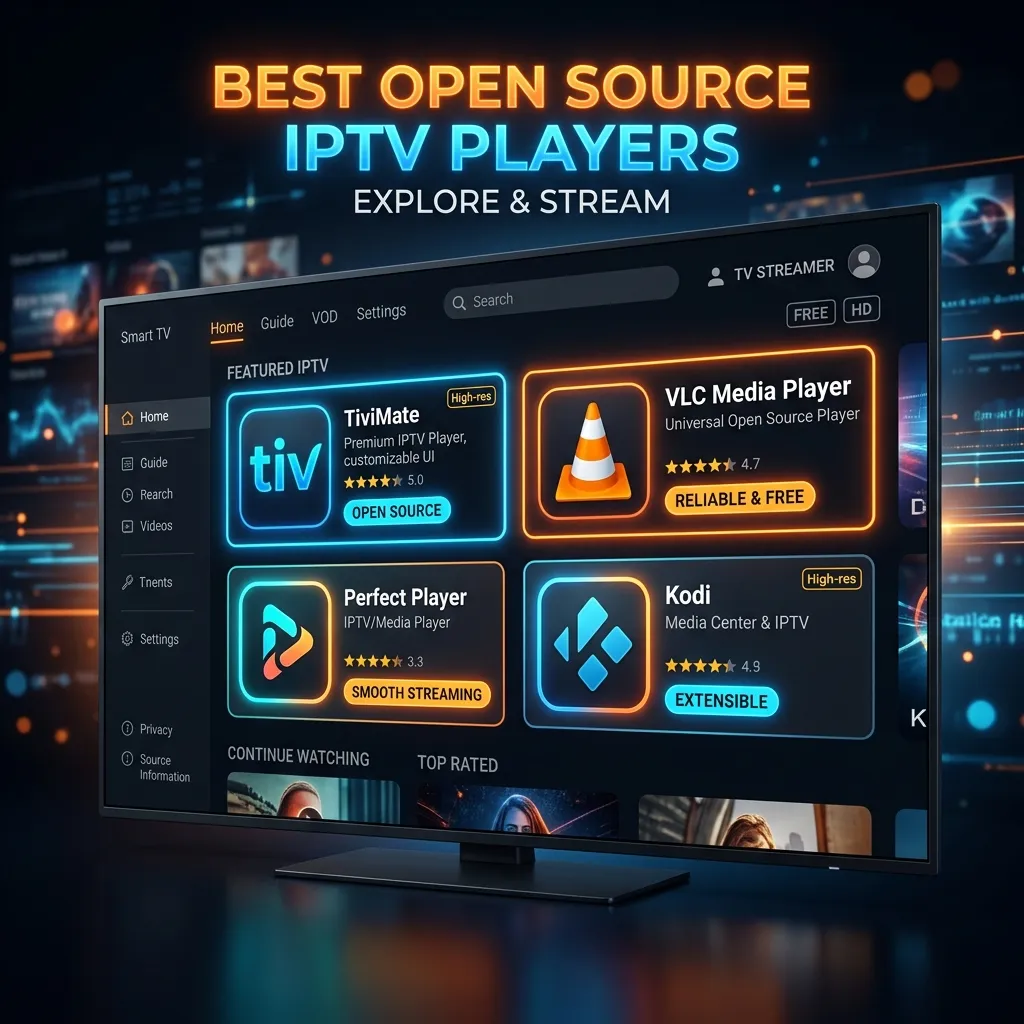
The television and digital streaming landscape has undergone a monumental shift as we progress deep into 2026. Gone are the days when viewers were restricted to expensive, inflexible cable subscriptions tied to proprietary hardware. Today, Internet Protocol Television (IPTV) reigns supreme, offering unprecedented access to global live TV channels, on-demand movies, and exclusive series. However, to truly harness the power of an IPTV service, you need an exceptional media player.
While the market is flooded with proprietary, closed-source IPTV applications that often demand recurring subscription fees, inject intrusive advertisements, or compromise user privacy through aggressive telemetry, a growing movement of tech enthusiasts and everyday cord-cutters are turning to a superior alternative: open-source IPTV players.
In this massive, comprehensive guide, we will explore the very best open-source IPTV players available in 2026. We will delve into what makes open-source software the gold standard for media consumption, analyze the intricate technical features of each application, and guide you on how to pair these players with a top-tier premium service like Smartiflix IPTV for the ultimate home entertainment experience. Whether you are setting up a dedicated home theater PC (HTPC), managing a home server, or looking for a lightweight app for your Amazon Firestick, this guide has everything you need to build the perfect setup.
What Exactly is an Open Source IPTV Player?
To appreciate the profound value of an open-source IPTV player, we first need to break down the two core components of the terminology: IPTV and Open Source.
Understanding IPTV Technology in 2026
Internet Protocol Television (IPTV) is a modern system through which television services are delivered using the Internet protocol suite over a packet-switched network, such as a LAN or the internet, instead of being delivered through traditional terrestrial, satellite signal, and cable television formats.
Unlike downloaded media, IPTV offers the ability to stream media in smaller batches directly from the source in real-time. This dynamic architecture enables live streaming, network-based catch-up TV, and vast Video on Demand (VOD) libraries to be pushed to the consumer seamlessly. Premium providers supply users with either an M3U playlist file or Xtream Codes API credentials, which act as the digital map containing the direct server links to these media streams.
The Power of Free and Open-Source Software (FOSS)
An "open-source" application is software whose original source code is made freely available and may be redistributed and modified according to the requirements of the user. In the context of media players, this means that the core engine rendering your video streams is developed collaboratively by a global community of developers, hobbyists, and engineers, rather than a single profit-driven corporate entity.
When you use an open-source IPTV player, you are using software that is fundamentally:
- Transparent: Anyone with coding knowledge can inspect the code to ensure there are no hidden trackers, crypto-miners, malware, or backdoors.
- Community-Driven: Features are conceptualized, built, and added based on what the user community actually needs, not what generates the most shareholder profit.
- Free of Charge: FOSS is almost always entirely free to use, meaning you won't be hit with unexpected "premium app unlocks," lifetime license fees, or recurring monthly charges just to utilize the software interface.
Proprietary apps often lock essential usability features—like Electronic Program Guide (EPG) support, catch-up TV, multi-screen viewing, or favorite list management—behind strict paywalls. Open-source players, conversely, provide these enterprise-grade features out of the box, for free, forever.
Why You Should Switch to Open Source IPTV Players in 2026
If you are currently relying on a closed-source, commercially developed player downloaded from a standard app store, you might be wondering if making the switch to a FOSS alternative is truly worth the effort. Here is an exhaustive look at the transformative benefits of embracing the open-source philosophy for your streaming needs.
1. Unmatched Privacy, Security, and Telemetry Control
In an era where user data is frequently referred to as "the new oil," proprietary applications frequently harvest immense amounts of telemetry data. They track exactly what channels you watch, exactly how long you watch them, your IP address, your geographical location, and even the hardware identifiers of your viewing device. Often, this data is sold to third-party data brokers and advertisers without your explicit, informed consent.
Open-source players prioritize user privacy by default. Because the underlying code is open to public scrutiny by thousands of independent developers, any malicious code or invasive tracking scripts are quickly identified, flagged, and stripped out by the community. You are in complete control of your data. Furthermore, if you are concerned about your digital footprint and ISP monitoring while streaming, combining a secure open-source player with robust operational security is critical. For a deep dive into securing your streaming setup and ensuring total anonymity, read our comprehensive guide on Is Smartiflix Safe?, which covers VPN deployments, DNS encryption, and safe streaming habits.
2. Complete Absence of Advertisements and Bloatware
There is arguably nothing more frustrating in the modern digital age than launching your preferred IPTV app to catch the beginning of a highly anticipated live sports event, only to be forced to watch a 30-second unskippable video advertisement injected by the app's developer.
Open-source software is fundamentally and philosophically ad-free. The developers contributing to these projects are typically motivated by a genuine passion for the technology, a desire to solve personal technical challenges, or a commitment to the open-source ethos, rather than direct advertising revenue. This guarantees a clean, lightweight, and distraction-free interface that launches instantly, respects your time, and never interrupts your viewing experience with pop-ups or banner ads.
3. Ultimate Customization and Theming Flexibility
Proprietary applications often force you into a rigid, "one-size-fits-all" user interface. If you dislike the color scheme, the menu layout, or the font size, you are simply out of luck.
Open-source players like Kodi or Jellyfin offer practically limitless customization. You can change the entire aesthetic look and feel of the application using hundreds of community-created skins. You can reorganize root menus, adjust backend playback buffer sizes, tweak audio synchronization delays down to the millisecond, and install hundreds of third-party add-ons. These add-ons can seamlessly integrate local weather forecasts, automatic subtitle downloading, and local NAS media library management directly alongside your live IPTV streams.
4. Cross-Platform Freedom and Broad Hardware Compatibility
Whether you are using a high-end liquid-cooled gaming PC running Windows 11, a customized Arch Linux distribution, a sleek MacBook Pro, a tiny Raspberry Pi microcomputer, or a budget-friendly Android TV box, there is an open-source player perfectly compiled and optimized for your specific hardware architecture.
FOSS developers take immense pride in cross-platform compatibility, ensuring no user is left behind due to their choice of operating system. For instance, if you are looking to set up an inexpensive, reliable, and highly portable streaming device for your living room or for travel, Amazon's hardware remains an excellent, cost-effective choice. You can easily sideload many of these powerful open-source tools onto it. Check out our dedicated, step-by-step tutorial on Smartiflix Firestick Setup to see exactly how versatile these devices can become when unshackled by closed-source constraints.
5. Superior Codec Support and Deep Hardware Acceleration
Because massive open-source projects like VLC and MPV share and contribute to foundational underlying multimedia frameworks (like the legendary FFmpeg library), they offer the most comprehensive, robust audio and video codec support in the world. Whether your IPTV provider is broadcasting a classic film in an older H.264 codec, streaming a modern live event in high-efficiency HEVC (H.265), or experimenting with the cutting-edge AV1 format, open-source players will decode and render the stream flawlessly.
Additionally, they provide deep, low-level access to hardware acceleration APIs (like DXVA2 on Windows, VA-API/VDPAU on Linux, and VideoToolbox on macOS). This ensures incredibly smooth, stutter-free playback of demanding 4K HDR content while simultaneously keeping your CPU usage negligible and your device temperature comfortably low.
The Top 10 Best Open Source IPTV Players for 2026
After conducting extensive, rigorous testing across multiple operating systems and hardware platforms—evaluating crucial metrics such as stream loading latency, massive EPG XML parsing efficiency, UI responsiveness, and overall user experience—we have curated the definitive list of the absolute best open-source IPTV players available to users today.
1. Kodi: The Undisputed King of Open-Source Media Centers
Originally launched over two decades ago as the Xbox Media Player (and later Xbox Media Center / XBMC) in 2002, Kodi has steadily evolved into the most powerful, flexible, and feature-rich open-source media center ecosystem on the planet. It is not merely a simple video player; it operates as an entire, unified operating system designed specifically for your television and home theater environment.
How Kodi Masterfully Handles IPTV Integration Kodi natively supports IPTV through its incredibly robust PVR (Personal Video Recorder) backend architecture. The most popular and officially supported add-on for this purpose is the PVR IPTV Simple Client. This highly efficient add-on allows users to input their provider's M3U playlist URL and their corresponding XMLTV EPG URL. Kodi's backend engine then parses this vast amount of data to generate a stunning, traditional cable-like TV guide interface, complete with high-resolution channel logos, detailed program synopses, season/episode metadata, and categorized channel groups.
Advanced Technical Features:
- Network Catch-up TV Support: If your IPTV provider supports network catch-up (the ability to watch previously aired programs from the server archive), Kodi natively supports navigating backward in time directly through the EPG timeline interface.
- Local Recording (DVR): By integrating advanced PVR backends like TVheadend or NextPVR alongside Kodi, you can seamlessly record live TV streams directly to your local NAS or hard drive.
- Limitless Skins: Don't care for the default "Estuary" skin? You can easily install completely different interfaces. Skins like 'Titan Bingie' can make Kodi look exactly like Netflix, while 'Arctic Zephyr' provides a sleek, minimalist Apple TV aesthetic.
| Feature | Specification Details |
|---|---|
| Supported Platforms | Windows, macOS, Linux, Android, iOS, tvOS, Raspberry Pi, Xbox |
| EPG Support | Yes, Extensive (XMLTV, JTV formats) |
| Xtream Codes Native | Via specialized third-party community add-ons |
| M3U Support | Best-in-class, handles massive playlists |
| Hardware Acceleration | Full, deep integration (Platform dependent) |
[!TIP] Performance Pro Tip for Kodi Users: When loading massive, unfiltered M3U lists (often containing over 100,000 combined live channels and VODs), Kodi can take a significant amount of time to parse the database on startup, especially on lower-end hardware. We highly recommend using a premium provider that allows you to customize your playlist from their dashboard, limiting the list to only the specific countries and content categories you actually intend to watch. This drastically reduces database overhead and results in lightning-fast load times.
Pros:
- Unmatched structural flexibility and a massive add-on ecosystem.
- Beautiful, highly customizable "10-foot user interfaces" designed for large TVs.
- Completely free with a massive global community available for troubleshooting and support.
Cons:
- The initial setup and configuration process can feel highly daunting for non-technical users.
- Can be somewhat heavy on system RAM and storage resources for very old or extremely low-spec streaming dongles.
To learn exactly how to get your premium IPTV service running flawlessly on Kodi and a variety of other applications, be sure to study our detailed Smartiflix Installation Guide.
2. VLC Media Player: The Swiss Army Knife of Media
Developed and maintained by the non-profit VideoLAN organization, VLC Media Player stands as one of the most downloaded and universally recognized pieces of open-source software in computing history. Instantly identifiable by its famous orange traffic cone icon, VLC has earned an ironclad reputation for its almost magical ability to "play absolutely everything."
Leveraging VLC as a Powerful IPTV Player
While VLC is primarily utilized globally for playing local video and audio files, it possesses an exceptionally robust, highly optimized network stream rendering engine. Opening an IPTV stream in VLC is remarkably straightforward: simply press Ctrl + N (or Cmd + N on a Mac), paste your network M3U URL, and hit play. Alternatively, you can effortlessly drag and drop a downloaded .m3u file directly into the main VLC window.
VLC will rapidly parse the playlist text and populate all your available channels into its "Playlist" view panel. You can utilize the built-in search bar to instantly filter and find specific channels among thousands of entries.
Under-the-Hood Technical Prowess: VLC is powered entirely by its own custom, highly optimized media framework. As of 2026, VLC's internal network buffering algorithms and packet-loss mitigation techniques are incredibly advanced, making it arguably the best diagnostic tool in existence for testing raw IPTV connection stability. If a specific channel or stream stutters heavily or drops frames while playing in VLC on a wired connection, you can be almost completely certain the issue lies with your ISP routing or the provider's server, not your local software.
| Feature | Specification Details |
|---|---|
| Supported Platforms | Windows, macOS, Linux, Android, iOS, ChromeOS |
| EPG Support | Very Limited / Not Native (Requires complex scripting) |
| Xtream Codes Native | No (Requires standard M3U URL conversion) |
| M3U Support | Yes (Parses sequentially as a standard media playlist) |
| Hardware Acceleration | Industry-leading, robust multi-threaded decoding |
Pros:
- Insanely lightweight, fast to launch, and uses minimal system resources.
- Unarguably the best, most comprehensive codec support in the industry; it will play virtually any obscure stream format.
- An indispensable tool for troubleshooting streams, analyzing detailed media information, and checking exact bitrates.
Cons:
- Completely lacks a native, built-in Electronic Program Guide (TV Guide) grid visualizer.
- Managing, sorting, and navigating large lists of Video on Demand (VOD) movie content is quite cumbersome compared to dedicated media center UIs.
3. Jellyfin: The Ultimate Self-Hosted Media Ecosystem
Jellyfin is a spectacular, rapidly growing open-source alternative to proprietary, commercialized media servers like Plex and Emby. It empowers you to host your own localized media server, beautifully organizing your downloaded movies, TV shows, home videos, and music into a sleek, Netflix-style web interface that you can securely access from any device, anywhere in the world.
Jellyfin's Powerful Live TV Integration Module Where Jellyfin truly shines for dedicated cord-cutters is its built-in "Live TV" administration module. You can seamlessly add your IPTV provider's M3U tuner link and XMLTV guide link directly into the Jellyfin server's backend administration panel. Jellyfin's server engine will then continuously ingest the channel list, periodically download and update the program guide data, and seamlessly integrate this live television interface right alongside your personal static media library.
When you subsequently open the Jellyfin client app on your Smart TV, smartphone, or tablet, you are greeted with a beautifully formatted "Live TV" section. This features an interactive, horizontally scrolling EPG grid, visually rich metadata highlighting currently airing shows, and the powerful ability to schedule server-side recordings.
| Feature | Specification Details |
|---|---|
| Supported Platforms | Server: Win, Mac, Linux, Docker. Clients: Web, Android, iOS, Roku, Fire TV |
| EPG Support | Yes (XMLTV flawlessly integrated and mapped) |
| Xtream Codes Native | No (Use standard M3U protocol) |
| M3U Support | Yes (Added easily as a virtual M3U Tuner device) |
| Hardware Acceleration | Powerful server-side video transcoding supported (Nvidia NVENC, Intel QuickSync, AMD AMF) |
Pros:
- 100% free with absolutely zero premium feature tiers or paywalls (a stark contrast to Plex Pass or Emby Premiere).
- Elegantly centralizes Live TV, DVR, and massive personal media collections into one unified, stunning interface.
- Robust server-side recording capabilities allow you to record a show at home while watching something else on your phone.
- Complete control over user management; securely share specific libraries with friends and family.
Cons:
- Requires a constantly running, dedicated computer or NAS device to act as the "always-on" server.
- Initial setup involves some fundamental networking knowledge (like port forwarding and setting up reverse proxies) to enable secure outside-the-home access.
4. TVheadend: The Advanced Backend TV Streaming Server
TVheadend is not a media player in the traditional, visual sense; rather, it is a highly advanced TV streaming server and network recorder for Linux. It boasts comprehensive support for DVB-S, DVB-S2, DVB-C, DVB-T, ATSC, IPTV, SAT>IP, and other broadcasting formats. It is explicitly designed for hardcore technology enthusiasts, homelab owners, and networking experts who demand absolute, granular control over their television stream routing.
Unleashing the Power of TVheadend The typical architecture involves installing TVheadend onto a lightweight Linux machine (such as a headless Raspberry Pi or an Unraid Docker container). You then feed it your IPTV provider's M3U link, configuring it as an "IPTV Automatic Network." TVheadend methodically scans the remote streams, maps them to customized internal channel numbers, and fetches EPG data using highly advanced internal "grabbers."
Once TVheadend is successfully managing and collating your remote streams, you can use various lightweight client software (such as Kodi equipped with the TVheadend HTSP Client add-on, or even a simple VLC network connection) to connect seamlessly to the TVheadend server from any room in the house.
Why deploy a complex backend like TVheadend?
- Intelligent Stream Multiplexing and Sharing: If your premium IPTV provider allows for 2 simultaneous connections, TVheadend can act as a highly efficient local proxy. If three different televisions in your house tune into the exact same live sports channel, TVheadend intelligently pulls only one stream from the remote provider, and then duplicates and multicasts that single stream locally across your LAN. This saves massive amounts of internet bandwidth and prevents you from hitting your provider's connection limits.
- Enterprise-Grade DVR Functionality: It offers incredibly complex recording schedules, automatic commercial skipping capabilities (via integration with Post-processing scripts like Comskip), and intelligent series linking.
| Feature | Specification Details |
|---|---|
| Supported Platforms | Linux native, FreeBSD, Docker environments |
| EPG Support | Yes (Highly advanced internal grabbers and mapping tools) |
| Xtream Codes Native | No |
| M3U Support | Yes (Highly configurable network imports) |
| Hardware Acceleration | Extremely low CPU usage; utilizes direct passthrough streaming |
Pros:
- Incredibly powerful, granular stream routing, filtering, and management.
- Arguably the most capable, reliable open-source DVR (Digital Video Recorder) backend available today.
- Highly network efficient through intelligent local stream multiplexing.
Cons:
- Features a highly technical, utilitarian web interface and setup process. Strictly not recommended for beginners.
- Requires a dedicated, always-on Linux server to function.
5. MPV: The Video Purist and Minimalist's Dream
MPV is a free, open-source, and cross-platform media player derived originally from the legacy MPlayer and mplayer2 projects. It is visually characterized by its extreme, almost brutalist minimalism—there is virtually no traditional graphical user interface. Upon launch, you see only a video window and a tiny, transparent on-screen controller that briefly appears when you move your mouse pointer.
Deploying MPV for IPTV Streams
MPV is deeply integrated with the command line interface (CLI). You can launch a live IPTV stream by simply opening your terminal and executing a command like mpv "http://your-iptv-provider.com/live/stream.ts". For managing larger channel playlists, power users frequently pair MPV with lightweight terminal-based UI applications (like fzf or rofi) or write custom bash scripts to parse and select channels.
Unmatched Video Rendering Quality: Where MPV absolutely destroys all competition is in its mathematical video rendering quality. It utilizes highly advanced OpenGL, Vulkan, and D3D11 based video output drivers capable of executing features beloved by strict videophiles. These include advanced video scaling utilizing high-quality algorithms (such as Lanczos or Spline36), precise color management profiles, flawless frame timing, and motion interpolation (smooth motion). If you possess a high-end, color-calibrated 4K monitor and want your standard 1080p IPTV streams upscaled to 4K with mathematical precision, MPV is unequivocally the tool of choice.
| Feature | Specification Details |
|---|---|
| Supported Platforms | Windows, macOS, Linux, BSD variants |
| EPG Support | No |
| Xtream Codes Native | No |
| M3U Support | Yes (Via command line playlist execution) |
| Hardware Acceleration | Yes, highly configurable and flawlessly implemented |
Pros:
- Absolute minimalist design resulting in virtually zero system overhead or bloat.
- Delivers the highest verifiable quality video scaling, debanding, and rendering available in any software.
- Extremely extensible and scriptable via powerful Lua and JavaScript APIs.
Cons:
- Requires basic to intermediate command-line knowledge to unlock advanced features.
- Entirely lacks a GUI for visually managing channels, favorites, or viewing an EPG.
6. IPTVnator: The Modern Electron-Based Contender
As web technologies have rapidly advanced, a new breed of desktop applications has emerged leveraging frameworks like Electron to bring web-like UI fluidity to desktop apps. IPTVnator is a brilliant, open-source video player application built specifically for modern desktop users who desire a clean, app-like experience without the heavy, TV-centric footprint of Kodi.
A Refreshingly Modern Approach IPTVnator provides a beautifully designed, dark-mode ready graphical user interface out of the box. You simply import your M3U playlist (either by pointing to a local file or entering a live URL), and the application handles the rest gracefully. It automatically categorizes your live channels based on the embedded group tags within the M3U file, provides a highly responsive search bar, and supports easily pinning specific channels to a dedicated favorites list.
Most importantly, it integrates a highly capable built-in HTML5 video player that supports native HLS (HTTP Live Streaming) and standard MPEG-TS streams, ensuring incredibly fast zapping (channel changing) times between networks.
| Feature | Specification Details |
|---|---|
| Supported Platforms | Windows, macOS, Linux |
| EPG Support | Yes (Supports XMLTV URL imports) |
| Xtream Codes Native | No |
| M3U Support | Excellent, parses tags quickly |
| Hardware Acceleration | Standard Chromium-based hardware acceleration |
[!NOTE] IPTVnator is rapidly climbing the ranks in popularity on GitHub due to its highly active development cycle and modern JavaScript-based architecture, which makes it exceptionally accessible for new web developers to contribute code, fix bugs, and propose new features.
Pros:
- Features a beautiful, highly intuitive, modern user interface.
- Exceptionally easy to set up for non-technical users looking for a "plug and play" desktop solution.
- Built-in EPG support featuring a clean, easily readable grid view.
Cons:
- Because it is an Electron-based application, it can consume significantly more system RAM than tightly coded native apps like VLC or MPV.
- Currently lacks highly advanced features like local recording or server-side catch-up TV navigation.
7. Hypnotix: Linux Mint’s Hidden Streaming Gem
Developed primarily by the core engineering team behind the widely popular Linux Mint operating system, Hypnotix is an open-source IPTV streaming application designed fundamentally to be as universally user-friendly as possible. While it was explicitly built for the Linux desktop environment, its python-based architectural roots mean it can theoretically be adapted for other environments.
Simplicity at its Absolute Core Hypnotix historically comes pre-configured with a free, open-source IPTV provider called Free-TV (which merely aggregates legally free, public broadcast channels from around the globe). However, it crucially allows you to easily bypass this and add your own custom M3U playlists or direct Xtream Codes API credentials.
The interface is deliberately divided into three massive, simple categories: Live TV Channels, VOD Movies, and VOD Series. This distinct architectural choice makes it a phenomenal open-source alternative to the popular, yet closed-source, Android applications that utilize similar three-panel grid layouts. Underneath the hood, it uses the reliable Xapp library and is powered by the legendary MPV video engine, guaranteeing rock-solid, high-quality playback performance.
| Feature | Specification Details |
|---|---|
| Supported Platforms | Linux natively (Mint, Ubuntu, Debian, Fedora, etc.) |
| EPG Support | Yes, functional but basic |
| Xtream Codes Native | Yes, excellent API support |
| M3U Support | Yes |
| Hardware Acceleration | Yes (Inherited dynamically via the MPV backend) |
Pros:
- Phenomenal native support for the Xtream Codes API, which categorizes VODs, box-art, and Series beautifully.
- Incredibly straightforward, visually uncrowded interface, making it perfect for the elderly or young children to navigate.
- Actively backed and maintained by the highly respected Linux Mint development team.
Cons:
- Officially supported and packaged only for Linux distributions.
- UI customization and tweaking options are relatively limited compared to a behemoth like Kodi.
8. FreeTuxTV: The Classic WebTV Workhorse
FreeTuxTV is a classic, GTK-based open-source WebTV and Web Radio player specifically designed for Linux. While its graphical interface might feel slightly nostalgic or utilitarian compared to modern, sleek Electron apps, it remains a highly reliable, battle-tested application for streaming various media protocols over long durations.
The Reliable, Always-On Workhorse FreeTuxTV excels exceptionally well in its ability to parse and gracefully handle massive, disorganized lists of global radio and television streams without crashing. It directly utilizes the VLC backend engine (libvlc) to render all media, meaning it natively inherits all the vast codec support, packet handling, and stability of VLC, while simultaneously providing a much more TV-centric user interface featuring a persistent, scrollable channel list sidebar. Uniquely, it also allows you to easily record live streaming events natively with a single click, saving them directly to your hard drive in their exact, original transport stream format without any detrimental quality loss from re-encoding.
Pros:
- Exceptionally stable for long viewing sessions, relying entirely on the proven libvlc rendering engine.
- Excellent, easy-to-use built-in live stream recording functionality.
- Fantastic for simultaneously managing internet radio streams alongside standard IPTV television networks.
Cons:
- The graphical user interface undeniably feels visually dated by modern design standards.
- Lacks modern, visually appealing EPG grid visualizations or advanced VOD sorting.
9. Telly: The Open-Source IPTV Proxy Master
While technically not a standalone video player with a graphical interface, Telly is a critical, highly specific piece of open-source software that solves a major problem for IPTV enthusiasts. Telly operates as an intelligent IPTV proxy that acts as a vital bridge between your remote IPTV provider and local media servers that natively only support physical hardware tuners, most notably the proprietary Plex Media Server.
How Telly Bridges the Crucial Gap Plex officially, and frustratingly for many, only supports physical over-the-air antennas (like the SiliconDust HDHomeRun hardware). It does not natively possess the capability to accept or ingest standard M3U IPTV links. Telly solves this limitation elegantly by taking your IPTV provider's M3U playlist and securely emulating a physical HDHomeRun device directly on your local network architecture. When Plex scans the network for available tuners, it sees the Telly instance, incorrectly assumes it is a physical antenna, and happily imports all your IPTV channels seamlessly.
This piece of open-source magic effectively allows you to bypass corporate restrictions and use Plex's stunning, metadata-rich interface and highly robust DVR recording capabilities with virtually any standard IPTV service.
Pros:
- Completely unlocks and enables full IPTV support for users heavily invested in the Plex Media Server ecosystem.
- Extremely lightweight daemon that runs perfectly and silently in a background Docker container.
- Represents open-source ingenuity and problem-solving at its absolute finest.
Cons:
- Requires strict command-line and configuration file editing to set up correctly.
- Operates strictly as a background proxy tool, it is not a standalone player you can "watch" video on directly.
10. Termux & Custom Shell Scripts (The Hacker's Approach)
For the ultimate open-source technology purists, particularly those operating on Android, ChromeOS, or lightweight Linux, utilizing powerful terminal emulator tools like Termux combined with simple, custom shell scripts and CLI media players (like MPV or FFplay) represents the absolute rawest, purest form of media streaming possible.
By writing a surprisingly simple 10-line bash script, a user can instantly parse a massive remote M3U file using standard UNIX tools like grep and awk, output a cleanly numbered list of channels directly in the terminal window, accept keyboard input, and pipe the selected URL directly into a highly efficient media player.
Pros:
- Absolute zero system bloat, GUI overhead, or memory leaks.
- Carries maximum "nerd credibility" and offers the ultimate customizable workflow.
- Fundamentally teaches you the foundational mechanics and networking protocols of how media streaming actually works behind the scenes.
Cons:
- Absolutely no EPG TV guide, no channel logos, and no elegant VOD categorization.
- Highly manual, code-driven setup that alienates average consumers.
Compiling Your Own Open-Source Player from Source Code
If you want to take the open-source philosophy to its absolute logical conclusion in 2026, you shouldn't just download a pre-packaged binary; you should compile the media player entirely from its raw source code.
Why Compile from Source?
When you download a pre-compiled .exe or .deb file for a player like VLC, it has been compiled to be "generic" enough to run on the widest possible variety of CPUs. However, when you clone the project's source code from GitHub and compile it locally using tools like CMake or GCC, you can utilize specific compiler flags (such as -march=native on Linux). This explicitly instructs the compiler to optimize the resulting binary to utilize the exact, specific instruction sets unique to your personal CPU architecture. The result is often a slightly faster, highly optimized application that runs cooler and handles high-bitrate 4K streams with less CPU overhead.
Furthermore, compiling from source allows you to test "nightly" bleeding-edge commits, granting you access to new features weeks or months before they hit the official stable release channels. It also allows you to manually disable unneeded modules (for example, stripping out Bluetooth audio support if you never use it) to make the application even more lightweight.
Community and Support: The Backbone of Open Source
One critical aspect new users must understand when transitioning to FOSS is the nature of support. Open-source projects do not have 1-800 customer service phone numbers or paid remote-support agents. The software is provided "as is," driven by passion rather than profit.
However, they possess something often far more valuable: a highly dedicated, deeply knowledgeable global community.
How to Find Help and Contribute:
- GitHub / GitLab Issues: This is where actual bugs are reported. If your player crashes on a specific type of stream, you can open an issue, attach your crash logs, and speak directly with the engineers writing the code.
- Discord and Matrix Servers: Almost all major projects now host real-time chat servers where thousands of users assist each other with configuration issues, network troubleshooting, and sharing custom scripts.
- Reddit and Dedicated Forums: Subreddits like r/Kodi, r/Jellyfin, or general IPTV forums are treasure troves of archived knowledge, custom UI skins, and advanced deployment tutorials.
The golden rule of the open-source community is reciprocity. If a free piece of software provides you with thousands of hours of flawless entertainment, consider contributing back. You don't need to be a C++ developer; you can contribute by translating the user interface into your native language, updating the project's wiki documentation, helping a new user on the forums, or providing a small financial donation to help cover the project's server costs.
How to Optimize Your Open Source IPTV Setup in 2026
Choosing and installing the best open-source IPTV player is only the first critical step in your journey. To absolutely guarantee a flawless, buffer-free, and visually stunning television experience, you must actively optimize both your software environment and your physical hardware network.
1. Curate, Clean, and Filter Your M3U Playlists
Premium IPTV providers often provision vast, sprawling playlists containing upwards of 80,000 live international channels and 200,000 VOD movies and series. Attempting to force an application like Kodi or Jellyfin to parse, load, and index a text file of this staggering magnitude on every startup will inevitably cause massive CPU spikes, significant memory usage, and painfully slow boot times.
The Solution: Utilize free, open-source online playlist editors (like m3u4u) or request that your provider filters your list at the server level. If you reside in the United Kingdom and exclusively speak English, there is absolutely no practical reason for your local player to parse, load logos for, and fetch EPG data for 5,000 regional channels broadcasting from South America. Drastically reducing your active playlist to your most essential 1,000 channels will make any open-source player feel incredibly responsive and lightning fast.
2. Verify and Leverage Hardware Acceleration Properly
It is vital to dive deeply into the advanced video settings menu of your chosen open-source player to ensure Hardware Acceleration (frequently referred to as Hardware Decoding) is explicitly enabled and functioning correctly.
- On Windows devices, look to enable APIs like DXVA2 or D3D11VA.
- On Linux architectures and Raspberry Pi devices, ensure VA-API or VDPAU is active.
- On macOS, verify that VideoToolbox is checked and active.
Relying entirely on software decoding forces your computer's main processor (CPU) to perform all the incredibly heavy mathematical lifting required to decode compressed video. This frequently leads to dropped frames on fast-moving 60fps sports streams and causes laptops to overheat and spin up their cooling fans loudly. Hardware acceleration bypasses this by offloading the complex decoding work to a dedicated, highly efficient silicon chip located on your graphics card (GPU) designed specifically for this exact purpose, resulting in silky-smooth, silent playback.
3. Ensure Adequate Network Bandwidth and Hardwire Your Connection
Even the most sophisticated, mathematically advanced open-source buffering algorithms cannot magically fix a fundamentally terrible internet connection. For standard, stable 1080p HD streaming, you require a rock-solid, sustained connection of 15-20 Mbps. For high-bitrate, uncompressed 4K HDR streams, you should aim for an absolute minimum sustained speed of 50 Mbps.
Furthermore, you should invariably connect your primary streaming device (whether it's an HTPC, an Apple TV, or a gaming console) directly to your home router utilizing a high-quality Cat6 Ethernet cable rather than relying on Wi-Fi whenever physically possible. Wi-Fi signals are highly susceptible to invisible packet loss, channel interference from neighboring networks, and physical degradation from walls, which directly manifests as frustrating stuttering, audio desync, or endless buffering wheels within your IPTV player.
The Perfect Match: Pairing Open Source Players with Premium IPTV
An open-source IPTV player is functionally equivalent to a high-performance, precision-engineered sports car engine; however, an exceptional engine is completely useless without premium, high-octane fuel to power it. The ultimate quality, reliability, and visual fidelity of your daily viewing experience are fundamentally dictated by the specific IPTV provider you choose to input into these powerful software players.
Free, publicly scraped M3U lists frequently found copy-pasted on GitHub repositories or random internet forums are notoriously abysmal. They suffer from constant buffering, the channels frequently go permanently offline in the middle of crucial live sporting events, and the audio synchronization is frequently severely broken due to overloaded servers.
To truly leverage the immense power of applications like Kodi, Jellyfin, or IPTVnator, you require a rock-solid, enterprise-grade premium streaming provider. This is exactly where Smartiflix steps in to elevate your setup.
Why Smartiflix is the Ultimate Premium Provider for Open-Source Software
At Smartiflix, we provision ultra-stable, high-bandwidth server streams that are specifically designed to integrate flawlessly with all the diverse open-source software environments discussed throughout this comprehensive article.
- Xtream Codes & M3U Architectural Mastery: We provide perfectly formatted, rigorously standards-compliant M3U URLs and Xtream API credentials. These formats parse instantly and accurately within complex software like Kodi and Hypnotix, without throwing syntax errors.
- Immaculate, Synchronized EPG Data: Our Electronic Program Guide XML data is meticulously maintained, frequently updated, and time-zone synchronized. This ensures that your open-source player's grid constantly displays perfectly accurate TV guides, rich show synopses, and crisp channel logos.
- Unrivaled, Categorized Content Library: Gain instant access to tens of thousands of flawless live global broadcast channels, ultra-premium sports network feeds, and an exhaustive, constantly updated library of pristine VOD movies and series, all logically and beautifully organized by genre and region.
Are you ready to truly supercharge your newly configured open-source media player? Head over directly to our Homepage to learn more about our foundational service infrastructure, or visit our detailed Smartiflix Pricing page to select a flexible subscription plan that perfectly aligns with your entertainment needs. Our global CDN servers are rigorously optimized for maximum uptime, guaranteeing that your highly anticipated movie night or live championship sports event is absolutely never interrupted by server lag.
For comprehensive, step-by-step instructions on exactly how to take your new, powerful Smartiflix subscription credentials and securely configure them within your chosen software environment, our dedicated Smartiflix IPTV setup hub contains exhaustive visual guides for every major operating system and device platform on the market today.
Frequently Asked Questions (FAQ)
Are open-source IPTV players fundamentally legal to use?
Yes, unequivocally. Open-source media players like VLC, Kodi, MPV, and Jellyfin are simply blank software frameworks designed technically to parse and play media files and network streams. They are 100% legal to download, install, compile, and modify anywhere in the world. The legality of your setup comes down entirely to the specific content you choose to route through them. It is solely your responsibility to ensure you possess the legal right and necessary licenses to access and consume the media you are streaming.
Which open-source player is objectively the best for an Amazon Firestick in 2026?
Because the Firestick ecosystem runs on a heavily modified, locked-down version of Android (Fire OS), Kodi remains unequivocally the best, most powerful open-source choice. The Kodi foundation maintains a highly optimized, dedicated Android ARM build that maps perfectly to standard remote control navigation paradigms and features excellent low-level support for hardware video decoding specifically tailored for Fire OS system-on-chips. For a complete, frustration-free sideloading walkthrough, please read our detailed Smartiflix Firestick setup guide.
Can I actually record live television streams using open-source players?
Yes, absolutely! While incredibly simple UI players like IPTVnator might currently lack integrated recording features, advanced, modular setups utilizing TVheadend, a self-hosted Jellyfin server, or Kodi (when properly paired with a functional PVR backend) offer incredibly robust, full-featured Digital Video Recording (DVR) capabilities. You can easily schedule future recordings via the EPG, automatically record entire seasons of series, and save the raw transport streams directly to your local NAS or external hard drive for permanent archival.
Do these open-source IPTV players come with live channels pre-installed?
Generally speaking, no. Most legitimate, legally compliant open-source players are intentionally designed as "empty technical shells," waiting to play whatever explicit media source the end-user provides. While certain lightweight applications like Hypnotix may include pre-configured links to legally free, publicly broadcasted news channels, to access premium cable networks, live pay-per-view sports events, and massive VOD libraries, you absolutely must provide your own private M3U playlist credentials sourced from a premium, reliable service like Smartiflix.
Are open-source players truly safer from viruses and malware?
Yes, open-source software is almost universally considered significantly safer than proprietary software because the underlying source code is completely transparent and publicly available for rigorous auditing. Dedicated security researchers, ethical hackers, and massive community development teams constantly review the code repositories, making it exceptionally difficult for malicious actors to successfully hide malware, ransomware, or silent tracking scripts within the application. However, to guarantee this safety, you must always ensure you strictly download the compiled software directly from the project's official, verified website or their official GitHub repository releases page—never from unverified third-party download portals. For an even deeper dive into digital safety and operational security while streaming, please read our dedicated security briefing: Is Smartiflix Safe?.
Conclusion
As we continue to navigate the increasingly complex, fragmented, and subscription-heavy world of digital media streaming in 2026, the fundamental argument for adopting and mastering open-source IPTV players has never been stronger or more urgent. These remarkable pieces of software represent the ultimate, enduring triumph of user freedom over corporate control. They offer users unparalleled data privacy, the complete and total elimination of intrusive advertisements, and profound levels of interface customization that rigid proprietary applications simply refuse to match.
Whether you opt for the immense, modular power of a heavily customized Kodi media center dominating your living room, the decentralized, self-hosted architectural magic of a Jellyfin server distributing media to your entire family, the modern, sleek desktop elegance of IPTVnator, or the raw, mathematically perfect rendering efficiency of tools like VLC and MPV, you are taking definitive control of your digital viewing experience. You are successfully unshackling yourself from the restrictive, surveilled ecosystems and arbitrary paywalls imposed by modern tech monopolies.
However, the hardware and the software, no matter how powerful, are ultimately only one half of the streaming equation. To truly, fully unlock the massive potential of these incredible open-source frameworks, you fundamentally require a premium streaming source that is equally powerful, technologically reliable, and vastly rich in high-quality content.
By strategically pairing the absolute best FOSS media players with an enterprise-grade, high-bandwidth premium subscription from Smartiflix, you effectively guarantee yourself a flawless, buffering-free, high-definition entertainment ecosystem. An ecosystem that not only rivals but comprehensively surpasses traditional, expensive cable television infrastructure in absolutely every conceivable metric.
Take the leap, embrace the open-source software revolution today, meticulously configure your perfect, personalized media setup, and permanently transform how you experience global television forever.
Disclaimer: The Smartiflix team strongly advocates for and encourages the use of secure, open-source software for managing personal media libraries and securely accessing legally obtained data streams. We firmly advise all users to always ensure they are fully complying with their specific local, regional broadcasting regulations and international copyright laws when accessing or streaming any digital content over the internet.