IPTV Scams: How to Spot and Avoid Fake Providers
Learn to identify IPTV scams and fake providers. Our essential guide helps you stream safely and secure a reliable IPTV experience without risks.
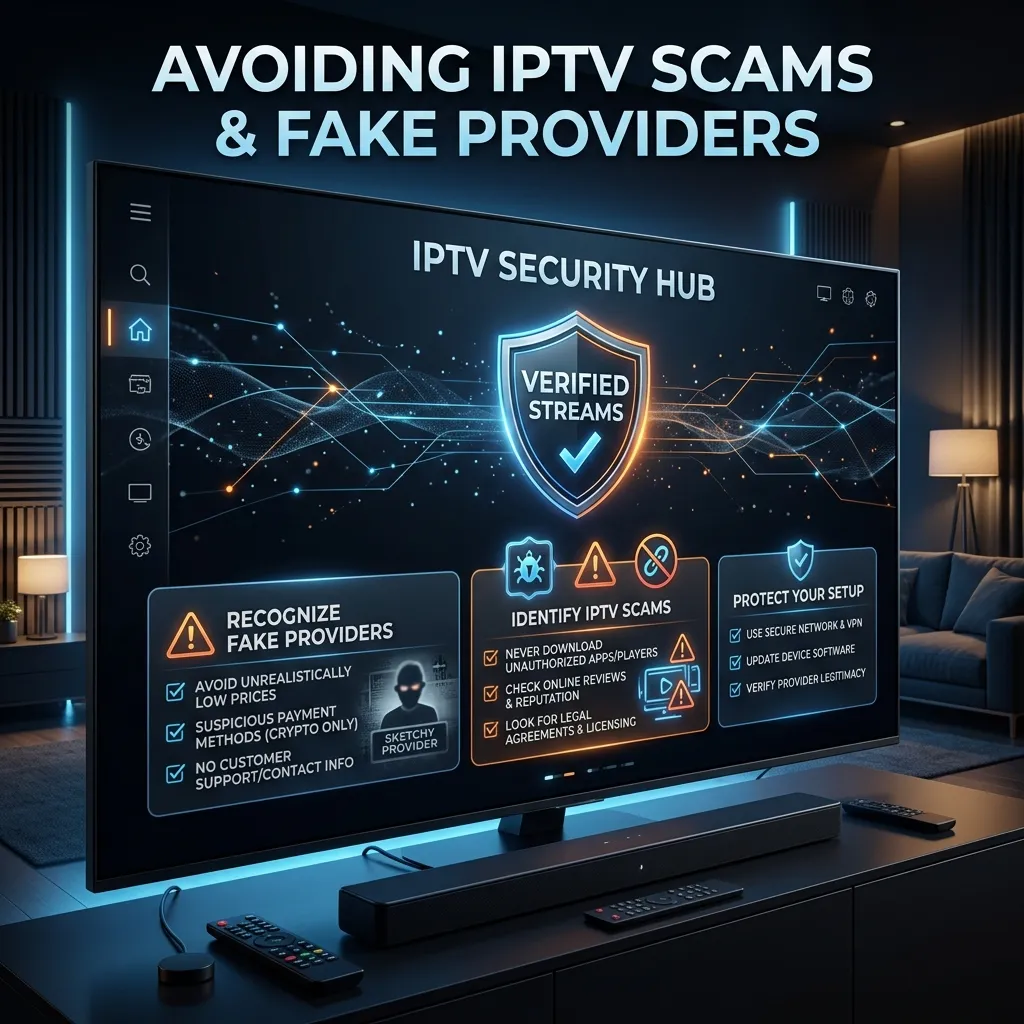
The digital revolution has transformed how we consume media, and Internet Protocol Television (IPTV) sits firmly at the center of this profound shift. With the promise of thousands of live channels, extensive on-demand libraries, and crystal-clear high-definition streams delivered straight to our devices over the internet, it’s easy to see why millions of viewers globally have abandoned traditional cable and satellite packages. However, as the popularity of IPTV has skyrocketed, a dangerous underbelly has emerged: a sprawling landscape of IPTV scams, fraudulent providers, and sophisticated digital traps designed to exploit unsuspecting consumers.
Navigating the vast and often confusing market of IPTV providers can feel like walking through a digital minefield. For every legitimate, high-quality service out there, there are dozens of fly-by-night operations whose sole purpose is to separate you from your hard-earned money, steal your personal information, or infect your streaming devices with malicious software.
In this comprehensive, deep-dive guide, we will unpack everything you need to know about avoiding IPTV scams and fake providers. From understanding the underlying mechanics of how these scams operate to identifying the glaring red flags that should send you running, this article is designed to equip you with the knowledge and tools necessary to protect yourself. By the time you finish reading, you will be an expert in vetting IPTV services, ensuring that your transition to internet-based television is smooth, secure, and genuinely enjoyable.
Whether you are looking to set up a brand new Smartiflix IPTV Subscription or you are just exploring your options, safety should always be your number one priority. Let’s dive into the complex world of IPTV scams and learn how to secure your streaming future.
The Rise of IPTV and the Inevitable Influx of Scams
To understand why IPTV scams are so prevalent, we first need to understand the market dynamics that created them. Traditional broadcasting methods—cable and satellite—rely on dedicated infrastructure, which requires massive capital investment. This created a high barrier to entry, meaning only large, heavily regulated corporations could provide television services.
IPTV completely disrupted this model. By utilizing existing broadband internet connections to deliver video content, the barrier to entry was drastically lowered. Suddenly, anyone with a server and access to digital streams could theoretically become a television provider.
While this democratization of broadcasting has led to incredible innovation and lower prices for consumers, it has also opened the floodgates for bad actors. Scammers quickly realized that they could set up a flashy website, make outrageous promises, collect subscription fees, and then simply disappear into the digital ether.
Why Scammers Target IPTV Consumers
Scammers target the IPTV market for several specific reasons:
- High Consumer Demand: The desire for cheap, comprehensive entertainment is universal. People actively search for alternatives to expensive cable bills, making them highly receptive to offers that sound like incredible deals.
- Technical Complexity: The underlying technology of IPTV—M3U playlists, Xtream Codes APIs, MAG boxes, and custom APKs—can be confusing to the average consumer. Scammers exploit this lack of technical understanding to blind consumers with jargon or trick them into downloading malicious software.
- The "Gray Market" Perception: Because some users associate IPTV with piracy or unauthorized streaming, they may be less likely to report scams to authorities, fearing they themselves might be implicated in illegal activities. Scammers leverage this fear to operate with impunity.
- Anonymity of the Internet: It is incredibly easy to set up an anonymous online presence. Scammers use fake names, offshore hosting, and cryptocurrency to remain untraceable, making it nearly impossible for consumers to recover lost funds.
Anatomy of an IPTV Scam: How the Fraud Operates
IPTV scams are rarely identical; they come in various shapes and sizes, ranging from simplistic money-grabs to highly sophisticated cybercrime operations. To protect yourself, you need to understand the different methodologies scammers use. Here is a breakdown of the most common types of IPTV fraud:
1. The "Hit and Run" Scam
This is arguably the most common and straightforward type of IPTV fraud. Scammers set up a professional-looking website offering incredibly cheap long-term subscriptions—for example, "Lifetime Access for $50" or "3 Years for $30."
They invest heavily in short-term marketing, spamming social media groups and forums to drive traffic. Once a significant number of people have paid for these long-term plans, the scammers simply pull the plug. The website goes offline, the servers shut down, and the operators vanish, taking everyone's money with them. Because the initial investment was so low, consumers often write it off as a bad experience rather than pursuing legal action, which encourages the scammers to simply rebrand and repeat the process.
2. The Buffer Trap (Overselling Capacity)
Not all scams involve taking your money and immediately running away. Some "providers" actually deliver a service, but it is entirely unusable. This is known as the "Buffer Trap."
Running high-quality IPTV servers that can handle thousands of concurrent HD streams requires massive bandwidth and expensive infrastructure. Scammers cut corners by purchasing incredibly cheap, low-capacity servers and then packing as many users onto them as possible.
When you test the service during an off-peak time, it might work passably well. But the moment a major sporting event begins or prime-time viewing hours hit, the server becomes hopelessly overloaded. Your stream will constantly buffer, freeze, or drop entirely. When you complain to "customer support," you will be ignored, or they will blame your internet connection. They have your money, and they know you will eventually give up trying to watch their unwatchable service.
3. The Phishing and Identity Theft Operation
Some fake IPTV websites are not actually selling IPTV at all; they are sophisticated phishing traps designed to steal your personal and financial information.
These sites will offer an amazing deal, but when you go to check out, the payment gateway is a carefully constructed fake. When you enter your credit card details, they are not sent to a bank for processing; they are sent directly to the scammers' database. Shortly after, you will find unauthorized charges on your card. Worse still, if you provided your real name, address, and email, this information can be sold on the dark web or used for further identity theft.
For more information on how we protect your data, you can read our comprehensive Is Smartiflix Safe? guide, which details the robust security measures we employ to keep our customers secure.
4. The Malware Vector (Infected Apps)
This is perhaps the most dangerous type of IPTV scam because it directly compromises your devices. Many IPTV services require you to download a custom Android application (an APK) to access their streams.
Fake providers will distribute APKs that contain hidden malware, spyware, or ransomware. Once installed on your Android TV box, mobile phone, or Firestick, this malicious software can:
- Steal your login credentials for other apps (like your email or banking apps).
- Hijack your device's processing power to mine cryptocurrency (cryptojacking).
- Lock your device entirely and demand a ransom to restore access.
- Monitor your network traffic to intercept sensitive data.
This is exactly why you should only use trusted, verified applications and follow proper setup procedures, such as those outlined in our Smartiflix Firestick Setup guide.
10 Glaring Red Flags of a Fake IPTV Provider
Now that you understand how the scams work, let's discuss how to spot them. While scammers are constantly evolving their tactics, they often leave behind telltale signs. If you encounter a provider exhibiting one or more of these red flags, proceed with extreme caution—or better yet, walk away entirely.
Red Flag 1: Prices That Are "Too Good to Be True"
We all love a bargain, but quality infrastructure costs money. Delivering thousands of high-definition, buffer-free channels requires a massive network of servers, continuous maintenance, and dedicated technical support.
If a provider is offering thousands of channels, VODs, and premium sports for $2 a month or a "lifetime subscription" for a flat fee of $30, it is almost certainly a scam. Legitimate providers must charge a reasonable rate to cover their operational costs. The old adage holds true: if it seems too good to be true, it probably is. Always compare prices against reputable services. You can view standard, fair-market pricing structures on the Smartiflix Pricing page to get a baseline idea of what a quality service should cost.
Red Flag 2: "Lifetime" Subscriptions
In the world of IPTV, "lifetime" usually means the lifetime of the scam, not your lifetime. Server costs are recurring monthly expenses for the provider. No sustainable business model allows for a one-time payment for perpetual access to a service that costs money to run every single month. Providers offering lifetime deals are almost always planning a "hit and run" exit strategy.
Red Flag 3: Lack of Contact Information and Transparency
A legitimate business wants you to be able to reach them. They will have a clear "Contact Us" page, an email address, a ticketing system, and perhaps even live chat or social media profiles.
Fake providers want to remain anonymous. If a website only provides a generic web form with no email address, no physical location, and no social media presence, this is a massive red flag. Who will you contact when your stream goes down during the Super Bowl? If they are hiding their identity before you buy, they will definitely hide when you need help or a refund.
Red Flag 4: Only Accepting Untraceable Payments
Payment methods are one of the most reliable indicators of a provider's legitimacy. Reputable businesses use established payment processors (like PayPal, Stripe, or direct credit card processing) which offer buyer protection and require the merchant to undergo identity verification.
Scammers actively avoid these processors because they know chargebacks and fraud investigations will quickly shut them down. Instead, they will insist on payments that cannot be reversed or traced, such as:
- Cryptocurrency only (Bitcoin, Ethereum, etc.)
- Gift cards (Amazon, iTunes, Google Play)
- Direct wire transfers (Western Union, MoneyGram)
- Peer-to-peer apps with no buyer protection (CashApp, Zelle)
While some legitimate tech companies do accept crypto as an option, if it is the only option, run away.
Red Flag 5: Poor Website Design and Broken English
While some scammers build sophisticated sites, many rely on cheap, copy-pasted templates. Pay attention to the details. Is the website filled with spelling and grammatical errors? Are there broken links? Do the images look blurry or stolen from other websites? Does the "Terms of Service" page look like it was copied from a completely unrelated business?
A legitimate provider invests in a professional online presence. A sloppy website usually indicates a sloppy—or fraudulent—operation.
Red Flag 6: Exaggerated, Impossible Claims
Beware of providers making claims that defy technical reality. Common exaggerations include:
- "100% Uptime Guaranteed" (No service on earth, not even Google or Netflix, has literal 100% uptime. Outages happen).
- "Zero Buffering Ever" (Buffering can be caused by your ISP or home network; a provider cannot guarantee zero buffering on your end).
- "Over 500,000 Channels" (Quality is infinitely more important than quantity. Most of those "channels" will be dead links, duplicates, or foreign language streams you will never watch).
Red Flag 7: No Free Trial or Short-Term Options
A legitimate provider is confident in the quality of their service. They want you to test it because they know you will be satisfied and subscribe. Most reputable providers offer a 24-hour free trial, a cheap 48-hour pass, or at least a standard 1-month subscription.
Scammers do not want you to test the service because they know it is terrible (or non-existent). They will push hard for you to buy a 6-month or 1-year package immediately, often claiming that trials are "currently unavailable due to high demand." Never commit to a long-term plan without testing the service first.
Red Flag 8: Aggressive Spam Marketing
If you are receiving unsolicited emails, direct messages on Reddit, Telegram, or WhatsApp from someone pushing an IPTV service, be highly skeptical. Professional services rely on SEO, word of mouth, and legitimate advertising. Spamming inboxes is the tactic of desperate scammers trying to cast a wide net to catch a few gullible victims.
Red Flag 9: Forced Use of Suspicious Proprietary Apps
While many providers offer their own customized version of standard apps (like a rebranded Smarters or XCIPTV), you should always have the option to use standard, third-party players (like TiviMate, OTT Navigator, or standard IPTV Smarters) using an M3U link or Xtream Codes API.
If a provider refuses to give you your login credentials and insists that their service only works on their specific, unverified, side-loaded APK, you are at a high risk of installing malware.
Red Flag 10: Terrible or Fake Reviews
Before buying anything online, checking reviews is standard practice. However, you must look for authentic reviews.
- Are all the reviews on Trustpilot 5 stars, posted within the last 48 hours, with broken English and generic praise ("Great service friend, very good channel")? Those are fake, paid reviews.
- Conversely, do a quick search for the provider's name along with words like "scam," "buffering," or "stealing." Check Reddit (subreddits like /r/IPTVReviews) and independent forums. If real users are constantly complaining that the service disappears or buffers relentlessly, listen to them.
The Severe Risks of Falling for an IPTV Scam
You might think, "What's the worst that could happen? I lose $20?" Unfortunately, the risks associated with fraudulent IPTV providers extend far beyond just losing your initial subscription fee. Understanding these risks is crucial for taking your digital security seriously.
1. Financial Exploitation and Identity Theft
As mentioned earlier, fake payment gateways are designed to capture your credit card details. Once scammers have your card number, CVV, and expiration date, they can make unauthorized purchases, drain your linked accounts, or sell your details on the dark web. If they gather enough personal information (name, address, email, phone number), they may even attempt full identity theft, applying for credit in your name and ruining your credit score.
2. Device Infection and Network Compromise
When you install a malicious APK from a fake provider on your Android box or Firestick, you are literally inviting a virus into your home network. Because these devices are connected to your Wi-Fi router, sophisticated malware can attempt to traverse your local network, scanning for vulnerable computers, laptops, and smartphones.
A compromised streaming device can quietly monitor your web traffic, steal passwords for your streaming services, or hold your device hostage with ransomware until you pay a fee. Always ensure you follow safe installation protocols, as detailed in our comprehensive Smartiflix Installation Guide.
3. Exposure to Malicious Content and Phishing Links
Some fake IPTV portals inject malicious advertisements or pop-ups directly into their web players or apps. Clicking on a seemingly innocuous "Update Player" button could redirect you to a phishing site designed to steal your email password or trick you into downloading further malware.
4. Legal Ambiguity and ISP Throttling
While falling for a scam usually makes you a victim, engaging with highly illicit, unregulated providers can sometimes put you in a legal grey area depending on your local jurisdiction. Furthermore, Internet Service Providers (ISPs) often monitor traffic connecting to known fraudulent or illegal IPTV servers and may actively throttle your internet speed or issue warning letters if they detect such activity.
The Vetting Process: How to Verify a Legitimate IPTV Service
Now that we have covered the dark side of the industry, let’s focus on the positive: how to find and verify a high-quality, legitimate IPTV provider that will deliver on its promises. By following this systematic vetting process, you can virtually eliminate the risk of being scammed.
Step 1: Conduct Deep-Dive Research
Never buy impulsively. Start by researching the provider's name on search engines and independent platforms.
- Check Trustpilot: Look for a mix of reviews. A legitimate company will have mostly positive reviews but also some realistic negative ones (complaining about specific channels being down, for example, which happens in reality).
- Check Reddit and Forums: Communities like Reddit are usually brutally honest. Search for the provider's name. If it's a scam, someone has probably posted about it.
- Analyze Website Age: Use a WHOIS domain lookup tool to see when the website was registered. If the website claims they have been "The #1 Provider Since 2018" but the domain was registered three weeks ago, they are lying to you.
Step 2: Evaluate the Support Infrastructure
Before spending a dime, test their customer support. Send them a technical question via email or their live chat system.
- Good Sign: They respond within a few hours with a clear, polite, and grammatically correct answer that actually addresses your specific question.
- Bad Sign: They do not respond at all, or they reply days later with an automated, generic message pushing you to buy a subscription.
Step 3: Insist on a Trial or Short-Term Test
This is the golden rule of buying IPTV. Always test first. Request a 24-hour trial. If they don't offer free trials, purchase the absolute shortest duration available (usually 1 month).
During your trial, do not just turn it on and say, "Oh, it works." Put it through a rigorous stress test:
- Test During Prime Time: Watch during the evening hours (7 PM to 11 PM) when network traffic is heaviest.
- Test Live Sports: Find a major live sporting event and watch it. Live sports require the most bandwidth and are the first to buffer on cheap servers.
- Check VOD Quality: Test their Video on Demand section. Do the movies play instantly? Is the audio in sync? Is the resolution true HD/4K?
- Navigate the EPG: Does the Electronic Program Guide actually work and match the channels?
Step 4: Verify Payment Security
When you are ready to purchase, scrutinize the checkout page.
- Look for the padlock icon in your browser's address bar (HTTPS encryption).
- Ensure they are using a reputable payment gateway (like Stripe, PayPal, or a recognized credit card processor).
- If you are redirected to a strange, unbranded payment page asking for plain text credit card details, abort the transaction immediately.
Step 5: Check App Flexibility
Confirm that you can use the service on the apps you choose. A trustworthy provider will gladly give you an M3U link or Xtream Codes API login so you can use premium apps like TiviMate. If they lock you into their own proprietary software, view it with high suspicion.
A Direct Comparison: Legitimate Providers vs. Scammers
To make it incredibly clear, here is a breakdown comparing the characteristics of a trusted provider against a typical scam operation.
| Feature | Legitimate IPTV Provider (e.g., Smartiflix) | Fake/Scam IPTV Provider |
|---|---|---|
| Pricing Model | Transparent, monthly/yearly options, realistic market pricing. | "Too good to be true" prices, pushes "Lifetime" deals heavily. |
| Testing | Offers 24/48 hour trials or cheap 1-month entry points. | Refuses trials, pushes immediate long-term commitment. |
| Support | Responsive email/ticket support, active communication. | Ignored emails, automated bot replies, vanishes after payment. |
| Payment Options | Credit Cards, reputable gateways, sometimes Crypto as an option. | Crypto ONLY, Gift Cards, untraceable wire transfers. |
| Performance | High uptime, robust servers handle prime-time traffic. | Constant buffering, unwatchable during major events. |
| App Compatibility | Provides M3U/Xtream Codes for use with any 3rd party player. | Forces the installation of suspicious, custom-built APKs. |
| Website Quality | Professional design, clear terms of service, secure connections. | Stolen templates, broken English, absurd marketing claims. |
Essential Security Measures for Safe Streaming
Even when you believe you have found a reputable provider, it is vital to practice good digital hygiene to protect yourself entirely. Here are the non-negotiable security steps every IPTV user should take.
1. Always Use a Virtual Private Network (VPN)
A VPN is your first and most important line of defense when streaming IPTV. A high-quality VPN encrypts all of your internet traffic and routes it through a secure server. This achieves several critical security goals:
- Prevents ISP Throttling: Many ISPs actively monitor for streaming traffic and will intentionally slow down your connection (throttling), causing buffering. A VPN hides the nature of your traffic from your ISP, ensuring you get the maximum speeds you pay for.
- Protects Your Privacy: A VPN hides your real IP address from the IPTV provider and any potential hackers lurking on the network, keeping your physical location and identity secret.
- Secures Payment Transactions: When you make your purchase, a VPN adds an extra layer of encryption, protecting your data over public or unsecure networks.
[!IMPORTANT] Never use a "Free" VPN for IPTV. Free VPNs are notoriously slow, heavily restrict bandwidth, and often sell your browsing data to third parties. Invest in a premium, high-speed VPN specifically designed for streaming.
2. Use Virtual Credit Cards or Secure Payment Gateways
If you are nervous about handing over your actual credit card number, utilize a virtual credit card service (like Privacy.com). These services generate a temporary, disposable credit card number linked to your real account. You can set a strict spending limit on the virtual card and lock it to a single merchant. If the IPTV provider turns out to be a scammer or tries to overcharge you, they will be blocked automatically, and your real bank details remain completely safe.
Alternatively, use services like PayPal (if offered), which provide a layer of abstraction between the merchant and your bank, as well as robust buyer protection policies that allow you to dispute fraudulent charges.
3. Stick to Trusted Hardware and Software
Avoid buying "pre-loaded" Android boxes off eBay or Facebook Marketplace. These devices are frequently loaded with malicious software, spyware, and outdated, insecure apps by the seller.
Instead, purchase standard, official hardware like an Amazon Firestick, Nvidia Shield, or Google Chromecast. Then, install trusted, verified apps from official app stores. Our official Smartiflix Installation Guide provides safe, secure methods for setting up your device without risking malware infections.
4. Keep Your Devices Updated
Whether you are using a Smart TV, a Firestick, or an Android box, ensure your operating system and all installed apps are regularly updated. Security patches are released constantly to fix newly discovered vulnerabilities. Running outdated software is an open invitation to cybercriminals.
Why Smartiflix is the Safe, Reliable Alternative
At Smartiflix, we understand that the prevalence of scams has made consumers rightfully wary of the IPTV industry. That is exactly why we built our service on a foundation of absolute transparency, security, and uncompromising quality.
We don't rely on flashy, impossible promises. We deliver a premium, robust streaming infrastructure designed for stability. Here is why you can trust Smartiflix for your entertainment needs:
- Premium Infrastructure: We utilize high-capacity servers distributed globally to ensure minimal buffering, even during peak viewing times and massive live sports events.
- Transparent Pricing: No hidden fees, no forced "lifetime" scams. We offer clear, straightforward subscription tiers that you can view on our Smartiflix Pricing page.
- Real Customer Support: Our dedicated support team is comprised of real human beings ready to assist you with technical issues, setup guidance, or billing inquiries.
- Absolute Security: We employ state-of-the-art encryption on our payment gateways to ensure your financial data is completely secure. We detail our commitment to your privacy in our Is Smartiflix Safe? documentation.
- Complete Flexibility: We provide you with the credentials you need to use the service on the hardware and software you prefer. We don't force proprietary malware onto your devices.
We invite you to experience the difference of a truly professional service. Start your journey with a Smartiflix IPTV Subscription today and leave the buffering and scams behind.
What to Do If You Have Been Scammed
Despite your best efforts, mistakes happen. If you realize that you have fallen victim to an IPTV scam, do not panic, but act swiftly. Follow these steps immediately to mitigate the damage:
- Contact Your Bank or Credit Card Company: Call your bank immediately and report the transaction as fraudulent. Request a chargeback. Most credit card companies have robust fraud protection and will reverse the charge if you explain that the service was a scam and was not delivered as promised.
- Cancel the Card: If you used your actual credit or debit card on a highly suspicious, unencrypted website, ask your bank to cancel the card entirely and issue a new one to prevent future unauthorized charges.
- Uninstall Suspicious Apps: If you installed an APK provided by the scammers, uninstall it immediately from your Firestick, Android TV, or mobile phone.
- Run a Malware Scan: If you installed software on a device capable of running anti-virus (like an Android phone or a PC), run a comprehensive malware scan immediately to detect and remove any hidden payloads.
- Change Passwords: If you used the same password for the scam IPTV site that you use for your email, bank, or other important accounts, change those passwords immediately. Scammers frequently try "credential stuffing" attacks using stolen passwords.
- Report the Site: You can report fraudulent websites to Google Safe Browsing and consumer protection agencies in your country (such as the FTC in the United States or Action Fraud in the UK) to help get the site taken down and protect others.
Frequently Asked Questions (FAQs)
Q: Are all IPTV services illegal? A: No. IPTV itself is simply a delivery method (television over internet protocol). Major services like Hulu + Live TV, YouTube TV, and Sling TV are entirely legal IPTV providers. However, many unverified, third-party IPTV services operate in a legal gray area by rebroadcasting copyrighted content without proper licensing. It is crucial to use a VPN to protect your privacy regardless of the service you choose.
Q: If an IPTV service asks for Bitcoin, is it definitely a scam? A: Not definitely, but it is a massive red flag if it is the only option. Some legitimate tech-forward companies accept crypto, but they will also accept standard credit cards. If a provider refuses to accept credit cards or PayPal, they are likely trying to avoid the fraud prevention systems of those networks, which is highly suspicious.
Q: Can an IPTV app hack my Firestick? A: Yes. A malicious APK downloaded from a fake provider can contain spyware, ransomware, or cryptocurrency miners that will severely compromise your device and network. Always follow safe installation practices like those found in our Smartiflix Firestick Setup guide and only install trusted applications.
Q: Why does my IPTV buffer only during big sports matches? A: This is the classic symptom of a provider overselling their servers (the "Buffer Trap"). They simply do not have the bandwidth capacity to handle the massive influx of users trying to watch the same live event simultaneously. A premium service like Smartiflix invests heavily in server architecture to prevent this. Alternatively, your ISP might be throttling your connection, which a VPN can fix.
Q: Should I buy a pre-loaded IPTV box? A: Absolutely not. Pre-loaded boxes are notorious for being loaded with cheap, unstable IPTV subscriptions that will expire in a few weeks, and worse, they are often infected with malware right out of the box. Buy a clean, official device (like a Firestick) and set it up yourself.
Q: Is it safe to give my real name and email to an IPTV provider? A: With a verified, legitimate provider, yes. However, with unverified third-party services, it is safer to use a secondary email address and avoid giving out unnecessary personal information to protect yourself from potential data breaches or identity theft.
Conclusion
The transition from traditional cable to IPTV offers unparalleled freedom, massive cost savings, and an incredible variety of entertainment. However, the lack of strict regulation in the third-party IPTV market means that consumers must become their own advocates and protectors.
By understanding the mechanics of how IPTV scams operate, recognizing the glaring red flags of fake providers, and strictly adhering to the vetting and security protocols outlined in this guide, you can navigate the streaming landscape safely and confidently.
Remember: never rush a purchase, always demand a trial, protect your payment information, and utilize a VPN. High-quality, reliable, and secure streaming is entirely possible when you know what to look for.
Ready to experience streaming the way it was meant to be—secure, stable, and transparent? Explore the Smartiflix Homepage today and discover why we are the trusted choice for thousands of satisfied viewers worldwide. Protect yourself, choose wisely, and happy streaming!